
FORCE HISTORY TO SWEAT: AN IN-DEPTH INTERVIEW ON SU HUI YU’S PERFORMANCE-MOVIE IN BOGOTÁ
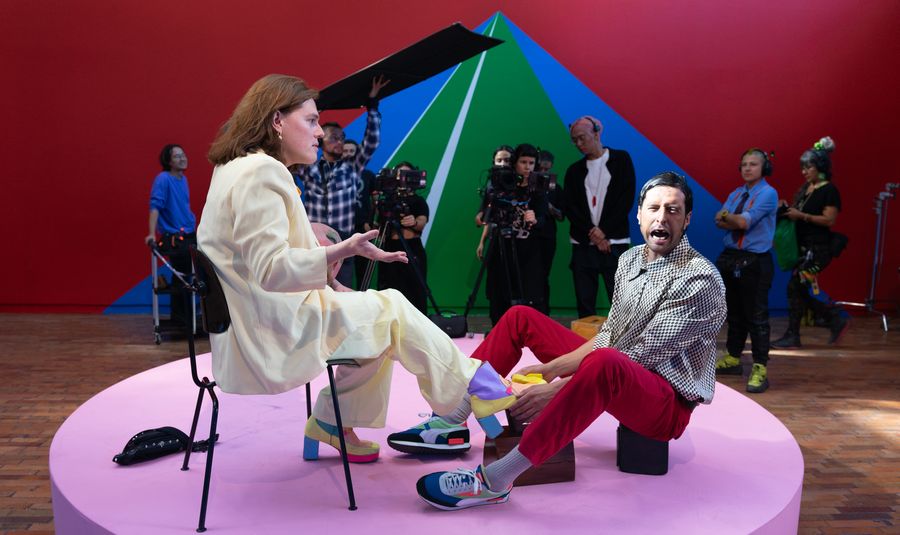
A Total Story premiered on January 24 at the Museum of Modern Art in Bogotá, though it soon became clear that this was no ordinary film. Shot inside the museum itself, the film by Taiwanese artist Su Hui-Yu (b. 1976) intertwines the histories of Colombia and Taiwan through a narrative told and brought to life by queer and trans people, who are radically present both in front of and behind the camera. Now, this collective experience will travel to Taipei, thanks to MOCA Taipei, for its grand premiere on April 12.
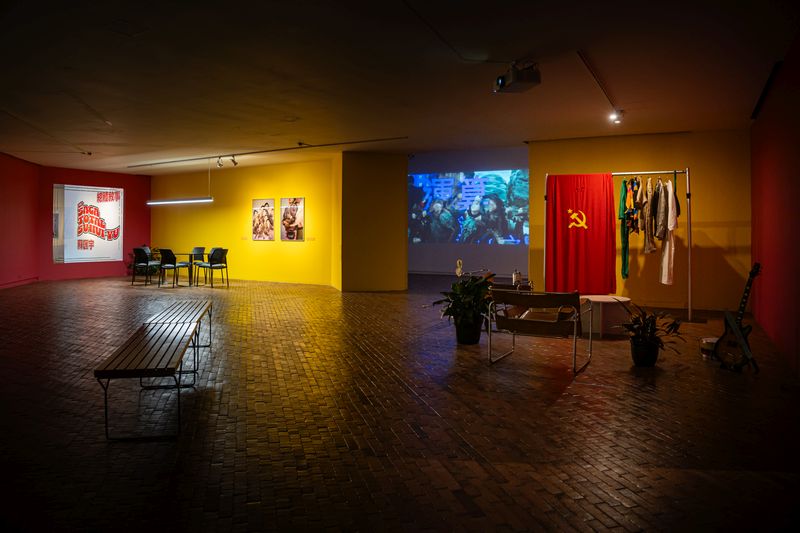
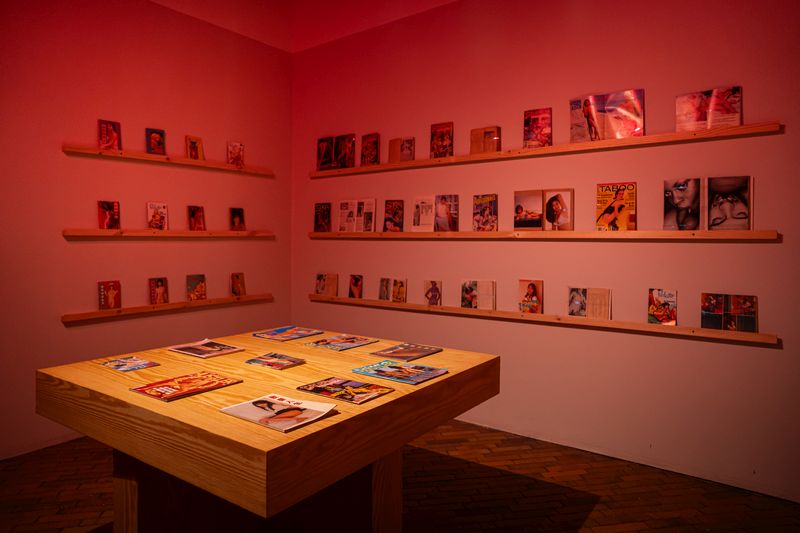
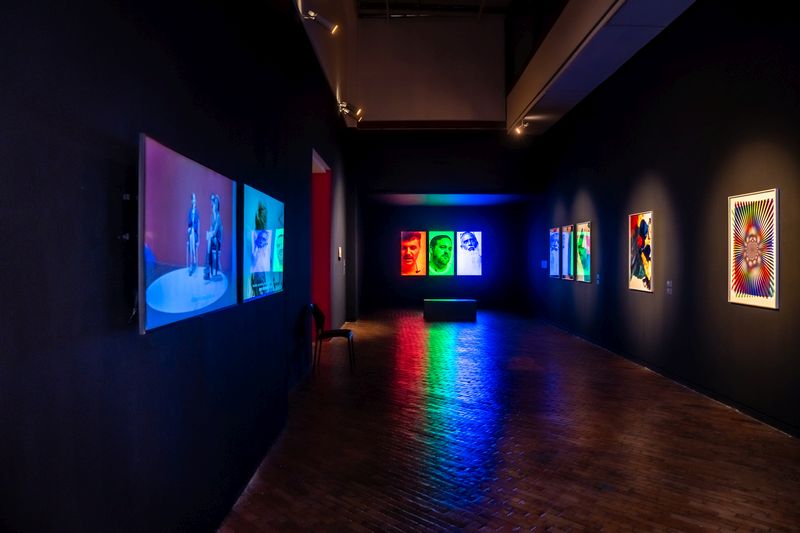
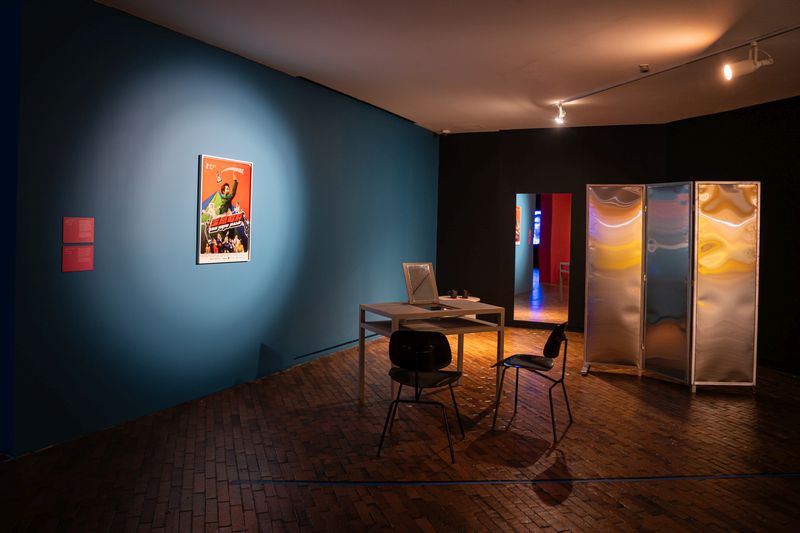
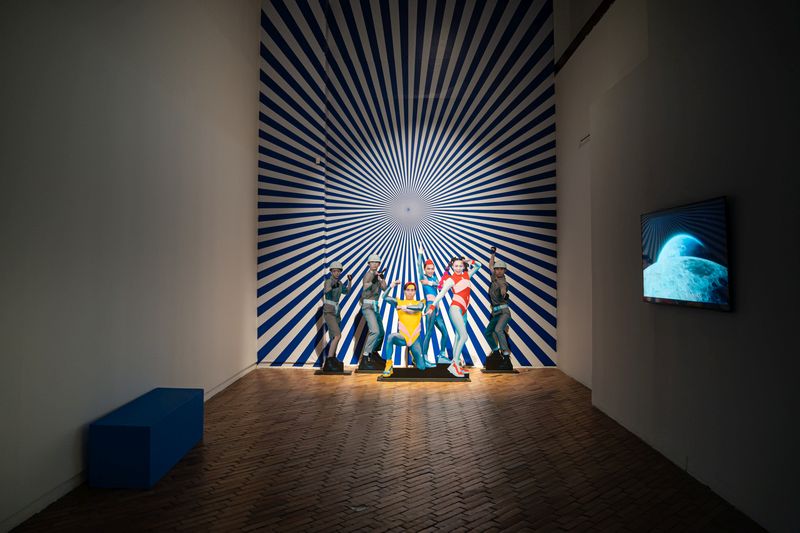
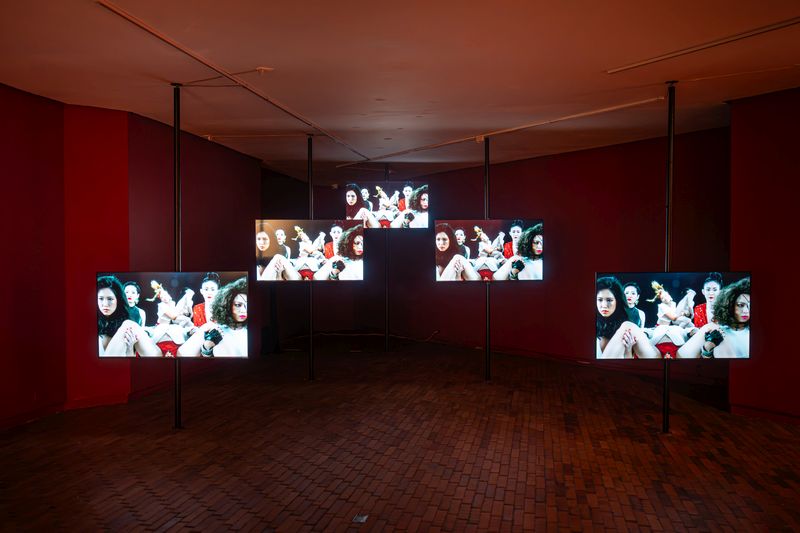
In addition to the new works A Total Story and The Trio Hall, Su’s first exhibition in Latin America also featured his earlier and recent series The Space Warriors and the Digigrave (2023/2025), The Women’s Revenge (2020), The Walker (2017), and Life, Pleasure, and the Reading Room (2017).
Dive into this conversation with Su Hui-Yu, Matilda González Gil, Eugenio Viola, and Juaniko Moreno, led by me, J Triangular, artivist and the producer behind this project.
JT: For audiences in Latin America, could you introduce us to your visual language and the role that performance plays at the core of your artistic practice?
Su: I think I’ve always been obsessed with the friction between martial law/collectivism and «forbidden things/desires.» My visual language is highly saturated and often baroque because I treat the screen not as a mirror of reality, but as a site for physical intervention.
Regarding performance, it’s the engine of my practice, I guess; it’s how I test the weight of history on the body. By placing performers in repetitive, ecstatic, or ritualistic actions, I’m trying to turn static archives into something that is living, breathing, and—most importantly—resisting. It is a way to force history to sweat.
JT: When did your “re-shooting” method emerge, and what conceptual or political questions does it allow you to explore?
Su: This method emerged around 2015, borrowing a term from Hollywood industry called «pickup» or «re-shooting»—the process of going back to the set to fix mistakes or fill in gaps, which means something went wrong on the storyline, yeah, it’s very metaphor in a sense. I started using this as a hint of «fixing» history.
Conceptually, it’s an act of re-possession. Politically, it allows me to hijack the authority of the past. History/Narrative is often written by the victors, leaving many gaps and disinformation. By «Re-shooting,» I can slow down time and insert the imaginations—to suggest a different future.
JT: Could you reflect on your first encounter with Su’s work? As both a curator and a participant in the live TV show produced in Taipei, how did you experience entering Su’s universe from within?
Eugenio: I had the privilege of encountering Su’s work in 2016, during a research residency in Taiwan. As curator of The Trio Hall, the first iteration of this project, I was particularly interested in how Su was pushing the boundaries of the exhibition as a format, expanding it beyond its conventional limits.
Being invited to interpret myself — almost as an accidental performer — added another layer to the experience. Entering Su’s universe from within meant inhabiting a space where the boundaries between observer and participant dissolved, creating a short circuit between art and life, deeply connected to performance as a medium.
Participating in the live TV show produced in Taipei further intensified this condition, transforming the curatorial role into an embodied experience and allowing me to engage with Su’s practice not only intellectually, but also physically and emotionally.
JT: Something historic happened at MAMBO during the preparation for this performance-film: a trans-sensitivity workshop was held for the entire staff, facilitated by Matilda González Gil, Dr. Luana Du, and me. How do you feel this workshop helped MAMBO and the entire crew align in their approach, fostering a shared understanding and collaborative environment for creating this work?
Juaniko: MAMBO has been one of the Colombian institutions at the forefront of showcasing LGBTQ+ artists. Projects such as Nada que cesa, Virosis: Arte y VIH en Colombia (1981-2023), and now A Total Story exemplify how these themes and experiences have been placed front and center.
However, this latest project was exceptional because it considered how inclusion and sensitization must be conceived from within the institution, by those who are part of it. The workshop provided a wonderful opportunity for both long-serving staff and newcomers to share their preconceptions about gender, discuss their experiences, and update their perspectives. It was a fruitful space of exchange for the entire team, especially meaningful around a subject that often remains taboo in cultural work environments.
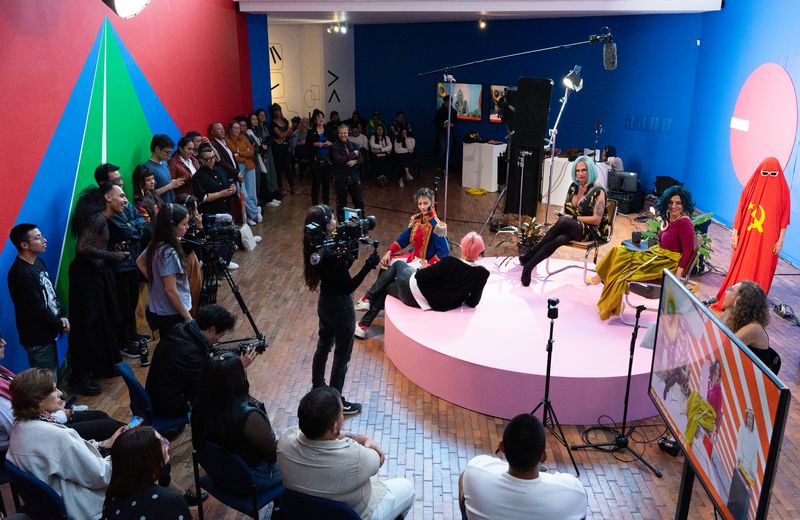
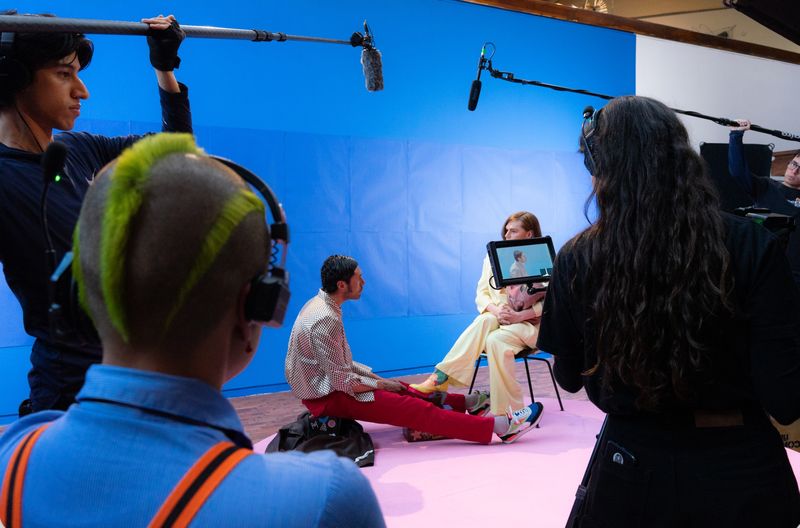
JT: In A Total Story, a cast and crew composed primarily of trans, queer, non-binary people, and women take the foreground in re-enacting pivotal moments in Colombian history, such as the takeover of the Palace of Justice. How does working with bodies and subjectivities historically overlooked by mainstream discourse transform the film’s relationship to historical representation?
Su: When bodies that have been historically erased—trans, queer, and non-binary folks—occupy an architecture of power like the Colombia Palace of Justice in 1980s (we did make a satire about the event this time), the chemistry of the «event» changes completely. We aren’t just looking at a tragedy anymore; we’re witnessing a claim to space/subject.
Their presence disrupts the official narrative. By placing these subjectivities in the foreground, the film making transforms from a documentary into a collective manifesto written by the bodies themselves. I think it’s my way of saying to «cinema» and history: If the footage didn’t include us, we will reschedule and re-shoot the timeline by our own.
JT: Matilda, you play two leading roles in the telenovela while also contributing to the creation of the script. Beyond your work as an actor in film and theater, you are also a lawyer and activist. Could you share your creative process in developing these two characters, and how your daily life as an activist informs your work as an actress and director across theater and film?
Matilda: You, J, as the producer, invited me to be part of the movie and told me AI was going to be used in the process of writing the script. Su explained that he wanted to resist the AI: “let’s f%#k the AI.” At first, I was scared by the idea of using AI, but then I understood the experimental spirit and humor behind the project, which was to play and experiment with AI. First, I was given rough screenplays drafts to play with and the creative limitation was to only intervene them by giving prompts to the AI.
They wanted to explore the concept of re-shooting with popular Colombian archetypes in politics and pop culture, such as Jaime Garzón’s (a Colombian comedian killed by paramilitary groups for his sharp political humor) character Heriberto de la Calle (shoe shiner), conservative politicians and the popular Colombian soup opera Café con Aroma de Mujer. You, J, proposed Café con Aroma de Hombre, and at that moment I was directing a bat documentary and a trans vampire film, and I had read that bats also pollinate coffee beans. So, I told the AI to include a female Nosferatu character who pollinated the beans of a trans man coffee worker, Gavioto.
In another sketch, we wanted to create an alternative reality in which comedians were not killed, and conservative, war-driven values could be transformed by the human discovery of pleasure. I was very happy to look the enemy in the eye instead of ignoring it, in a performance film that allowed us to play with AI and demonstrate that human creativity can never be replaced by machines—because as humans, we can desire and f%#k.
As a lawyer and activist, I’ve learned that the law alone will never make us free, and that social and cultural change urgently requires action fueled by imagination, curiosity, and color.
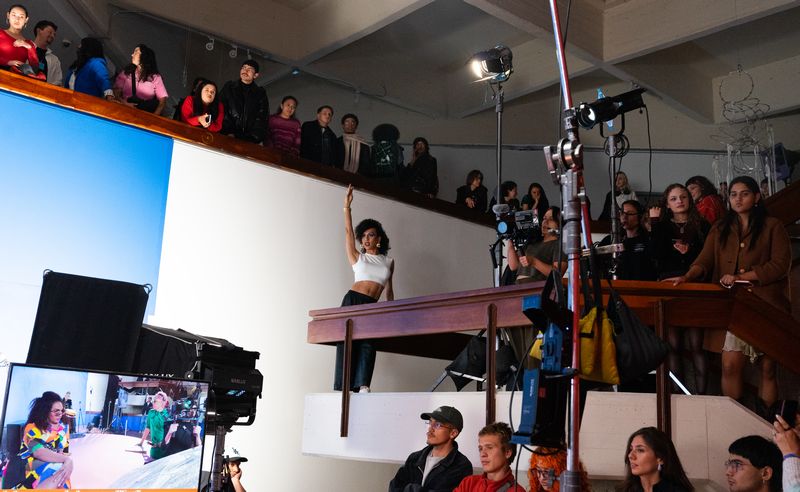
JT: In A Total Story, the relocation to Bogotá and the re-shooting of historical moments—now embodied by voices historically excluded, particularly trans communities—seem to radically expand the work’s experimental field. How does this shift in geography and embodiment push Su’s practice to another level, transforming it into a deeply political avant-garde work that speaks directly to Colombia’s contemporary urgencies, such as the demand for a comprehensive trans rights law?
Eugenio: Re-shooting is a core aesthetic strategy in Su’s practice. It enables new iterations and alternative narratives, allowing history to be revisited from fresh perspectives. Here, the shift in geography and embodiment brings a heightened sense of urgency for vulnerable groups and the wider public.
Relocating the work to Bogotá and collaborating with historically excluded voices, particularly trans communities, gives the project a distinctly political dimension. It reimagines historical moments while highlighting issues of visibility, representation, and agency within a defined social and cultural context.
Supporting the rights and visibility of vulnerable communities remains central to our approach. For example, we have worked with the Red Comunitaria Trans in Bogotá, engaging with local realities and advocating for inclusion. In A Total Story, this commitment is further emphasized, making the work a powerful political gesture that addresses Colombia’s current needs, including the call for comprehensive trans rights.
JT: Do you believe that cinema—through projects like this—can act as a form of repair for painful moments in Colombian history? How do you see the intersection of memory, performance, and experimental storytelling shaping the ways audiences confront or reimagine these events?
Matilda: As a forming actress, I’m tired of being the “trans character” and playing a cis conservative woman was so much fun. Exclusion is painful and the encapsulation of roles that trans persons are supposed to inhabit is very boring, frustrating and restrictive. Re-filming history and changing its sex it’s a very liberating and healing experience.
Politically, fascism around the world is weaponizing trans persons under the pretense that we are a new idea imposed from a woke agenda. This film reminds us that we have always been here and compels the audience to see what discrimination has erased from history: trans bodies and talents. Memory, performance, and experimental storytelling in this performance film goes to a very uncomfortable question about AI but also gives humanity the real power to reimagine traumatic events and recall other alternatives/futures were and are always possible.
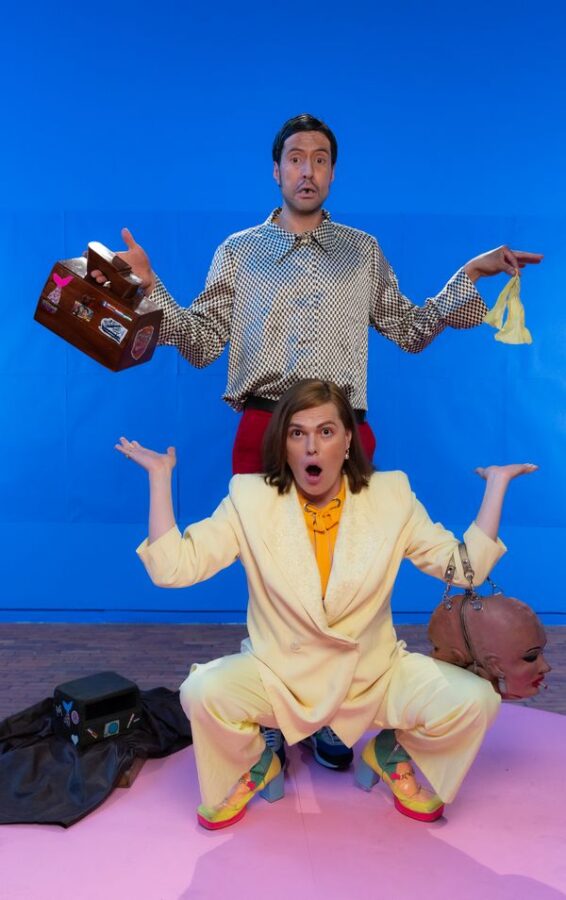
JT: In this context, how would you describe the key continuities and differences between The Trio Hall, filmed at MOCA Taipei, and A Total Story, produced and shot inside MAMBO?
Su: To be honest, I don’t really see a «border» between them. For me, they are basically the same film that I just can’t seem to finish editing. It’s like a colorful, sexy, and never-ending feature.
Regarding the continuity, to me the best part is the messiness. I realized that the «bad melodrama» of Taiwan’s 1980s history and the intense soap opera TV sections of Colombia’s politics are actually playing on the same channel. Thus, MOCA Taipei and MAMBO are just two different scenes in one giant movie. There is no clean cut. It’s a seamless transition of chaos and desire. I jumped from one «crime scene» to another, and the actors kept dancing.
JT: How do these two works speak to one another across institutions, geographies, and historical imaginaries?
Su: They don’t just «speak» to each other; they are screaming at each other like an old married couple. It’s funny because when I arrived in Bogotá, I thought, «This city is so familiar but also far away, like a childhood friend you haven’t seen each other for whole life,» and then I looked at the history—the struggles, the tensions, the absurdity—and I thought, «This feels exactly like home.» It’s like finding a long-lost twin who is just as crazy as you are.
The dialogue is urgent I think, because the history in both places is unfinished. We are both rushing against time. To me, connecting these works isn’t some polite, academic exchange. It’s more like a jam session where everyone is playing their instruments too loud because we know the song (history) is far from over, but everyone gets some memory of the notes.

JT: In what ways does this work challenge institutional expectations and expand the museum’s role as a site for experimental, socially engaged, and radically inclusive practices?
Juaniko: A museum’s main responsibility as an institution is to its public, and by addressing sexuality, gender, popular culture, and political ideology, Su’s work has resonated with the Museum’s audience. The expansive format of performance and filmmaking acts as both a challenge and an attraction, pushing beyond the expected frame of audience participation. It questions what is to be contemplated, what is to be written or built collectively, whose history is represented, and what is being left out.
It remains profoundly interesting to consider inclusion from two perspectives: the inclusion an institution aspires to foster, and the inclusion it neither anticipates nor welcomes. We have witnessed scenes where visitors become impromptu performers, overwriting the Museum’s sanctioned narrative of an artist or artwork.
Other scenes compel the visitor to manipulate what is displayed—to wear it, play with it, sometimes bordering on vandalism. Sometimes this dynamic shifts online, with visitors recording videos for private use, such as a background for a music video. What are the limits to this? Is there a protocol for each of these situations? Probably not. Yet a new frontier is drawn with each scenario, and each redrawing redefines the Museum’s role with its public.
JT: In what ways does this collective presence push the work beyond reenactment and toward a reconfiguration of who is allowed to inhabit, perform, and narrate history on screen?
Su: Yes, «Reconfiguration» might sound a bit fancy, or maybe we can say: The original directors of our history—the dictators, the politicians—did a terrible job. Their script was boring and oppressive. So, let’s hijack the set.
We are not just «reenacting» or acting nicely; me and all the partners are taking over the stage because we think we look better on camera. When the production team invite and put queer bodies, trans bodies, artists, activists, and art folks in the center, we naturally steal the show. It’s a takeover. We are saying something to the history/narrative, «Okay, your turn is over. The lighting is better on us, and our costumes are way cooler.» It’s a playful rebellion, but I found all the participants are damn serious about staying in the frame. I think yes, it’s questioning to those who have the right of making histories/movies/narratives.
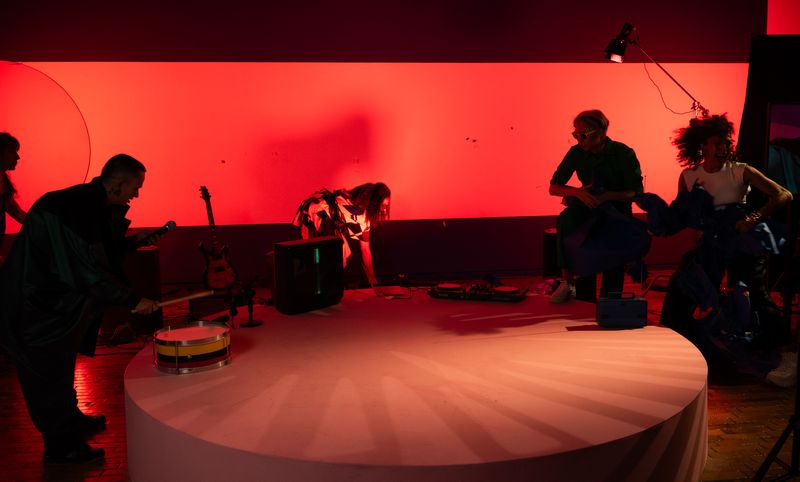
The audience wonders how I managed to assemble a team of 52 people to embody trans and queer resistance in Bogotá. For me, it was a spiritual act: 緣分 (yuanfen) guided us. I didn’t just want actors; I wanted activists.
From Matilda González Gil, who inspires me with her everyday activism, to Angela María Jiménez Cano, our line producer, who brought in our rockstar director of photography Natalia Imery Almario, and then Laura Camila Cortés, Jahira Quintero, Magdalena aka La Morena del Chicamocha, DEM, and Rita de MIXELANEA, every person helped turn this film into a collective act of artistic insurgency.
I’m also deeply grateful to Laura Pineda from the MAMBO team, who was vital in making everything run smoothly. Making cinema is a miracle that can only happen collectively, and I’m eternally grateful to the crew and fantastic cast for breathing the power of community and resistance.

También te puede interesar
Por un Mambo Accesible y Sin Muros.entrevista a Claudia Hakim
En esta entrevista, Claudia Hakim habla sobre sus planes para un museo que necesita fondos para ampliarse y así pueda materializarse -en más metros cuadrados y con las debidas herramientas profesionales- el modelo institucional...
NAUFUS RAMÍREZ-FIGUEROA: CANTÁNDOLE A LAS PLANTAS
“Cantándole a las plantas. Performances 2001 – 2023” es la primera retrospectiva dedicada al trabajo performativo de Naufus Ramírez-Figueroa y la primera muestra individual del artista guatemalteco en Sudamérica. Se presenta en dos museos...

FINALISTAS PREMIO JULIUS BAER A LAS ARTISTAS LATINOAMERICANAS
Este año se presenta la primera edición del Premio Julius Baer a las artistas latinoamericanas en colaboración con el Museo de Arte Moderno de Bogotá (MAMBO). Las cinco finalistas han propuesto una obra inédita...