FROM THE GULF TO THE ANDES: ART, DIPLOMACY, AND THE EXPANDING MAP OF CULTURE
In October 2025, the international cultural diplomacy initiative Years of Culture invited a group of writers, curators, and cultural observers from around the world to Doha for a week-long immersion in the country’s art and architecture. The invitation coincided with two significant milestones: the 20th anniversary of Qatar Museums and the launch of Evolution Nation, an eighteen-month campaign reflecting on five decades of cultural development since the founding of the National Museum of Qatar.
For Artishock, the invitation resonates on another level. This edition of Years of Culture marks a rare and timely focus on Latin America, as 2025 celebrates the Qatar–Chile–Argentina Year of Culture. The program’s premise is not to present culture as soft power, but to activate an exchange—one in which the cultural ecosystems of South America and the Arabian Gulf meet through shared questions about modernity, identity, and the role of art in reimagining social futures.
The Architecture of a Nation
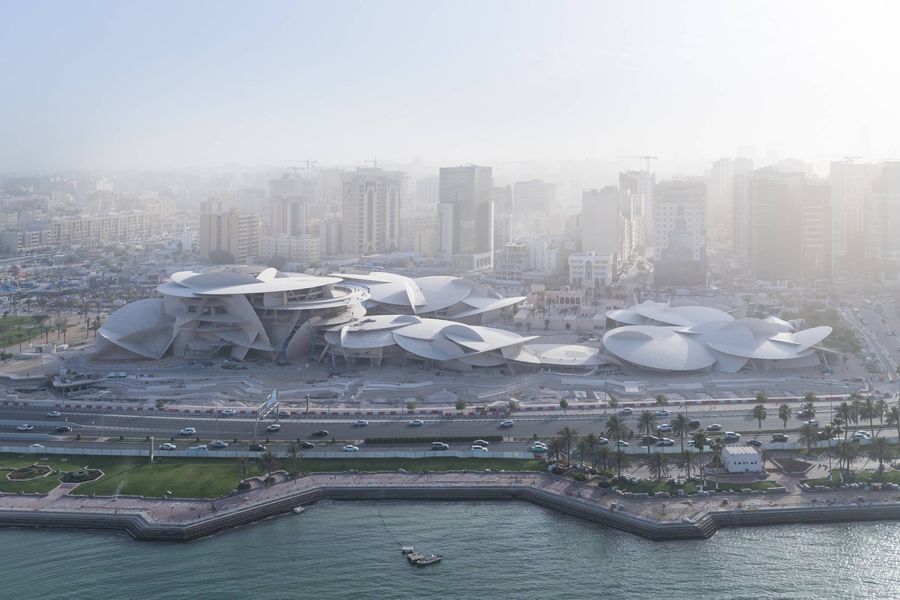
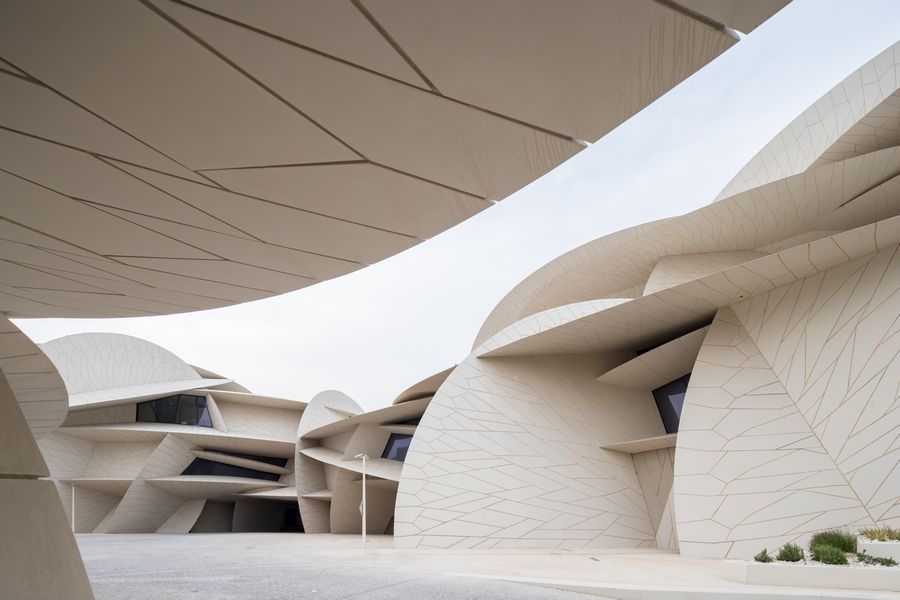
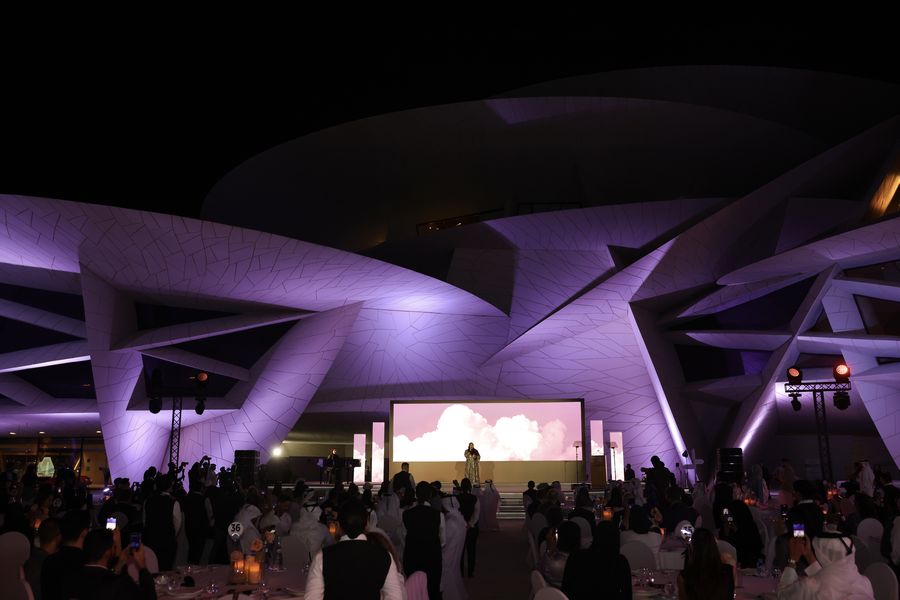
The trip began at the National Museum of Qatar (NMoQ), Jean Nouvel’s now-iconic building that unfolds like a desert rose at the edge of Doha’s Corniche. More than a museum, the NMoQ embodies the idea that a nation’s architecture can serve as its autobiography. Inside, Qatar’s past and present are narrated through oral histories, artefacts, and immersive installations that reconstruct the country’s transformation from a pearl-diving economy into one of the most dynamic cultural hubs in the Middle East.
To mark its 50th anniversary, the museum opened A Nation’s Legacy, A People’s Memory: Fifty Years Told—an exhibition that retraces its evolution since 1975, when Sheikh Khalifa Al Thani established the first national museum in the restored palace of Sheikh Abdullah bin Jassim Al Thani. The exhibition makes clear that Qatar’s story is not one of rupture but of transformation through continuity: the architecture that once served as a royal residence now shelters the narrative of a country reinventing itself through culture.
As Years of Culture CEO Mohammed Saad Al Rumaihi noted in his welcoming remarks, Evolution Nation is less a retrospective than an act of projection. It reflects on what cultural institutions have become in Qatar and what they can aspire to be. Museums here are not monuments to a completed history but dynamic laboratories where identity, technology, and diplomacy intersect. This vision resonates deeply across Latin America, a region that has long understood museums as spaces for self-definition amid rapid social change.
The Fragility of Nature, the Strength of Imagination
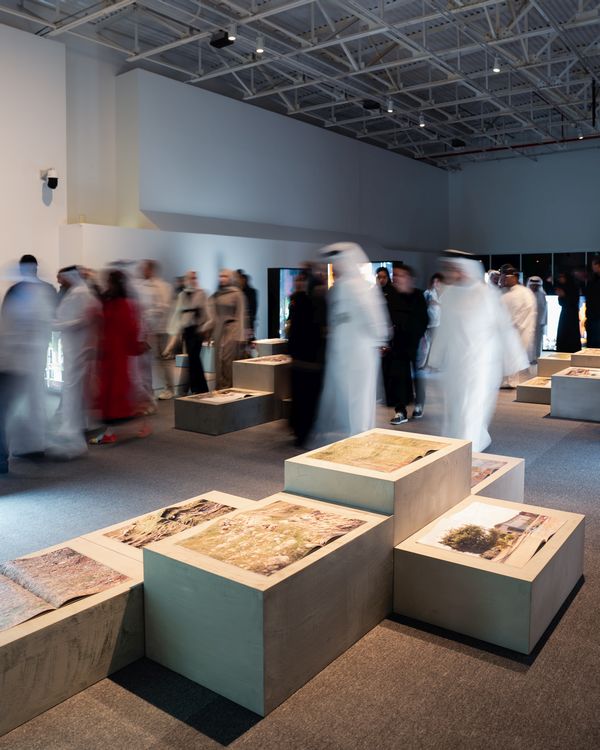
From the NMoQ’s sculptural corridors, the group moved to Lehmesa: Return by Moonlight, an exhibition devoted to the hawksbill turtle, an endangered species that returns each season to Qatar’s shores. Through an immersive scenography that combines scientific research, video installations, and sound, the exhibition explores the fragile equilibrium of marine ecosystems and the shared responsibility of preserving them.
What makes Lehmesa remarkable is its seamless integration of art, science, and ethics—an approach that mirrors a growing movement in contemporary art worldwide, where ecology becomes both subject and method. In Latin America, this environmental consciousness echoes debates around the Anthropocene and Indigenous epistemologies, positioning Qatar within a global conversation that transcends geography.
The turtle—“Lehmesa”—becomes a metaphor for cultural return: the cyclical movement between origin and migration, between the local and the global. In this sense, the exhibition’s inclusion in the Years of Culture framework also evokes the return of Latin American artists and thinkers to a dialogue with the Arab world, a connection that, though often forgotten, has deep historical roots in migration and exchange.
M7 and the Pulse of Creative Economies
If the National Museum tells Qatar’s story through heritage, M7—Qatar Museums’ hub for design and innovation—projects it into the future. Located in Msheireb Downtown Doha, M7 functions as an incubator for fashion, design, and creative entrepreneurship. Director Maha Ghanim Al Sulaiti introduced the space as “a laboratory of the imagination,” where education, mentorship, and experimentation merge to shape a new creative economy.
The exhibitions on view during the Years of Culture week reflect this multidimensional ethos. Threads of Impact, celebrating seven years of Fashion Trust Arabia (FTA), showcases more than eighty designers from across the MENA region, positioning Arab fashion as a terrain of both individual expression and collective identity. The show reveals how sartorial practices embody stories of resilience, memory, and aspiration—echoing Latin American fashion initiatives that reclaim textile traditions as acts of cultural sovereignty.
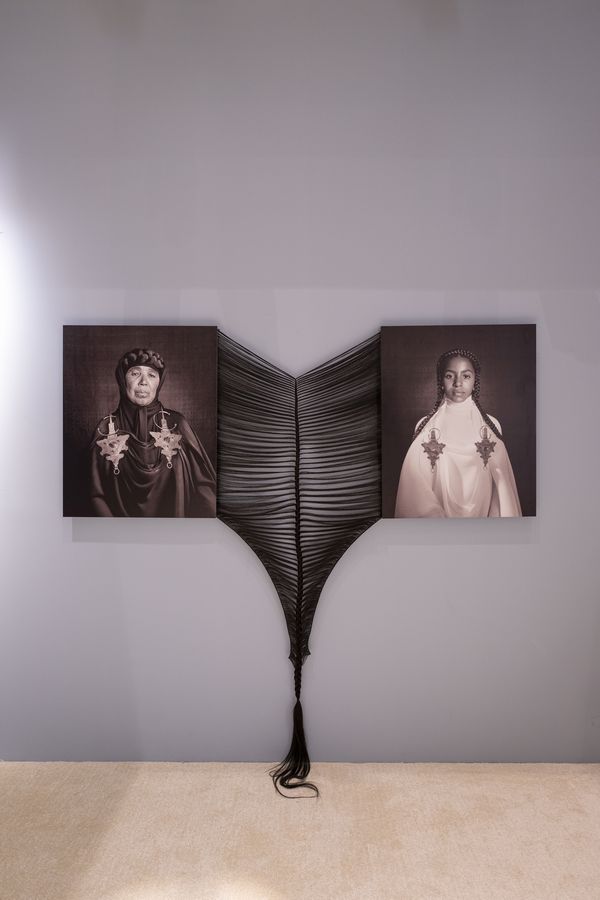
Another exhibition, Houbara Haven: A Chaumet Tiara, traces the collaboration between Qatari artist Aisha Alattiya and the Maison Chaumet and Alfardan Jewellery firms, translating national heritage into contemporary design. Equally noteworthy was Amazigh Hair Couture, a tribute to the Amazigh hair traditions of Morocco as living art forms. Through photographs, hair sculptures, and archival references, the exhibition recovers a visual language that colonial anthropology had exoticized, reformulating it as a feminist narrative of continuity and resistance.
Across these projects, one could read Qatar’s cultural agenda as a model of intersectionality: design as diplomacy, craftsmanship as pedagogy, and tradition as future-making. For Latin America—where art and design are also vehicles of emancipation—these dialogues invite reflection on how regional creative economies can thrive without losing sight of their cultural specificities.
Rethinking the Countryside
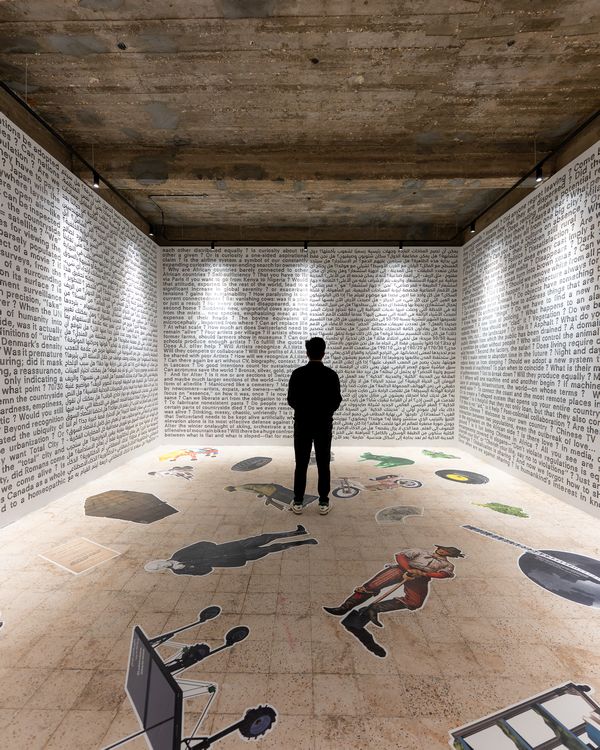
The following day brought a shift from the urban to the rural imagination. Countryside: A Place to Live, Not to Leave, an exhibition and manifesto developed by AMO (the think tank of Rem Koolhaas’s OMA) and Qatar Fund for Development, invites a radical reconsideration of the rural condition. Presented jointly by the National Museum of Qatar and the newly established Qatar Preparatory School for the Creative Industries, the project maps a vast transcontinental territory—from Africa to Mongolia—where the majority of humanity lives outside the city.
At first glance, this may seem remote from Latin American realities. Yet the exhibition’s critique of urban centralization resonates deeply with South American contexts, where rural and Indigenous communities face similar challenges of representation and sustainability. The project’s insistence that the countryside can be a site of innovation—not retreat—reframes the relationship between culture and development.
Later that afternoon, a visit to Richard Serra‘s East–West/West–East in the Brouq Nature Reserve translates these questions into a spatial experience. Four gigantic steel plates—each between 14 and almost 17 meters high—rise up in the Qatari desert, aligned on an east-west axis that stretches for almost a kilometer between gypsum plateaus.
The work unfolds as a silent intervention: it not only occupies the landscape but reshapes it, inviting a meditation on scale, topography, and orientation. In its presence, the desert ceases to appear empty and instead reads as a palimpsest of time and matter. In this sense, the piece—like much of Qatar’s public art program—articulates a philosophy in which landscape and culture are no longer parallel but tightly interwoven; an idea that resonates with Latin American ways of relating to a territory understood as possessing its own agency.
Global Conversations in Motion
By the third day, Doha had begun to reveal itself as a city of simultaneous narratives. At the Qatar Olympic and Sports Museum (3–2–1), the morning opened with a briefing on Art Basel Qatar 2026—a future event already shaping global expectations. Conversations between Art Basel CEO Noah Horowitz, Sheikha Reem Al Thani, and other cultural leaders outlined a vision for a new node in the global art fair circuit—one that, unlike its Western counterparts, will operate at the intersection of art, design, and urbanism.
The exhibition Sneakers Unboxed: Studio to Street, on view in the same museum, seemed to anticipate this convergence. Originating from London’s Design Museum, it traces the evolution of sneaker culture as a mirror of technological, social, and artistic transformations. Its presence in Doha underscores the permeability between global subcultures and institutional narratives—a tension familiar to Latin American art, where street aesthetics are becoming increasingly relevant within the art system.
Later, at QM Gallery Katara, The Rooted Nomad: M.F. Husain offered an immersive reading of the life and work of one of India’s most celebrated modernists, expanding on a curatorial approach first developed for his presentation at the Venice Biennale. The exhibition captured Husain’s restless mobility—his journeys across continents, mythologies, and artistic vocabularies. In Doha, the show found a fitting home: a city that, like Husain himself, thrives on movement and multiplicity.
In the afternoon, Hospitality Qatar 2025 brought together delegations from Argentina and Chile under the Years of Culture umbrella, focusing on the intersections of tourism, gastronomy, and creative technology. Here, the presence of Latin American voices was not merely symbolic. Panels and demonstrations explored how cultural exchange can generate new forms of economic collaboration, from sustainable design to AI-driven accessibility projects.
The day closed with the keynote marking Qatar Museums’ 20th Anniversary, delivered by H.E. Sheikha Al Mayassa bint Hamad bin Khalifa Al Thani. Her address reaffirmed what had become increasingly evident: Qatar’s commitment to building cultural infrastructure is not a strategy of prestige but of pedagogy—an effort to cultivate a society that learns from art, both locally and globally.
Thresholds and Flux
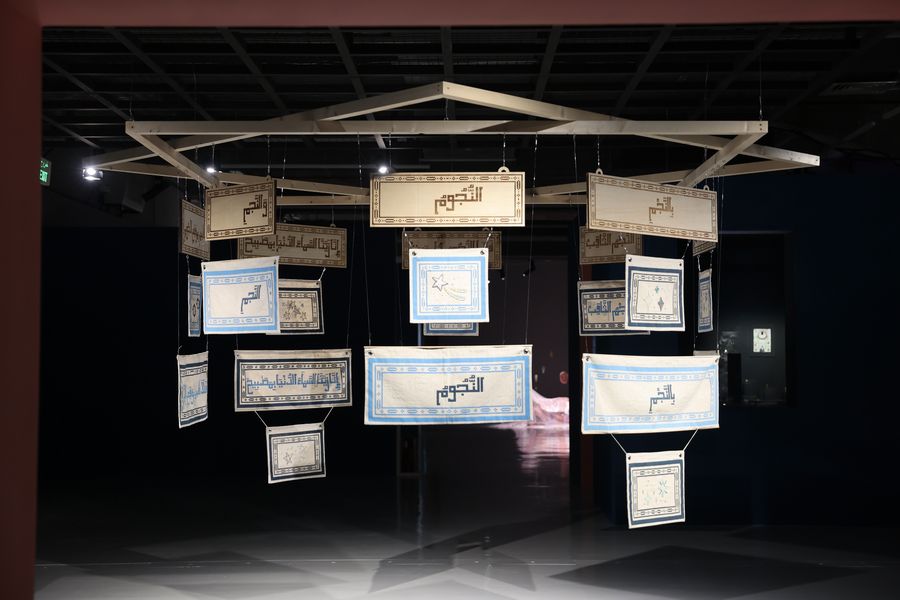
Our visit to Fire Station: Artists in Residence offered another perspective on Qatar’s creative ecosystem. Founded in 2015, the residency program has become a cornerstone of the country’s contemporary art scene. The exhibition Portals in Flux presented works by fifteen Qatar-based artists exploring the concept of thresholds—literal and metaphorical—as sites of transformation. Sound installations, tactile sculptures, and olfactory experiments invite viewers to inhabit the in-between: the space where perception shifts and new meanings emerge.
Portals in Flux evokes questions that resonate strongly across Latin America: How can residencies nurture translocal artistic practices? How do institutional frameworks negotiate the tension between the global and the situated? Fire Station’s model reflects an increasingly widespread approach across the Global South: placing the artist’s process—rather than the final outcome—at the heart of the practice.
Life Is Architecture
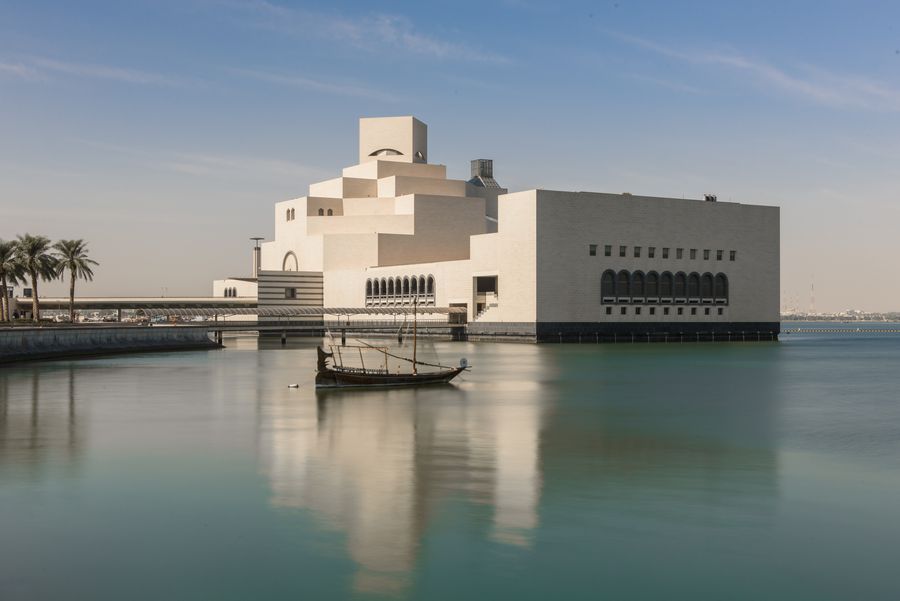
The itinerary’s final days were dedicated to the twin exhibitions on architect I.M. Pei at Al Riwaq and the Museum of Islamic Art (MIA). I.M. Pei: Life Is Architecture, organized in collaboration with M+ Hong Kong, is the first comprehensive retrospective of the architect’s work. Through sketches, models, and archival materials, it reconstructs Pei’s practice as an ongoing negotiation between East and West, tradition and modernity.
The companion exhibition, I.M. Pei and the Making of the Museum of Islamic Art: From Square to Octagon and Octagon to Circle, traced the conceptual genesis of Doha’s most emblematic building. For Pei, who designed the museum in dialogue with Islamic geometry and Gulf light, architecture was a form of philosophy—a pursuit of purity through form. Together, the two shows illustrated how modern architecture can serve as a medium of cultural translation.
At MIA Park, Rirkrit Tiravanija’s new installation untitled 2025 (no bread no ashes) extended that translation into the social realm. Reimagining the communal oven as a site of gathering and exchange, Tiravanija drew on Argentine artist Víctor Grippo’s 1972 performance in Buenos Aires, where bread became a metaphor for collective labor. The Doha installation invited visitors to bake and share bread from different cultures—a gesture of conviviality that connects the Arabian Gulf with Latin America’s own traditions of hospitality and resistance.
This moment of convergence —Tiravanija’s presence in Doha, the enduring resonance of Grippo, and Chile and Argentina joining Qatar as cultural partners— encapsulates the spirit of Years of Culture: a program that understands culture not as a conclusive gesture but as a space of transit and transformation, where histories migrate and imaginaries unfold beyond their geographies of origin.

También te puede interesar

UN SEMILLERO DE FILANTROPÍA PARA EL ARTE
En su séptimo aniversario, Díaz nos cuenta cómo han ido construyendo una comunidad en la que conviven filántropos y amantes del arte con artistas, galeristas y otros actores del mundo cultural. También nos explica...

COLECCIÓN ENGEL ENTRE GANADORES DE PREMIOS AL COLECCIONISMO DE ARCO
La Fundación ARCO, impulsada por IFEMA, ha otorgado los Premios “A” al Coleccionismo, que este año ha reconocido seis colecciones, entre ellas la Colección Engel, que actualmente cuenta con más de 400 obras icónicas...
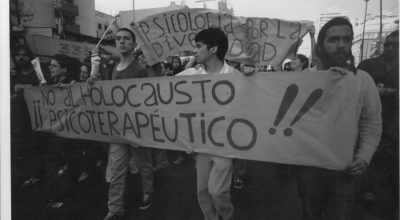
ANARCHIVO SIDA EXPLORA LA DIMENSIÓN DE LA CRISIS VIH/SIDA EN ESPAÑA Y CHILE
Bajo el nombre de Anarchivo Sida, el colectivo Equipo re (Aimar Arriola, Nancy Garín y Linda Valdés) ha desarrollado un trabajo de investigación y producción sobre la dimensión cultural y social de la continuada...