

99 QUESTIONS GATHERING: ON THE POETICS OF LOOSE ENDS
The 99 Questions Gathering: On the Poetics of Loose Ends, held at the Humboldt Forum from October 25 to November 2, 2024, combined exhibition and conference formats into a dynamic platform for exploring art, cosmological knowledge, and technology. The gathering’s title encapsulated its essence—an ongoing narrative woven from fragments and open questions, evolving through participant interactions.
The gathering functioned as a polyphonic chorus, where every voice was given space to resonate and interact in harmony. This embodied the idea that there is no singular truth, but rather a web of interconnected stories, ideas, and lived experiences. Curator Michael Dieminger envisioned the Humboldt Forum Museum as a living organism, continuously evolving with the stories and voices of both human and more-than-human participants. «This gathering is not about definitive answers,» he explained, «but about understanding loose ends as starting points for new thoughts and encounters.» This approach challenged the museum’s traditional drive to categorize objects, cultures, and knowledge.
The gathering engaged in a network of loosely tied knots—each knot a thought, each knot a new possibility, in constant movement with others. In these open ends, in the spaces between certainty and definition, the life of knowledge emerged. Participants were not passive observers, but active contributors to a network of knowledge shaped through interactive installations, workshops, and performances. This open, poetic network fostered a diverse, polyphonic atmosphere that challenged traditional hierarchies and interwove perspectives from a variety of cultures.
Inspired by the concept of the pluriverse, the gathering allowed diverse cosmologies and epistemologies to coexist. Drawing on Édouard Glissant’s question, “How do we move from periphery to periphery, in a world where many worlds coexist?” the gathering created a network that connected peripheral voices in dialogue, bypassing the need for a central core.
Reimagining the Museum: Open Ends as Spaces of Possibility
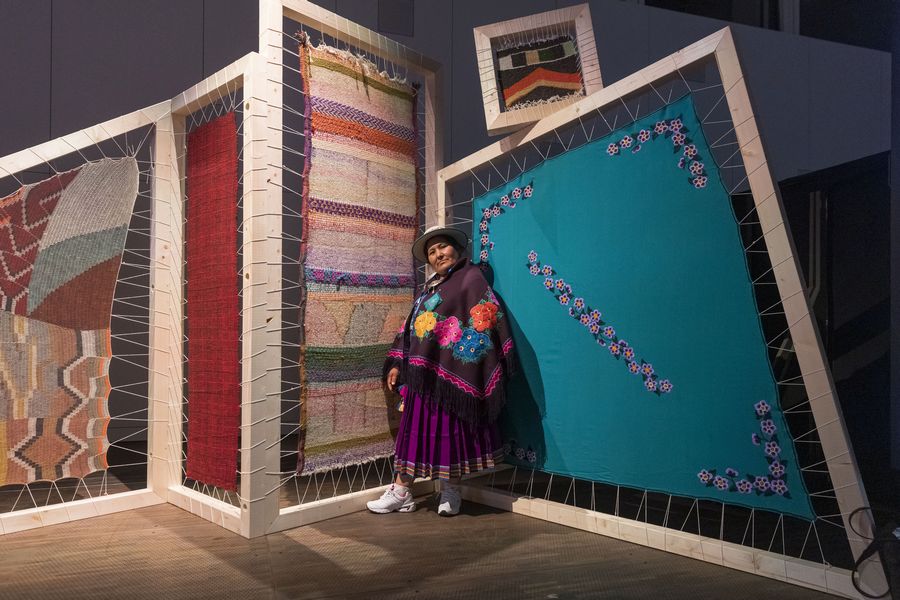
Focusing on the concept of open ends, the gathering reimagined the Humboldt Forum as a space where uncertainty and incompleteness could foster new connections and forms of knowledge. Open ends served as both a methodological and philosophical lens, encouraging participants to embrace ambiguity and resist fixed narratives or hierarchical systems. Drawing from Martin Savranski’s exploration of speculative thinking, these open ends were framed as productive sites for negotiation and transformation, enabling the emergence of perspectives often overlooked or marginalized.
This approach transformed the museum into a dynamic, co-creative space, prioritizing the unfinished and the interconnected. By emphasizing complexity and the rejection of extractivist logics, the gathering prompted participants to reconsider the museum’s role—not as a space of finality, but as one of continual becoming.
The gathering’s focus on decanonization and relational curatorial practices shifted the Humboldt Forum from a static, object-focused site to a «relational infrastructure.» The museum became a space where the symbolic worlds of participating communities were integrated, promoting knowledge practices that moved beyond exoticization and extractivism. This relational model turned the museum into an interface for exchange, rooted in shared experiences and dynamic perspectives.
Research Nodes: Locally Situated Knowledge Systems
The 99 Questions Gathering arose from two years of engagement with what are referred to as research nodes—locally situated approaches that considered different scales, temporalities, and interconnections. These nodes dedicated time to diverse localities and fostered cross-pollination, shaping the polyphonic program with contributions from feminist, Indigenous, Afro, and Afro-Diasporic cosmologies.
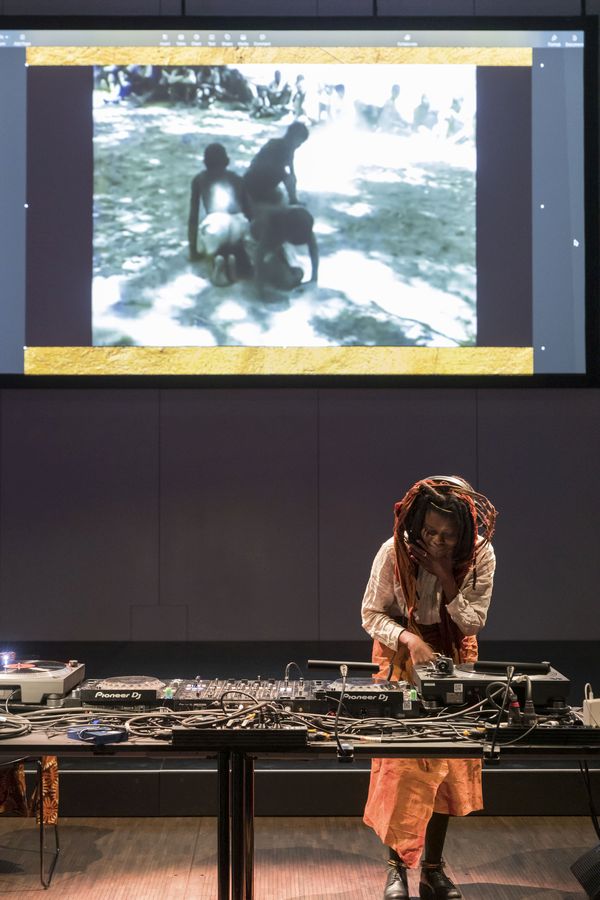
One key research node, South-to-South: A Meeting on African and Afro-Diasporic Technologies, explored a decolonial conception of technology grounded in African and Afro-Diasporic communities’ deep connection to the Earth. Here, technology was seen as a lived practice that nurtures and protects both community and habitat. The program highlighted weaving as a form of resistance and framed Afro and Afro-Diasporic technologies as decolonial alternatives to Western concepts of technology and art. This non-extractive, reciprocal approach is built upon shared knowledge systems and collective creation.
The cosmological ties between Brazil and the Congo enabled a transcontinental exchange, emphasizing the cultural and spiritual bonds between these regions, creating a space for ideas, stories, and practices to flow together. This South-to-South dialogue, curated by Sara Garzón and Dieminger in collaboration with Pivô Art and Research in Brazil and the Centre d’art Waza in the Democratic Republic of Congo, nurtured solidarity and mutual enrichment.
At the core of the gathering’s curatorial approach was facilitating exchanges between Global South communities, rooted in local realities and brought into Western museum contexts. This situated curatorial practice honored the knowledge and traditions of these communities, positioning them as central to the discourse.
By moving beyond Western frames, the gathering created a space defined by layered dialogues responsive to local knowledge systems. Through inter-periphery dialogue, it proposed a museological model that connects geographic and cultural boundaries, offering new standards for relational and inclusive practices.
Engaging with the ideas of quilombo leader Nêgo Bispo, the gathering embraced «border thinking,» an approach that respects different ways of life and thought without erasing their distinctiveness. Borders were reconceptualized as fluid and permeable, facilitating exchanges that celebrate diversity while resisting assimilation.
Deconstructing Binary Logics: Art, Technology, and Innovation
The gathering critiqued the binary logic that categorizes urban art as «high-value» while relegating rural, often women’s work to the realm of «folklore.» Similarly, it questioned the divide between «high-tech» and «low-tech practices,» challenging the conventional view that technologies from the Global North are «advanced,» while Indigenous or community-based technologies are dismissed as «primitive.»
By highlighting innovation within diverse cultural contexts, the gathering presented works by participating artists as situated knowledge systems, resisting reductive classifications of art and technology. These works were framed as contemporary art, rather than ethnographic or craft objects.
Inspired by the Andean philosophy of Crianza Mutua or «mutual care,» the gathering treated knowledge as a living system to be nurtured, not extracted. This principle, central to the Textiles Semillas node, framed knowledge production as reciprocal and sustainable, mirroring the care practices intrinsic to participating communities.
By embedding care into its methodologies, the gathering cultivated an ethos of collective knowledge production that prioritized mutual respect, shared stewardship, and the co-creation of alternative futures.
Textiles Semillas: A Living Project of Weaving and Cultural Bridging
The works on view in this exhibition intricately interlaced themes of memory, transformation, and cultural continuity, inviting viewers into a dynamic dialogue between traditions and contemporary expressions of identity and resistance.
The Textiles Semillas research node centered on the act of weaving as both a material and symbolic practice of resistance, care, and connection. Rooted in feminist and Indigenous cosmologies, this project envisioned textiles as a living archive—an ongoing process of storytelling, memory-making, and bridge-building across cultures and generations.
Weaving was approached not only as a craft but as a methodology for cultivating reciprocal relationships, interweaving threads of ancestral knowledge with contemporary practices. This living archive is maintained and shared across generations, fostering a collective narrative that transcends time and place, weaving a tapestry of both history and future possibilities.
The project emphasized the transformative potential of textiles to create networks of solidarity and understanding while resisting extractive and commodifying systems. Collaborations within Textiles Semillas brought together diverse voices, bridging traditional and experimental techniques to create a dynamic space of intersection and innovation. This collective act of weaving served as a metaphor for building relationships, embracing a pluriverse of knowledge systems, and fostering a shared responsibility toward cultural preservation and innovation.
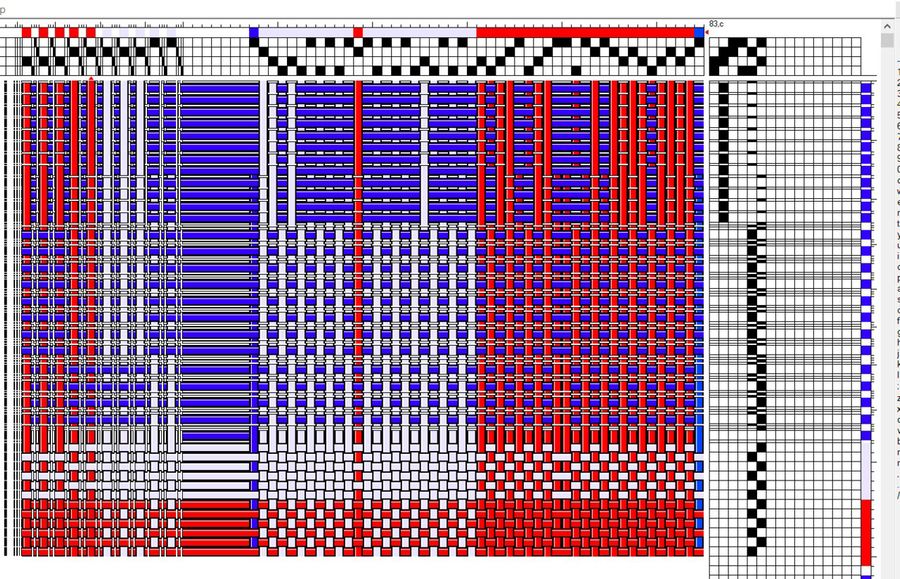
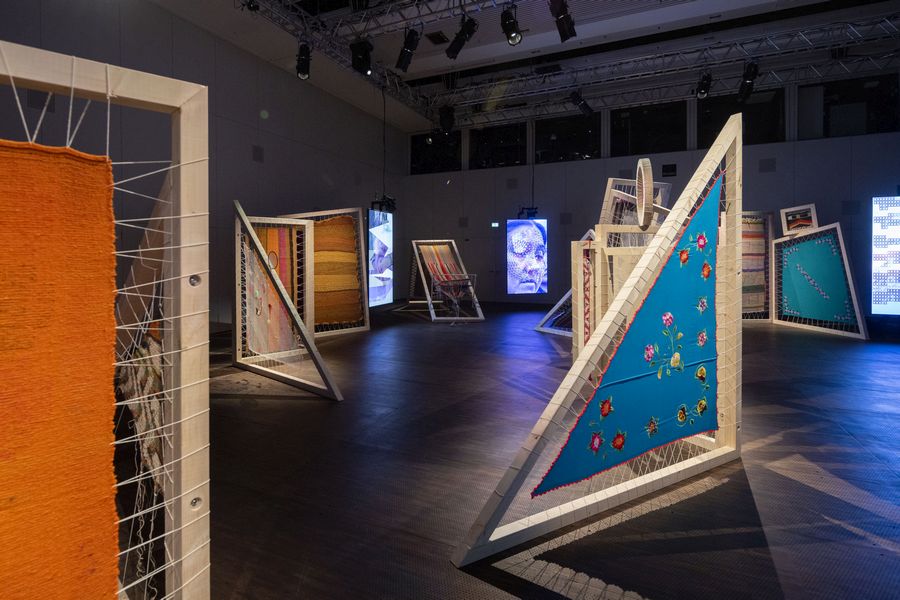
As a result, La Crecida is a wooden installation composed of frames displaying textiles created by the twelve weaving groups that form Unión Textiles Semillas in northwestern Argentina. The textiles, crafted from llama fiber, chaguar, sheep wool, cotton, and industrial yarns, feature natural dyes sourced from rhubarb, carob tree sap, walnut, eucalyptus, yerba mate, onion, chinchilla, cochineal, beetroot, jarilla, herbs, and artificial dyes. Techniques include knitting, ground looms, backstrap looms, frame looms, needle lace, braiding, and embroidery, reflecting the diverse heritage of the communities involved.
Complementing the textile display is an audiovisual triptych created by artist Alina Bardavid, featuring documentary footage and digital animation. This vertical-format video installation captures the legacies and knowledge of the weaver communities, highlighting both the continuity and transformation of weaving traditions. By integrating visual storytelling with material artistry, Bardavid’s work adds a dynamic layer to the exhibit, inviting viewers to engage with the relationship between tradition and innovation.
Designed by architect Paulo Vera in collaboration with artist Alejandra Mizrahi, the wooden structure reflects the mountainous horizon and the frames traditionally used in weaving. Typically hidden in the weaving process, these frames are left visible in La Crecida to emphasize the transitionary nature of weaving as both a process and a finished object. This design choice invites viewers to appreciate not only the final textiles but also their origins and construction, reinforcing the notion that weaving is a living, ever-evolving practice.
The structure serves as a dynamic display for textiles specially created for this exhibition by the twelve weaving groups in 2024. It transforms the gallery into a living archive of shared memory, where material and narrative coexist, offering a tactile and visual experience of cultural continuity. Each textile tells its own story, while also contributing to the collective story of Unión Textiles Semillas.
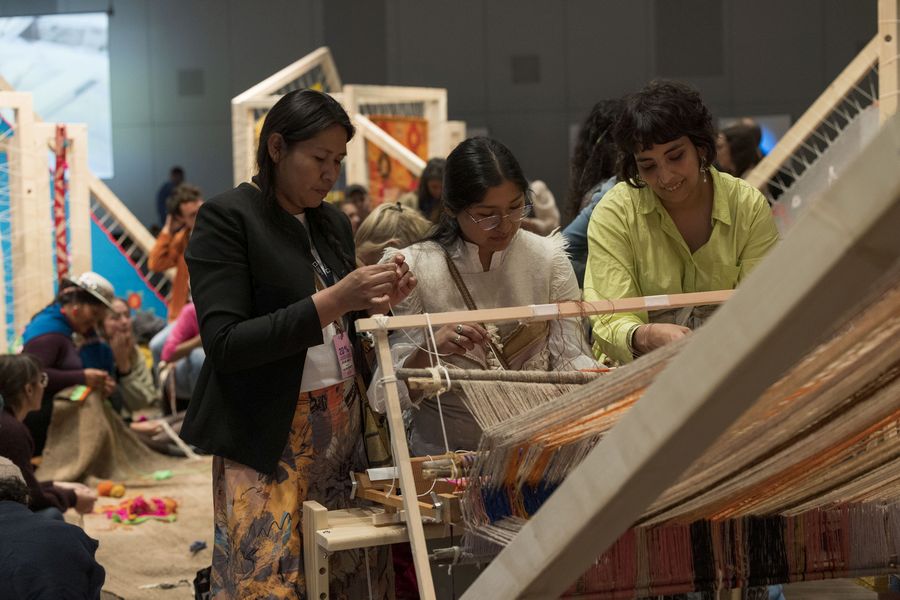
Unión Textiles Semillas unites twelve weaving groups and an intercultural research collective known as Sembradoras (Sowers). Since its inception in 2023, the initiative has connected women’s organizations from rural and Indigenous communities across northwestern Argentina. Coordinated by curators and artists Andrei Fernández and Alejandra Mizrahi, the project fosters collective creation, blending memories, struggles, and artistic practices to celebrate the growth that emerges from collaboration.
Participating groups include Achalay Tejidos (Niogasta, Simoca, Tucumán); Cooperativa La Pachamama (Amaicha del Valle, Tucumán); Flor en Piedra (Caspalá, Jujuy); Flor de Altea (Santa Ana, Jujuy); Randeras de El Cercado (Monteros, Tucumán); Silät (Santa Victoria Este, Salta); Tejedoras de Quilmes (Quilmes, Tucumán); Tejedores Andinos (Huacalera, Jujuy); Teleras de Atamisqui (Atamisqui, Santiago del Estero); Teleras de Huilla Catina (Huilla Catina, Santiago del Estero); Tinku Kamayu (Santa María, Catamarca); Warmipura (Tafí del Valle, Tucumán).
Unión Textiles Semillas has participated in key cultural events, including Textile Art Day at the Museum of Latin American Art of Buenos Aires (MALBA), within Cecilia Vicuña’s exhibition Dreaming Water; the Cantando Bajito exhibition series at the Ford Foundation Gallery in New York; and a residency at the URRA Project in Buenos Aires. Through these platforms, the project has not only showcased its artistic practices but has also challenged dominant narratives surrounding craft, weaving, and gender.
Unión Textiles Semillas represents more than an artistic project; it is a platform for rethinking the role of craft as a cultural and political act. Through La Crecida and other initiatives, the union challenges extractivist narratives by highlighting the resilience, artistry, and histories embedded in women’s weaving traditions. It affirms the museum as a relational space, where the interplay of diverse perspectives can foster new forms of understanding and creation.
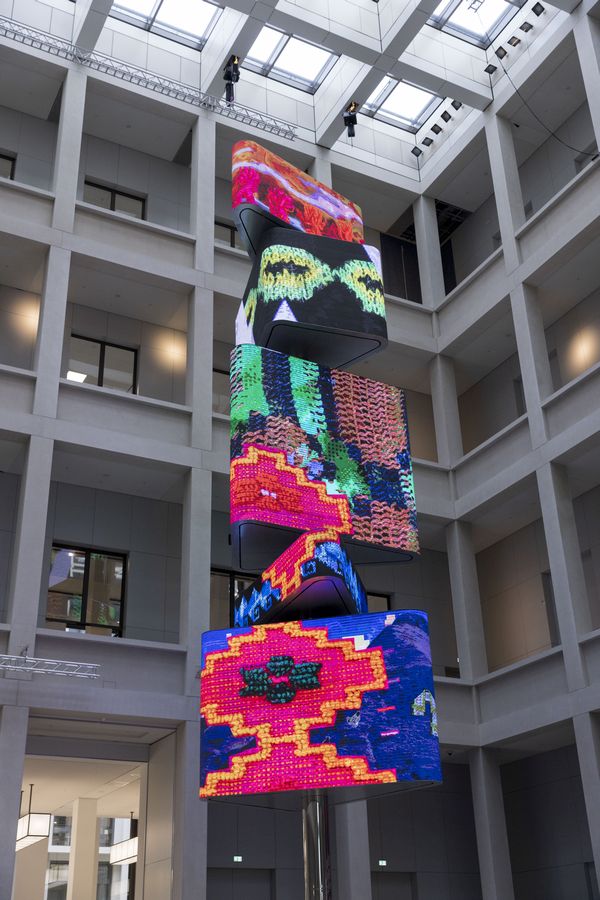
biarritzzz (b. 1994, Fortaleza; lives and works in Recife, Brazil) is an anti-disciplinary, transmedia artist whose work explores languages, codes, and media. Her practice emphasizes magic and low resolution as counter-narratives in the ongoing cosmological dispute of realities.
Her piece El sueño del Telar que durmió por la tarde (The Dream of the Loom That Slept in the Afternoon) is a visual chant carried by the wind—images that move, dance, and breathe as if viewed with closed eyes. The work envisions a dialogue between machines, the natural landscape, and a distant dream, examining the intersection of traditional and modern practices.
The piece begins with a question: How might a traditional loom describe its experience after generations of use by weavers living amidst towering mountains? How might these sensations translate into an imagined narrative—one that is lost to time yet revived through contemporary vision?
Rooted in the belief that there are no hierarchies among technologies (a microchip is as technological as a manioc sieve, both tools designed to meet human needs), biarritzzz imagines the loom telling its story as though it were a member of Unión Textiles Semillas.
The narrative starts at the bottom of the Kosmograf and spirals upwards, with each layer playing its part in the cosmos: first, the inner-earth fire cooks life, then the surface waters refresh the land with their translucent movements; from the sea, the mountains rise, providing a monumental backdrop for this everyday dance; in the sky, luminous bodies and stars flicker and fall in a constant loop; and, ultimately, the sky meets the earth with fire, melting everything once again, in an eternal cycle.
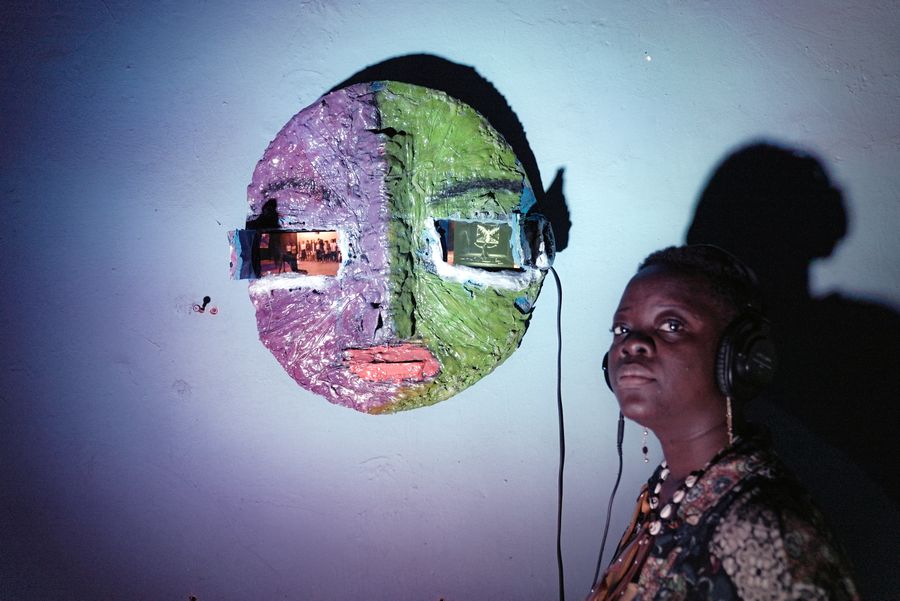
Sara Ndele, a visual artist from Kinshasa, explores themes of memory, roots, and cultural education within the Yombe tribe of Kongo Central. Her work reinterprets Yombe masks through innovative techniques, particularly her signature “Matsuela” (tears), which uses melted plastic as a metaphor for resilience and rebuilding amidst sorrow.
Her multimedia installation, Tell Me the Story, combines six masks, plastic chairs, and old smartphones to create a poetic dialogue between tradition and modernity. It draws from Africa’s oral storytelling tradition, addressing its potential loss in the face of modernization. By transforming discarded materials like broken plastic chairs into sculptural forms, Ndele symbolizes Africa’s wounds, fragmentation, and the potential for healing through fire as a medium of transformation.
Each mask in the installation is paired with a smartphone displaying looping video performances, weaving narratives that range from personal (e.g., Walé, reflecting on postnatal practices) to spiritual (e.g., Yemanja, honoring the Yoruba water goddess). Other masks—such as Sentinel, Dieu Dimosi (One Eye), and Decision—confront themes of spiritual authority and reclaim lost histories.
Through Tell Me the Story, Ndele not only preserves cultural memory but also invites renewal and collective healing. The installation reimagines fragmented histories, offering a space to reconnect and piece together Africa’s shared narrative.
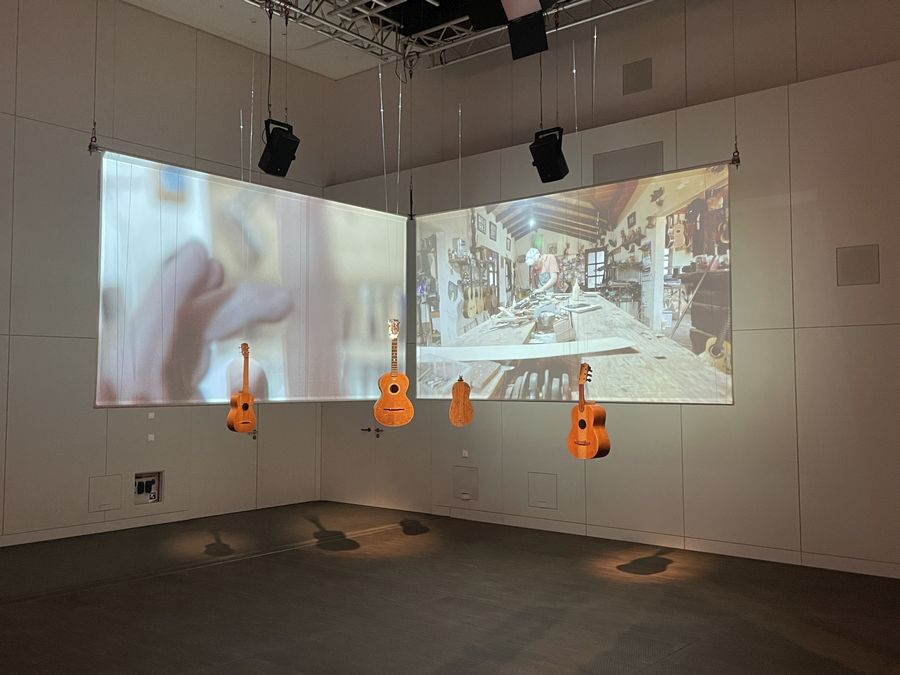
Miguel Buenrostro (b. 1984, Tijuana, Mexico) is an artist and filmmaker based in Berlin, whose work explores the intersections of art, territory, and the sonic dimensions of border spaces. His practice encompasses cinema and sound-based interventions in public spaces, often focusing on themes of migration, borders, and the sociopolitical dynamics of the Americas. Buenrostro co-founded Nuevo Norte, a workshop engaging local initiatives to investigate the politics of migration and neoliberalism through creative practices.
A recurring theme in Buenrostro’s work is the diasporic journey of musical instruments, particularly the guitars crafted in Paracho, Michoacán—a region renowned for its luthiery tradition. These instruments, often associated with migrant musicians, symbolize the intersection of craft, tradition, and transnational movement.
In Conocimiento – Habilidad – Espíritu (Knowledge – Skill – Spirit), Buenrostro collaborates with Agustín and Enrique Enríquez, a family of luthiers from Paracho. The project combines string instruments with visual and sonic exercises that document the workshop’s history and craftsmanship. The installation features recordings of the instrument-making process—scraping, cutting, and carving—interwoven with the music that accompanies the luthiers’ work and the sounds of the instruments themselves. This layered soundscape reveals the tacit knowledge and embodied skill inherent in their craft.
Program Highlights
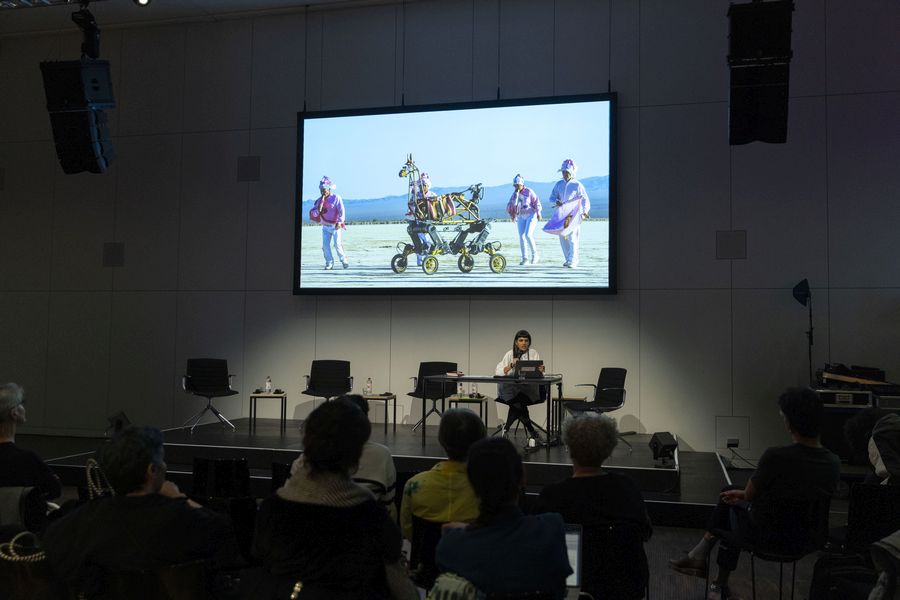
The Infrastructures for Post-Extractivist Futures roundtable opened the event with a critical exploration of extractivism in cultural institutions. Speakers proposed alternative models for museums and institutions rooted in diversity, relationships, and non-extractivist principles. Ba Taonga Julia Kaunda-Kaseka emphasized the role of local institutions in countering Western museology, while Andrei Fernandez highlighted the decolonial practices of Textiles Semillas and the importance of local economies in the global art context. Moderated by Jean Kamba, the session stressed the urgency of structural change to reimagine museums as relational spaces, rather than sites of exoticization.
In his talk From Curator to Kirata: Toward a Non-Extractivist Curatorial Practice, Patrick Mudekereza redefined curatorial roles through the concept of Kirata, advocating for a decolonial, community-centered approach to museum practices. His insights provided a refreshing perspective on the museum as a platform for co-creating knowledge in collaboration with communities, rather than merely extracting it from them.
Philosopher Martin Savranski, in The Tangled Planetary, reflected on the theme of loose ends, advocating for knowledge that embraces complexity and relationships. His talk previewed his forthcoming essay on the growth of knowledge through interconnected perspectives.
The Contar la Tela workshop by Unión Textiles Semillasimmersed participants in traditional weaving techniques of indigenous communities in northern Argentina, connecting these practices to acts of cultural resistance and self-determination. The session culminated in an interactive installation, La Crecida, and a collective ceremony symbolizing growth and interconnectedness.
In The Singing of Machines: Intelligences, Technologies, and Cosmic Connections roundtable, curator Sara Garzón led a discussion on more-than-human intelligences and cosmic connections that extend the boundaries of human understanding. Paula Gaetano Adi explored robotics as a tool for planetary liberation and resistance, Elisa Balmaceda examined technology’s influence on perception, and Oscar Santillán discussed planetary and decentralized intelligences through his work What is it like to be Earth?. Together, the panel expanded the boundaries of knowledge to include technological, cosmic, and more-than-human networks.

También te puede interesar
La Apuesta de la Xiii Bienal de Cuenca
Las obras seleccionadas para la Bienal arrojaron propuestas ampliamente heterogéneas, diversas interpretaciones en su relación con la tesis curatorial, aunque jugando siempre con una noción de temporalidad que se diferencia de aquello que Giacomo...
BRUMA. PRÁCTICAS DE RESIDIR
La residencia al sur de Chile, que celebra cinco años de la participación chilena en el festival ARS Electrónica, incluyó a artistas, académicos y gestores culturales.
UN NUEVO PACTO DIGITAL. LATINOAMÉRICA EN EL FESTIVAL ARS ELECTRONICA 2021
¿Para qué queremos utilizar las nuevas tecnologías y cómo? ¿Cómo los artistas, científicos y activistas pueden usar el arte, la tecnología y el conocimiento científico y social situado para enfrentar de manera eficiente y...