
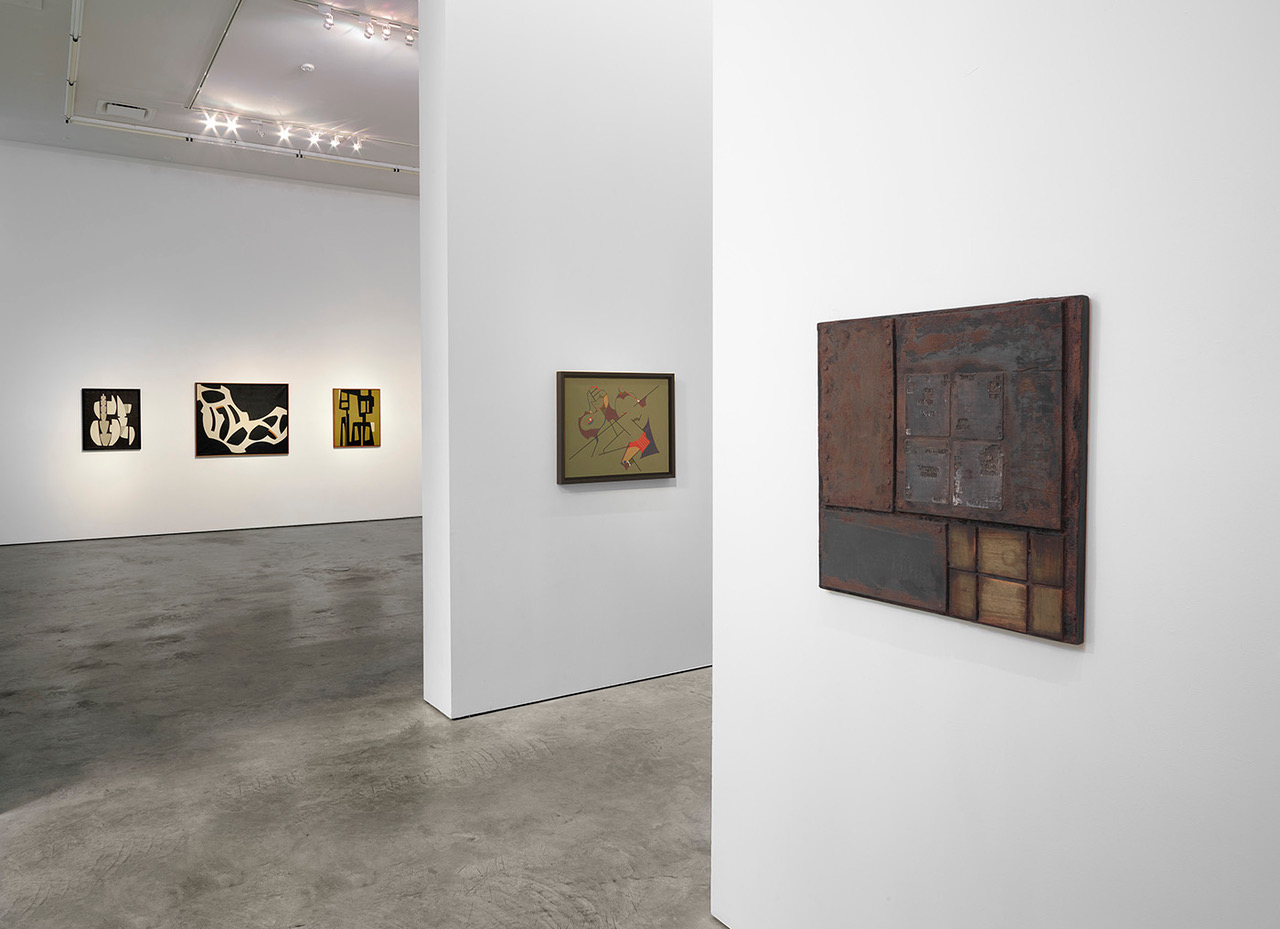
ELSA GRAMCKO: THE INVISIBLE PLOT OF THINGS
By Gabriela Rangel | Curator
Elsa Gramcko was born in 1925 in Puerto Cabello, the largest port in Venezuela. Raised by a polyglot family, passionate about the arts and supportive of her intellectual development, Gramcko moved to Caracas with her parents and her sister Ida, a close interlocutor who would herself become an important poet. Gramcko attended courses of philosophy at the Universidad Central de Venezuela. She married Carlos Puche, a modernist photographer, and shortly thereafter started to audit studio art classes at the Escuela de Artes Plásticas y Aplicadas.
In 1954, Elsa Gramcko completed a series of oil paintings that blended surrealism and geometric abstraction with a unique machinic sensibility. These groundbreaking early works caught the attention of critics, granting her invitations to a group show at the Museum of Fine Arts, Houston and a solo show at the Pan-American Union in Washington, D.C. The dynamic chromatic palette that Gramcko used in her first works evolved into larger canvases of tubular shapes composed using a few complementary hues on black backgrounds. By the end of the 1950s, she developed new works characterized by elegant, biomorphic shapes with a strong graphic inflection that positioned her as a singular artist among her peers.

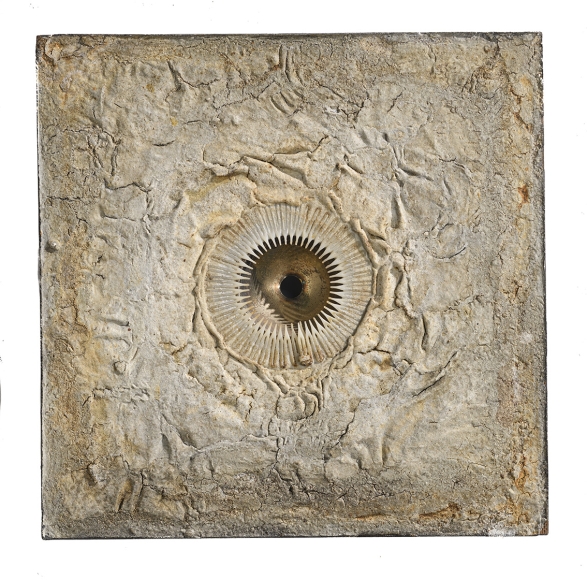


Gramcko kept a non-partisan position in relation to local avant-garde groups that promoted abstraction as a universal expression aligned to the country’s process of modernization. An avid reader of surrealist poetry, German existentialist philosophy, and Carl Jung’s meditations on memory and consciousness, Gramcko explored different avenues of painterly abstraction as a new path to humanism. At the beginning of the 1960s, a period marked by political unrest in Venezuela, Gramcko was also shaken by her sister’s mental breakdown. She produced a series of dense, textured, and rust-inflected metallic paintings.
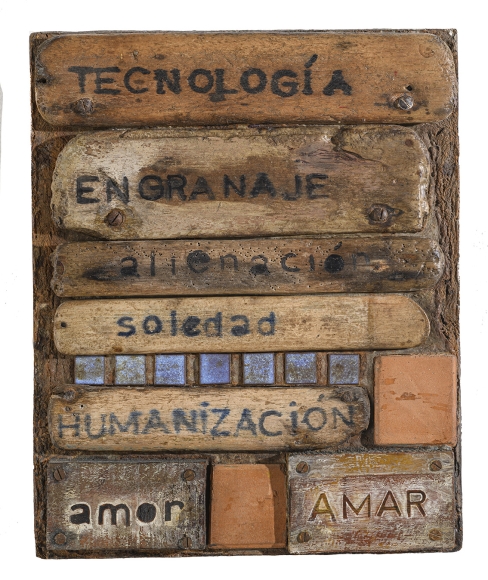
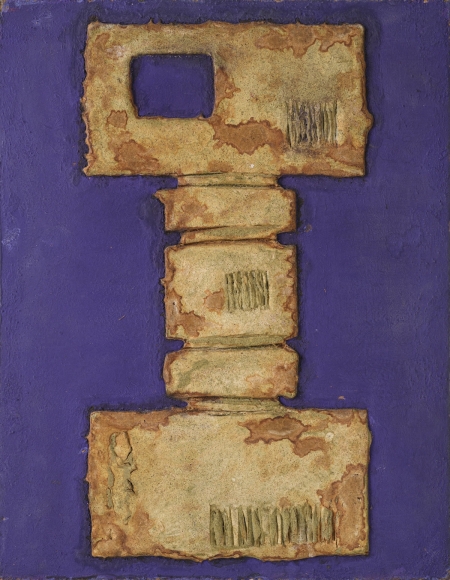
Subsequent works incorporated new materials such as sand, glue, and cement, shifting her aesthetic gravity toward assemblage. Although Gramcko never identified as an informalist artist, her use of additive and conglomerate techniques demonstrated an affinity with the tendency, especially in her paintings on windows and doors, and in her three-dimensional collages and assemblages, which included medium-scale sculptures on painted and welded steel. Toward the end of her career, Gramcko recalibrated assemblage using recycled wooden boards and planks on which she combined words and numbers.
Through her explorations of things, which Gramcko differentiated from everyday objects, she produced mysterious and beautiful works in which distant realities (carried by things) make a strong image composed by our minds with an emotional impact. This exhibition is an effort to present her contribution to postwar global modernism, outside the doctrinaire limitations of the avant-garde and beyond the binary distinction between abstraction and figuration.


ELSA GRAMCKO: THE INVISIBLE PLOT OF THINGS
Sicardi Ayers Bacino, 1506 W. Alabama St., Houston, Texas, USA
May 13 – July 2, 2022
The exhibition is presented in partnership with James Cohan, New York.

También te puede interesar

TERAPIA. CÓMO EL PSICOANÁLISIS HA INFLUIDO EN EL ARTE ARGENTINO
Buenos Aires se convierte en un epicentro sobre el tema para la región, pero no todo el país, al menos en las primeras décadas. Así, no podría afirmarse que el psicoanálisis es parte de...
LUCÍA PIZZANI: RITES, SEEDS AND REFUGE
Trabajando con una diversidad de medios que incluyen la escultura, la instalación y el collage, el mundo creativo de Lucía Pizzani teje una danza íntima entre personas, tierra y plantas. Su actual exposición individual...
SUWON LEE: BODY, SPACE, TIME, LIGHT
Suwon Lee ha desarrollado un cuerpo de trabajo en el que esa exterioridad –del mundo– y la interioridad del ser –del suyo– se integran. En este sentido, sus paisajes siderales provocan una aterradora fascinación...