
GUADALUPE ROSALES. TZAHUALLI: MI MEMORIA EN TU REFLEJO
Guadalupe Rosales (b. 1980, Los Angeles) is a multidisciplinary artist and educator whose work bridges personal memory, community storytelling, and historical counter-narratives. Best known for her social media–based archival projects Veteranas and Rucas and Map Pointz, Rosales has spent the last decade creating participatory platforms that recover and reframe the erased or distorted histories of Chicanx/Latinx youth in Southern California. Rooted in collaborative methodologies and deeply informed by lived experience, her projects draw from vernacular photography, ephemera, and oral memory to construct new modes of collective visibility—outside the limits of institutional frameworks.
Working across sculpture, sound, drawing, video, and installation, Rosales creates immersive environments that activate memory as a sensorial and embodied experience. Her work centers the body as both archive and witness, proposing it as a site where emotion, trauma, joy, and history converge.
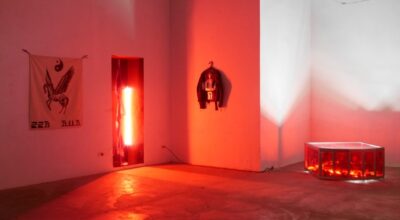
In Tzahualli: Mi memoria en tu reflejo, currently on view at the Palm Springs Art Museum, Rosales interweaves her personal archive with community contributions to reflect on the affective dimensions of memory and cultural survival. Spanning the Chicano youth subcultures of 1990s Los Angeles—rave scenes, backyard parties, lowrider culture, and teenage bedrooms—the exhibition challenges linear narratives and institutional omissions. Through photographs, flyers, videos, sculptures, and participatory installations, Rosales conjures a tzahualli—a Nahuatl word she invokes as a metaphor for a web or veil—where memory is collective, queer, nonlinear, and alive.
Curated by Christine Vendredi and Luisa Heredia, and presented as part of the museum’s Q+ Art and Historias initiatives, this exhibition not only preserves subcultural histories but insists on their enduring presence and vitality.
Diverging Narratives
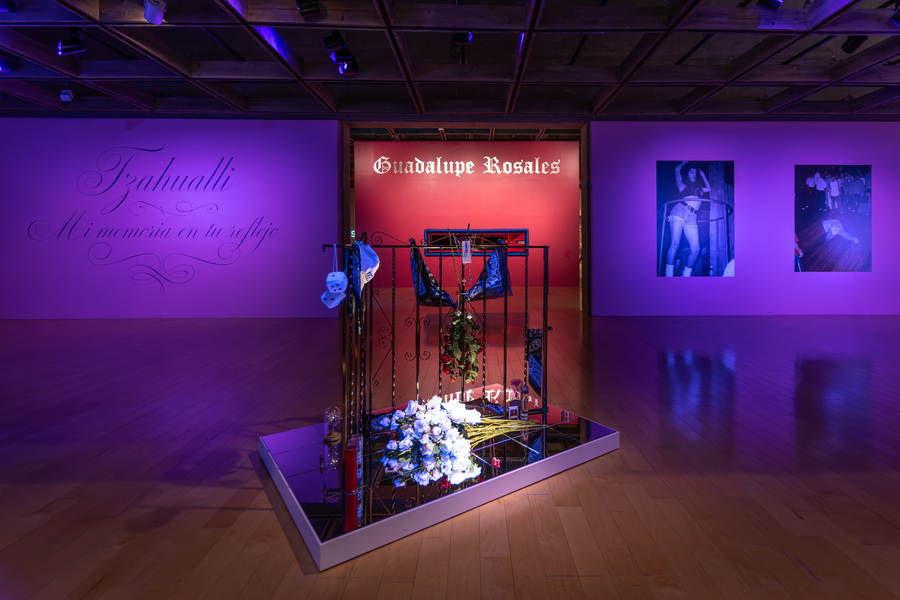
The exhibition opens with a quiet gesture of reverence: a shrine-like installation assembled with votive candles, silk flowers, bandanas, and a house-like metal fence, all resting atop a polished chrome base. Part memorial, part altar, the piece evokes both personal mourning and collective remembrance. The inclusion of the fence—reminiscent of those found around patios or front yards in working-class neighborhoods—grounds the shrine in a domestic vernacular. It signals the threshold between private and public life, suggesting how acts of remembrance and spiritual resistance often unfold in everyday spaces.
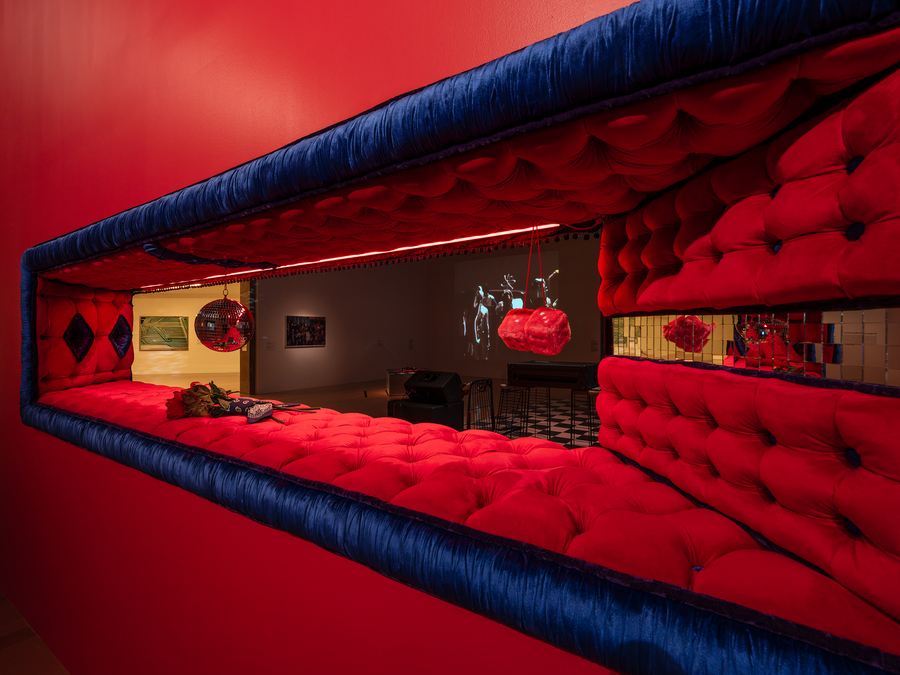
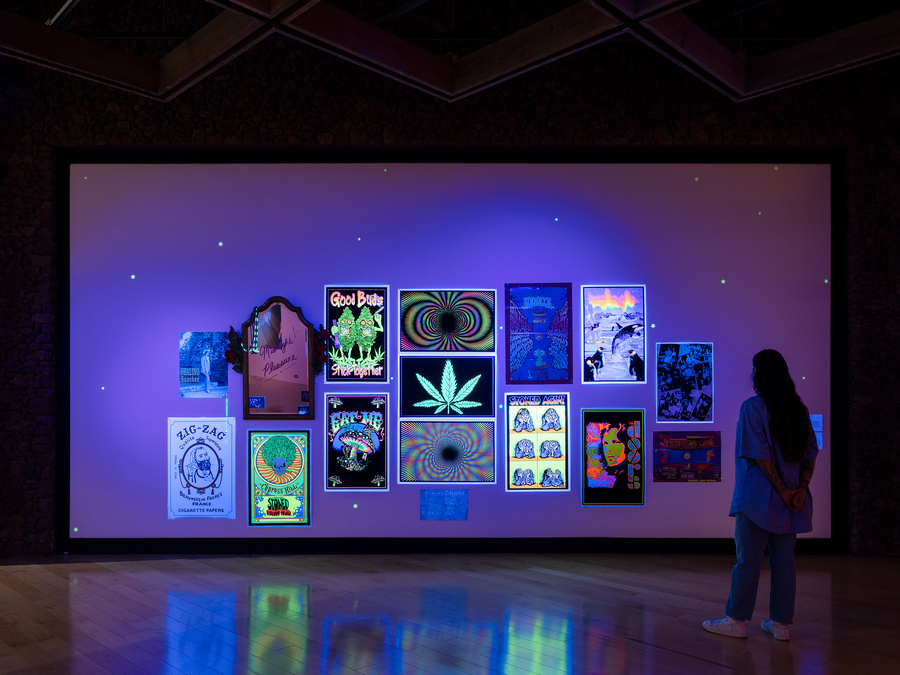
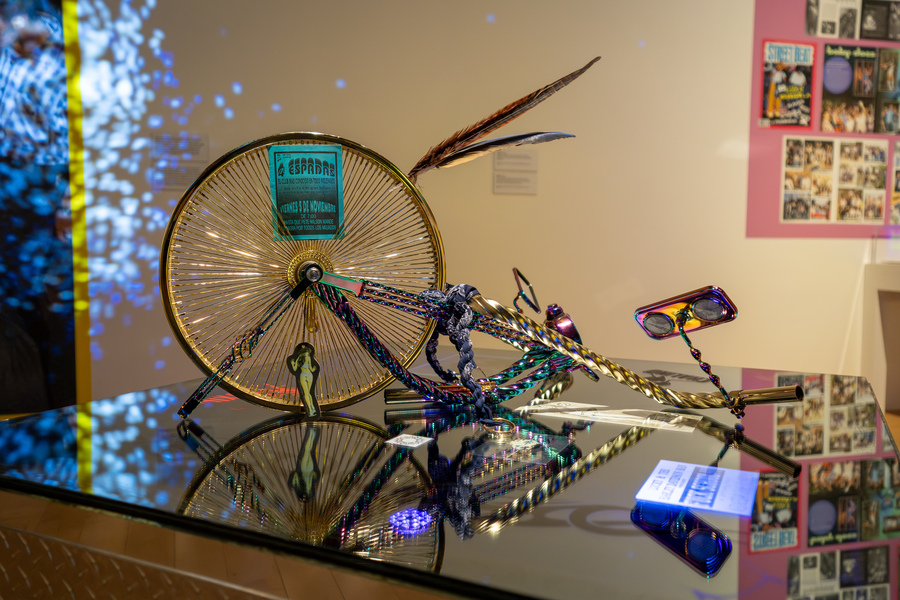
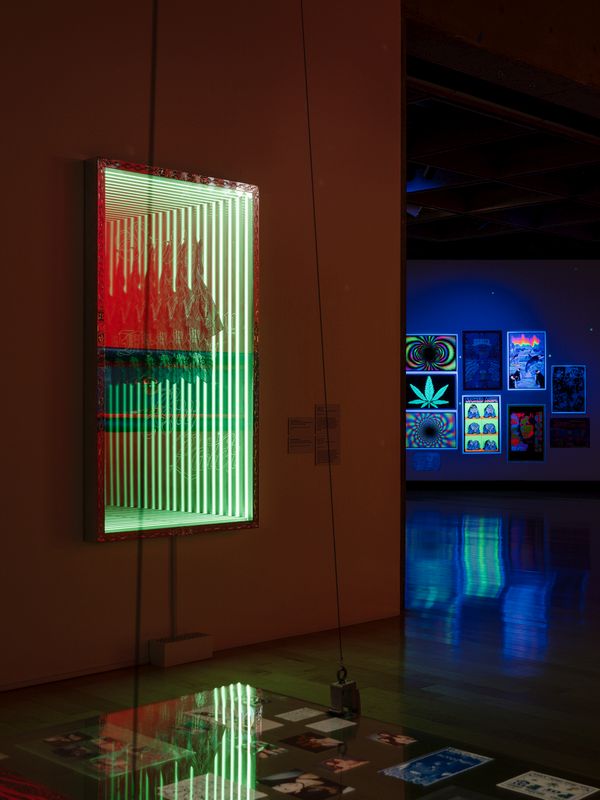
Nearby, a sculptural structure—reminiscent of the plush interiors of vintage lowrider cars—envelops the viewer in tufted upholstery and mirrored disco tiles, evoking the aesthetics of cruising culture and customized car interiors. On an adjacent wall, a 1990s teenage bedroom scene is recreated: glow-in-the-dark, psychedelic party posters radiate under ultraviolet light, merging private fantasy with subcultural style. Here, Rosales reclaims interiority and desire as potent political forces.
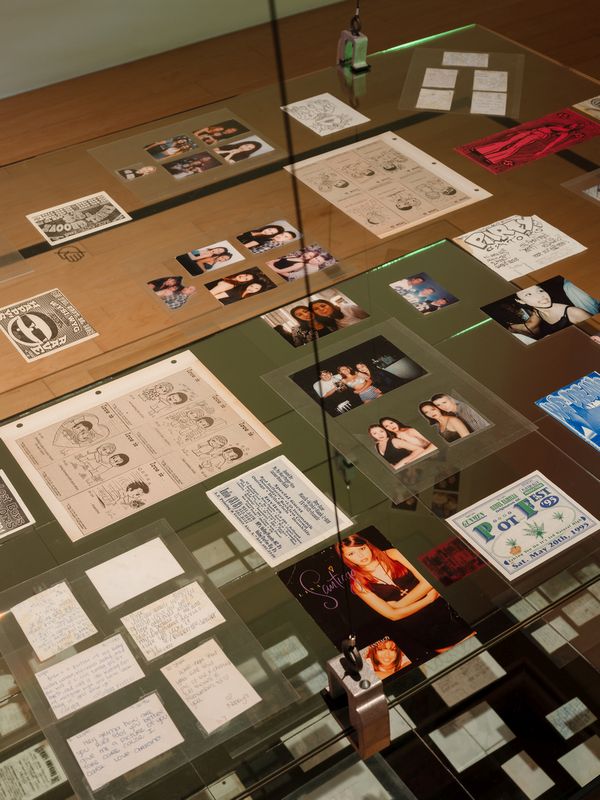
Across the galleries, archival materials—party flyers, zines, personal photographs, and political memorabilia—are presented in vitrines and glass cases like sacred relics. These items, many drawn from Rosales’s physical and digital archives, function not only as documentation but also as tools for reimagining the past from the margins. Flyers from underground parties, DIY zines, and protest materials against California’s Proposition 187 expose the dissonance between institutional narratives and lived experience—particularly for young Chicanx and Latinx communities in 1990s Los Angeles.

Youth Party Culture
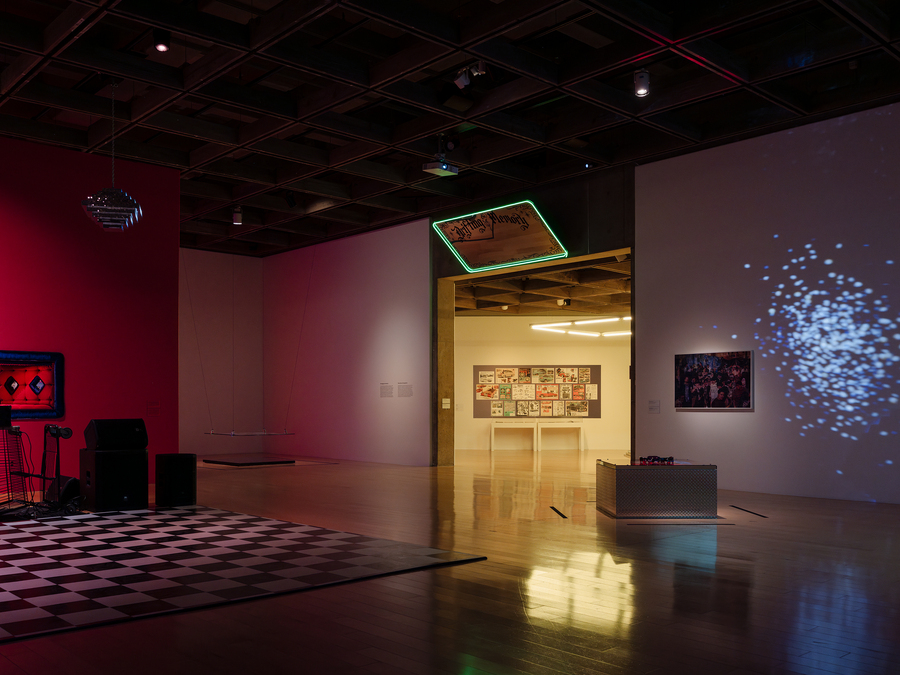
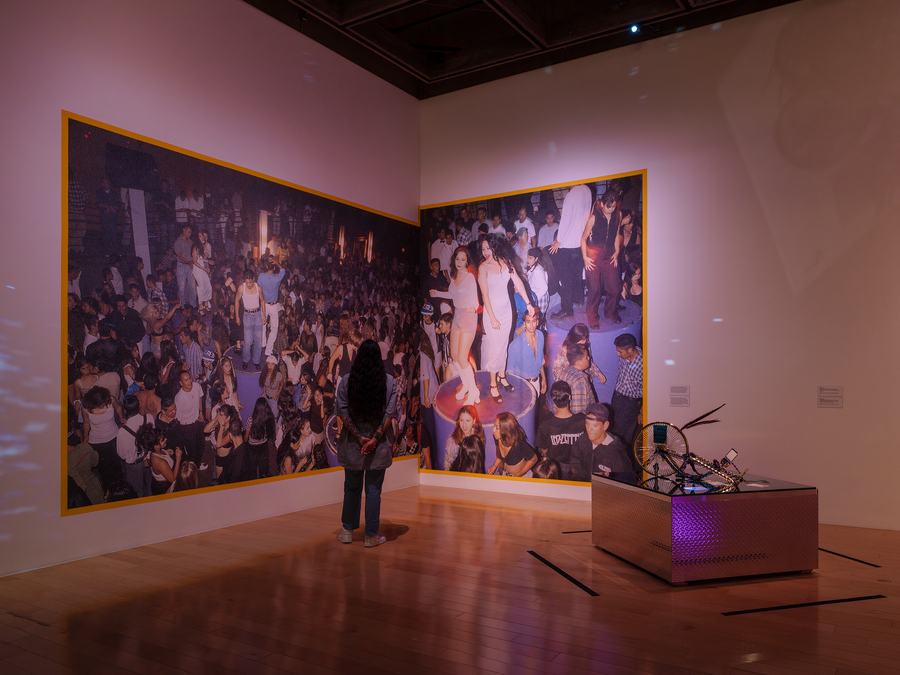
At the heart of the exhibition lies a dance floor. Tiled in black and white and lit by swirling blue spotlights, it anchors a room that pulses with embodied memory. A makeshift DJ booth constructed from shopping carts becomes both sculptural object and homage to DIY aesthetics. Here, partying emerges not as an escape but as a powerful assertion of presence—a space for claiming joy in defiance of criminalizing media and exclusionary policies.
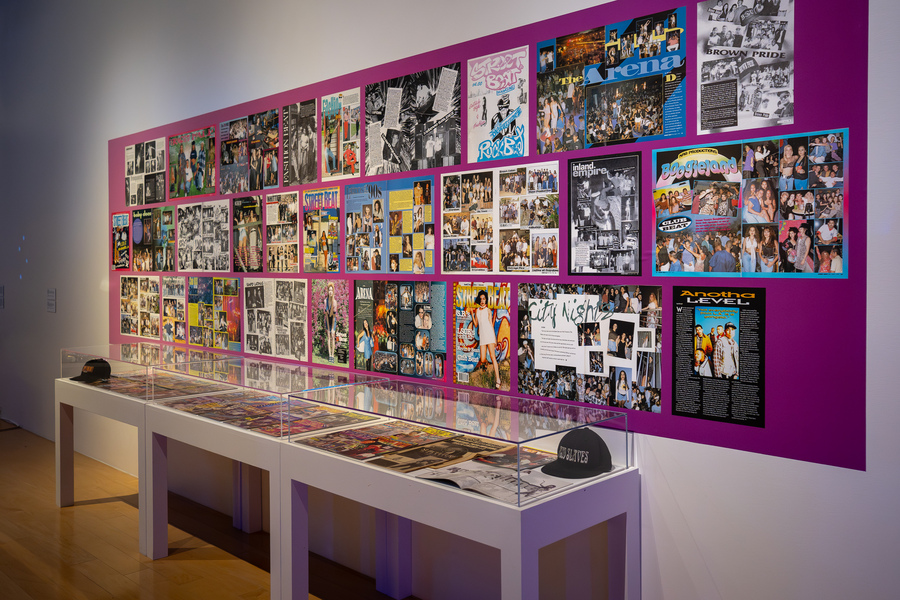
Surrounding the dance floor, enlarged photographs evoke the vibrancy of queer, multiracial nightlife in 1990s Los Angeles. One side wall is papered with large-scale prints depicting scenes inside Arena, the massive former nightclub on Hollywood’s Santa Monica Boulevard, and the adjacent club Circus—both known as radical, open spaces for Black, Brown, working‑class, and queer youth. Taken together, the images offer expansive yet intimate portraits—friends mid-dance, mid-laugh, mid-rebellion—situating pleasure and cultural belonging against a backdrop of exclusionary social worlds.
No Cruising
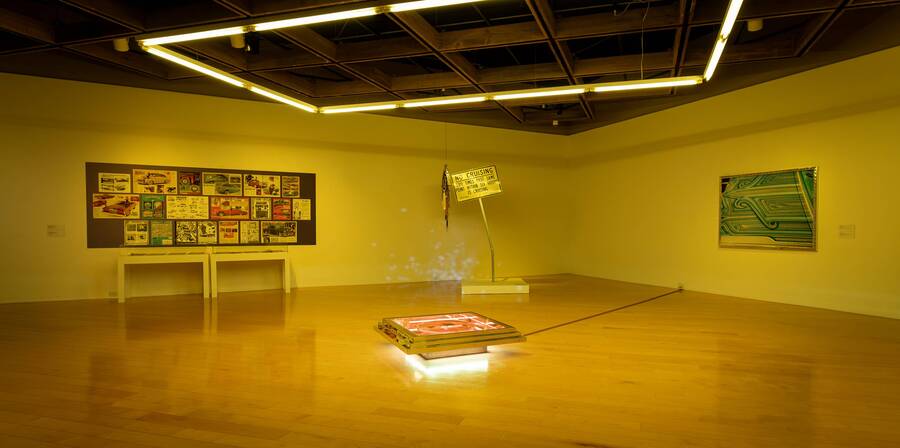
Originating in Southern California in the 1940s, lowriders—or tumbados—are more than just customized cars: they are extensions of their drivers, vehicles of identity that embody family traditions, neighborhood ties, political resistance, and personal aesthetics. In this context, “cruising” refers to the slow, deliberate parading of lowriders through city streets. It is a ritual of presence, a moving performance of pride and belonging. Yet cruising has long been subject to criminalization—its practice surveilled, ticketed, and restricted—revealing how joy and self-expression in public space become sites of contention, especially for Brown communities.
In the final gallery, the lowrider reappears—not only as a symbol of mobility and cultural style, but as contested terrain. Two large, brightly colored photographs of painted car hoods showcase swooping and jagged motifs, merging the visual language of automotive design with the formalism of hard-edge abstraction.
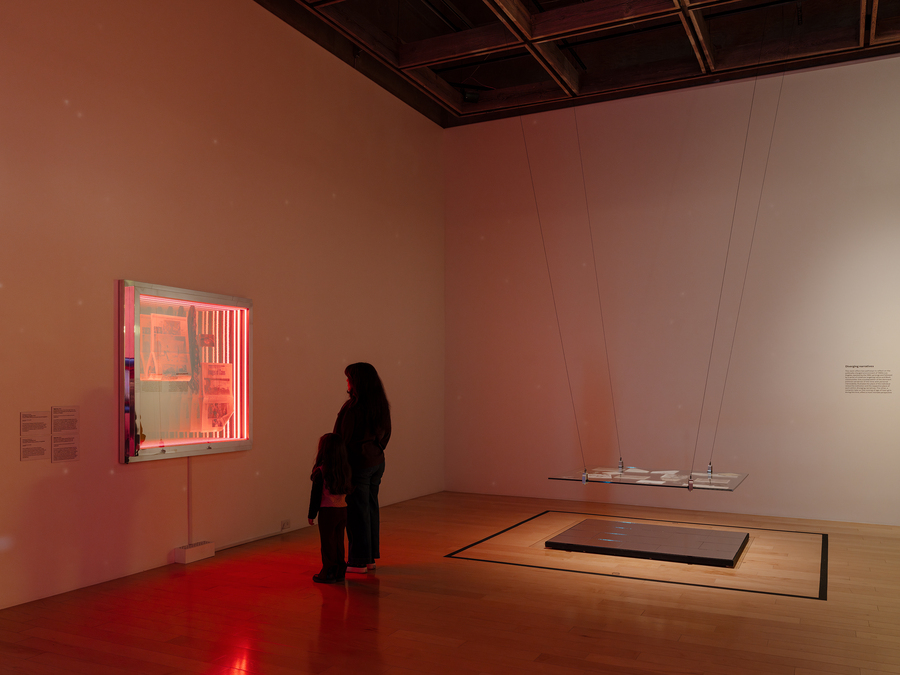
Scattered throughout the exhibition are three mesmerizing infinity portals—two mounted on the wall and one installed on the floor—that create the optical illusion of endless depth. Composed of double-sided mirror glass edged with LED strips, these works pulse with shifting color, drawing the viewer into a space of hypnotic reflection.
Toward a Living Archive
True to Rosales’s practice, Tzahualli: Mi memoria en tu reflejo is not a closed exhibition but a living archive. A transparent acrylic box near the exit invites visitors to deposit personal items—flyers, snapshots, mementos—that may become part of the evolving installation. This gesture enacts what the entire exhibition proposes: that memory is relational, incomplete, and ongoing. By dissolving the borders between personal and collective, public and private, documentation and embodiment, Rosales not only reframes the past—she reclaims the terms on which it is remembered.
This openness to continued contribution and reinterpretation underscores the exhibition’s deeper ambition: to give form and voice to histories often marginalized or erased. In doing so, Tzahualli transcends the conventional boundaries of an art exhibition, positioning itself as a vital archive and a resonant mirror of a community’s collective memory.
Rooted deeply in the lived realities of Southern California’s Latinx youth culture, the show honors the intricate interplay between identity, survival, and self-expression during a turbulent era. By elevating the often overlooked “party girl” subculture—young women forging their own aesthetics and spaces amid social marginalization—Rosales challenges dominant narratives that have long sidelined these experiences.
Her work captures the ephemeral and intimate moments of everyday life with a reverence usually reserved for official histories, while resisting any easy nostalgia. Instead, Tzahualli holds space for joy and resilience alongside struggle and systemic injustice, inviting viewers to confront the complexities of cultural survival. In doing so, Rosales not only preserves a vital chapter of Los Angeles history but also asserts its rightful place within contemporary artistic and institutional discourse.
The exhibition will be on view at Palm Springs Art Museum until October 19, 2025

También te puede interesar
Guadalupe Rosales. Archivist of Latin Culture
The Instagram account Veteranas and Rucas is a flashback to the 90s Latinx communities of Southern California. The pics, digital or digitalized, worn out by time, show in a casual way the social and...
HASTA QUE LA MUERTE NOS SEPARE
Estableciendo una conexión con el “oficio heredado” o la búsqueda por rendir tributo a alguna noción familiar, las diversas obras que conforman este proyecto conllevan un espíritu de homenaje al pasado cuya influencia es...
Guadalupe Rosales. Archivista de la Cultura Latina
La cuenta de Instagram Veteranas and Rucas es un flashback a las comunidades latinxs de Los Ángeles de los años 90. Las fotos, digitales o digitalizadas, de apariencia desgastada por el tiempo, muestran de...