

REBECA ROMERO: AFTER THE SUN
Peruvian artist Rebeca Romero’s practice encompasses sculpture, textiles, writing, sound, and performance. Through objects, texts, and installations, she interrogates dominant historical narratives—particularly those surrounding the clash between Indigenous and European cultures. Frequently merging Pre-Columbian iconography with advanced scanning and printing technologies and working with materials that range from clay to plastic, her work oscillates between ancestral pasts and speculative futures.
Online museum archives become a site of digital excavation, where Romero gathers data to later recontextualize, reassemble, and re-present. With a sustained focus on new materialities, modes of production, and collaborations between artist and machine, her practice questions hegemonic understandings of intelligence, technology, and knowledge.
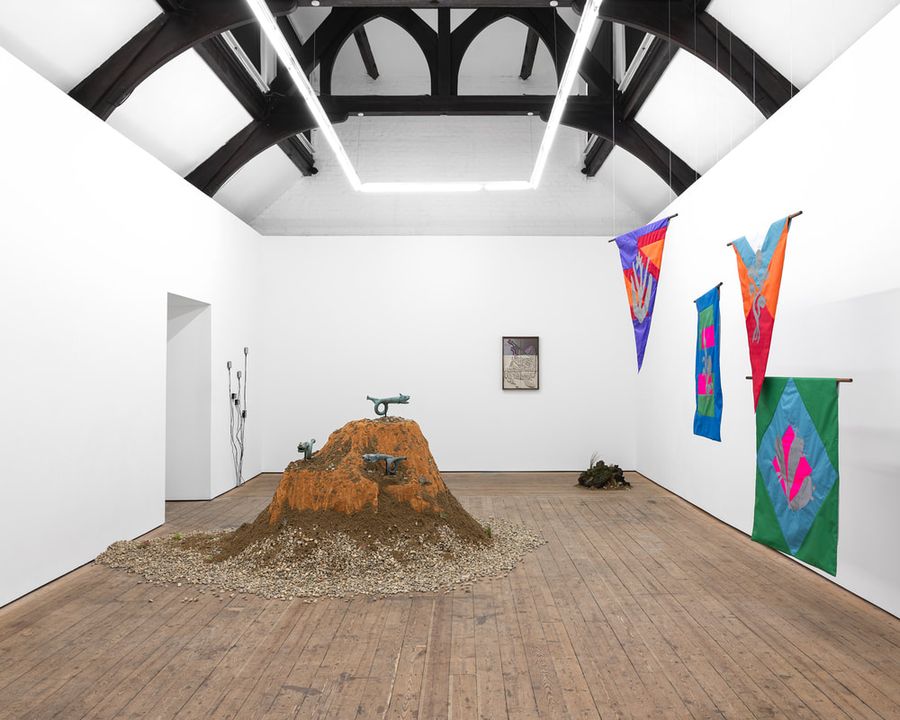
From 20 March to 17 May 2025, Copperfield, London, presents After the Sun, Rebeca Romero’s first solo exhibition at the gallery. The show is accompanied by a commissioned essay by Gisselle Girón Casas, curator at the ESCALA Collection, which we are pleased to share below.
AFTER THE SUN. RESISTANCE TALES, OTHERWORLDLY COMMONING FUTURES, AND REIMAGINED MYTHS
Gisselle Girón Casas
“Still there are seeds to be gathered, and room in the bag of stars.”
Ursula K. Le Guin in The Carrier Bag Theory of Fiction, 1986
For the past five years, Rebeca Romero’s practice has been devoted to creating speculative artefacts that combine Indigenous American technologies and iconography with new fabrication techniques, including AI, 3D printing, 3D scanning, animation, laser cutting and UV printing. By removing and disavowing artefacts from the confines of history and museums and rekindling them in fiction, Rebeca manipulates them to create new possible futures.
Her works construct a visual and narrative otherworldly site, future remnants of a revolutionary civilisation. This mythic culture adorned itself, played music, gathered food, and navigated the earth while practising a society centred on care and communication with plants and stars. Rebeca’s work transforms us into hybrids of storytellers, archaeologists, and astronomers. Through speculation, we piece together the narratives of the community that once used these tools and ornaments.
Rebeca’s drive to reveal the faces of this lost community—an integral part of the epic mythology she has been constructing—continues in this exhibition. Here the face of a hero is unearthed, and we finally discover who played and used these artefacts, who produced them, and to what ends their technology served the needs and vision of this society.
History has often promoted a single, linear version of events, erasing the faces of heroes who no longer contribute to a narrative preferred by the victors—colonisers, those who have been licensed to write and immortalise these stories as official knowledge. By presenting a tangible reconstruction, After the Sun invites us to reconsider how history is told, whose stories have been silenced, and which stories we want to reclaim and hear anew.
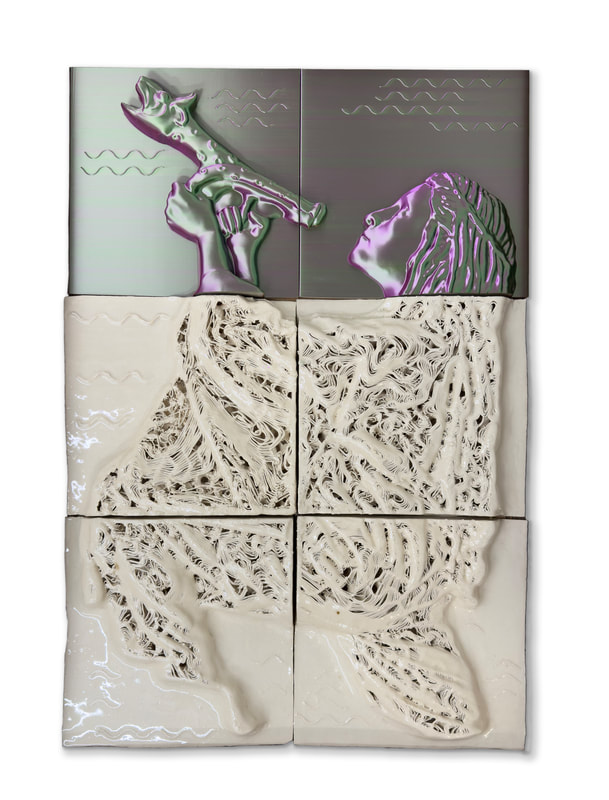
To construct the myth of After the Sun, Rebeca draws on Professor Irene Silverblatt’s research on Andean women who refused colonial evangelisation and were derogatively labelled witches by Spanish clergymen. These women escaped to the highlands, creating an ideology of their own and crafting a method of resistance to defend their culture and their own theory and stories of the universe’s origin. Rebeca asks: what if these women who gathered and established a new matriarchal society had succeeded? What if these women reclaimed back the identity of witches and crafted a forward-thinking and magical community?
Rebeca introduces us to the Sower, a feminised entity depicted playing Kawra, a horn inspired by zoomorphic trumpets from the Mochica civilisation of what is now Northern Peru. She emerges as a heroic figure who challenges the passing of time in the shape of a reconstructed wall relief. Seen against the high reliefs and sculptures in museums that no longer possess an identifiable face—sometimes lacking a nose, a mouth, or even a complete head—this exhibition challenges the loss of identity in historical narratives.
The Sower is a high priestess named after her craft. She studies the stars and the earth todetermine the best crop seasons, crafting rituals to foster a relationship of care and communication between earthly beings and the celestial. Whilst this fictional narrative and matriarchal society live within their own specific temporality, points of convergence emerge, evident in the Sower’s materiality, where the technological past is embedded in clay, whilst an alternate future is reflected in the shiny PLA. The beheaded hero refuses to be forgotten, holding on to any possibility of reproduction and reconstruction.
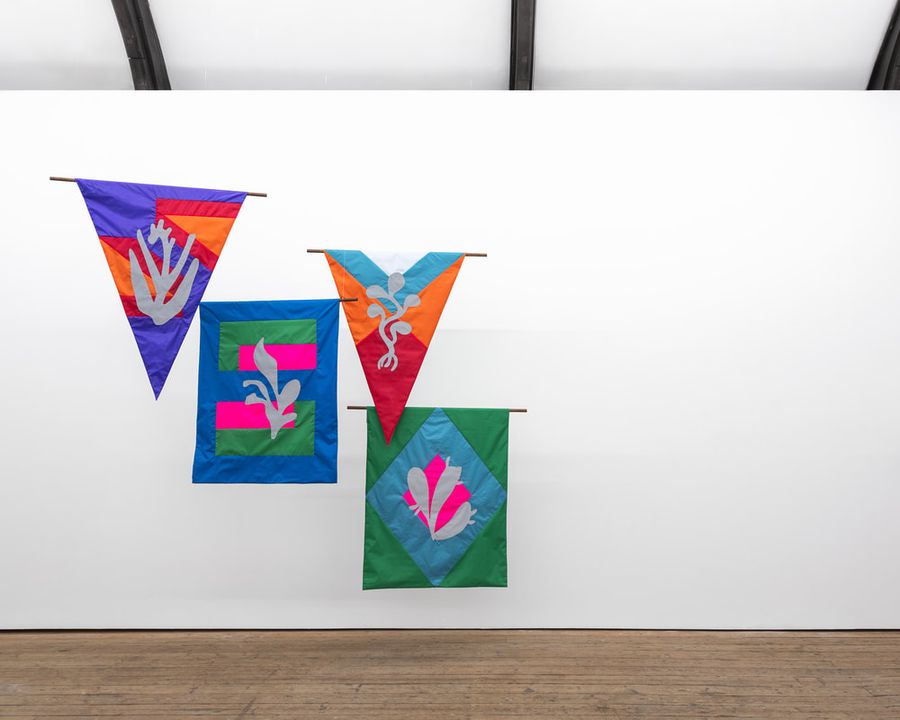
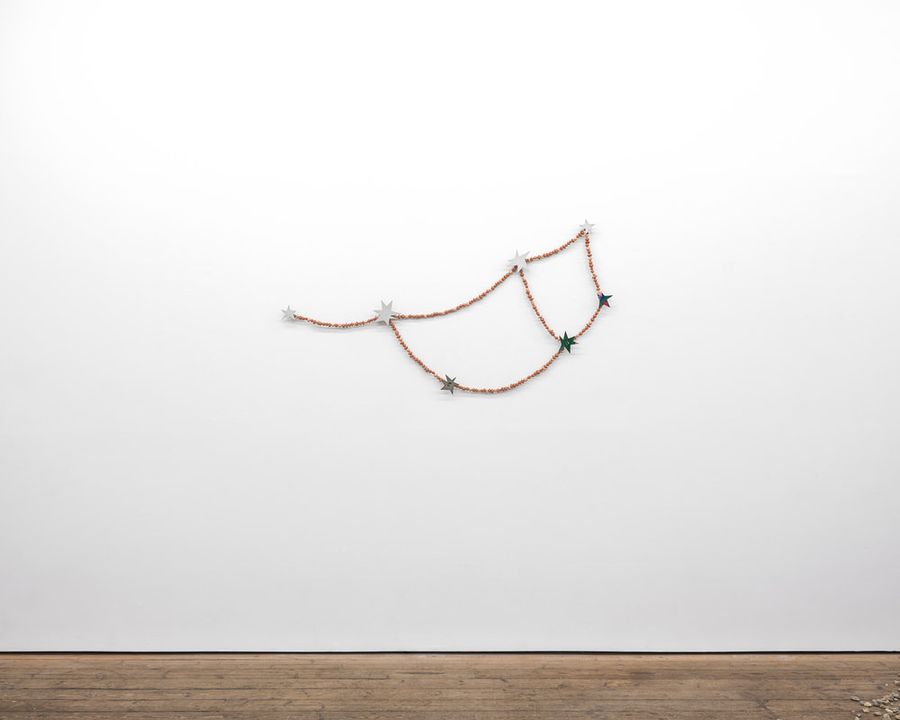
In After the Sun, myth-making is intimately associated with the observation of stars, particularly the Seven Sisters, an open star cluster that features in numerous myths about the sky, the winter solstice, and the delimitation of agricultural eras.
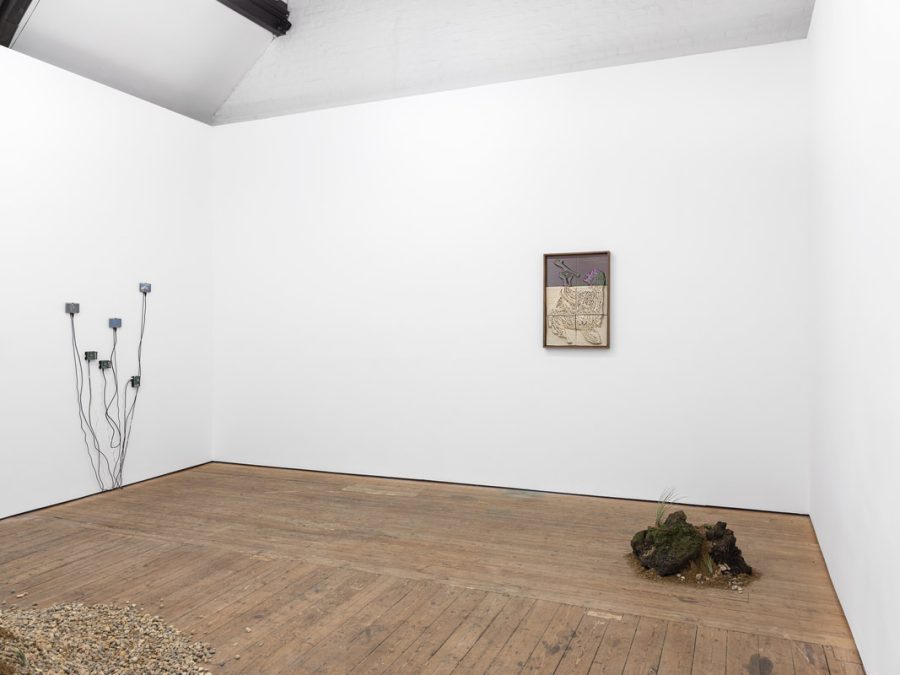
One of the pieces in the exhibition, Gathering, consists of seven mirrored stainless-steel stars connected by clay spindle whorls, resembling the arrangement of rosary beads used in Catholic traditions to count prayers. In this piece, the Seven Sisters, once turned into stars by Zeus to escape the pursuit of the hunter Orion, are reunited once again, actively offering new ways for this matriarchal society to navigate and sustain a flourishing relationship with the earth and the skies.
In referencing this myth, where women escape a hunter, Rebeca alludes to Ursula K. Le Guin’s redefinition of technology in The Carrier Bag Theory of Fiction. In this essay, Le Guin hacks and challenges the linear, progressive understanding of human evolution and, instead of positioning the weapon, sword, stick, and other killing tools as the zenith of history, introduces the container—the trustworthy bag, the home setting, the shrine holding the sacred, the sky holding the stars—as the greatest invention.
The work symbolises the women who gathered and fled to the highlands as an act of defiance against colonisation. Acting as a form of cartography, Gathering encourages us to identify uncertain lands for diverse experiences, knowledge systems, affects, and beliefs that can better inform the world we strive to create. Gathering and the Sower assert that these women are the heroes of our time. By intertwining weaving with astronomy and faith, Rebeca reintroduces weaving and astronomy as portals for rethinking our understanding of time, thereby creating new temporalities and possibilities for worship.
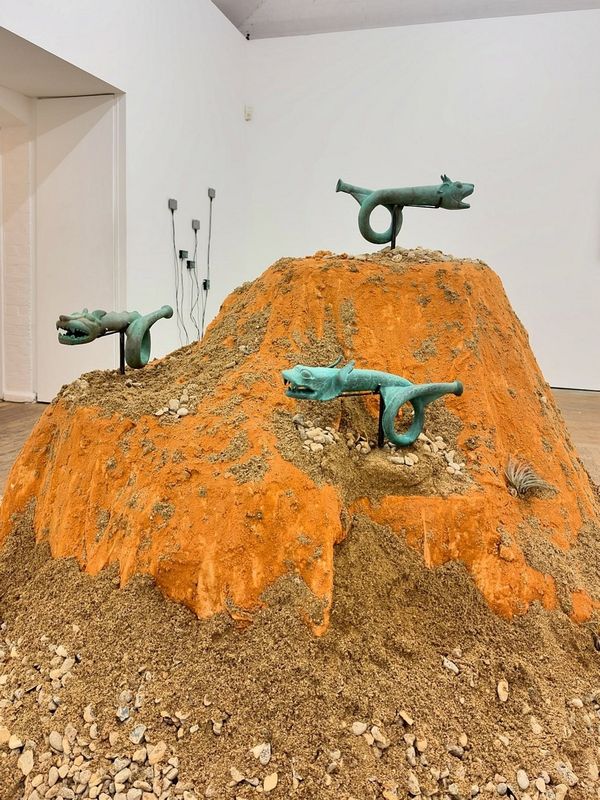
The exhibition features musical technologies from this future-past matriarchal society. Katari, Kawra, and Uturunku—horns used for communication rituals—amplify sound andsignal the sowing season. The Sower is seen playing her beloved and trusted Kawra, asserting her voice against historical erasure. Also on display is Journey, an ensemble of four heraldic flags that honour plants and roots through durable and highly technical materials like ripstop and reflective fabrics.
Rebeca describes her work as ‘future-past’, existing in a constellation of tenses that reshape our experience of time. Embracing a circular, non-linear process, she fuses ancient knowledge with cutting-edge technology, weaving past, present, and future together: past in the original technique, present in its digital reinvention, and future in its power to inspire new myths. As we interpret these narratives, a threshold towards collective meaning-making, or commoning, emerges. The bonds of solidarity formed through the shared act of storytelling are just as significant as the story itself.
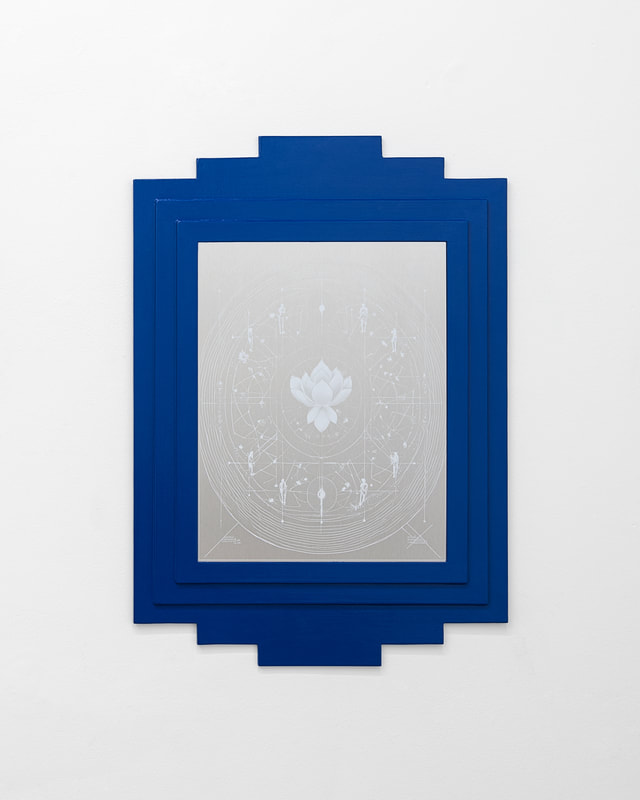
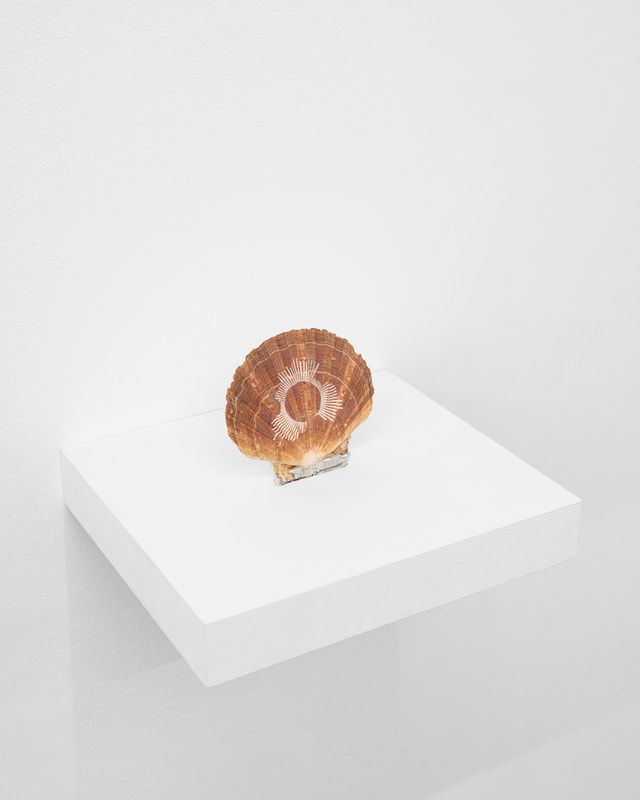
After the Sun insists that a new world remains to be built. It urges us to imagine andconstruct a different world, one where magic shapes our future. Now, more than ever, in a context where utopia has been co-opted by the linear narrative of capitalism, extractivism, and colonial culture-making processes, exercising our imagination and creative forces through storytelling and world-building becomes urgent, if not vital.
This exhibition offers a counternarrative, tapping into a heartfelt collective urgency for science fiction novels of resistance strategies, of alternative ways to live and embrace life. While the Sower is the heroine of this matriarchal society, the true hero of this exhibition is the license to create these alternate futures. As Le Guin once said, the hero is the story itself, created when we make sense of the contents of After the Sun.
By reclaiming a lost past, Rebeca reveals how artistic creation can act as a portal, bridging history and speculation. Her work challenges the role of creativity in the present. Through the figure of the Sower, a highly skilled producer of affect, rituals, and storytelling, Rebeca questions the purpose of making art today and asserts her commitment to life-affirming creative practices. She calls us to rethink and re-establish our true relationship with the universe by crafting fictions, speculative storytelling devices, and new myths. After the Sun reminds us that there are still many stories to be told, seeds to be gathered, andsongs to be sung. The eternal search does not end here—it begins anew.

También te puede interesar
EDUARDO NAVARRO (BREATHSPACE)
Gasworks presents the first UK solo exhibition by Buenos Aires-based artist Eduardo Navarro. Sitting in a corner of the gallery, the viewer encounters “Self-Doll” (2020), a stuffed humanoid covered in orange fleece. In a...
JIMENA CHÁVEZ DELION: DESPERTAR EL PULSO
En esta propuesta artística las protagonistas son un grupo de mujeres, en su mayoría migrantes venezolanas, que se dedican a pintar suelas de zapatillas falsificadas en el mercado informal del calzado en el Centro...
Fernando Bryce at Galerie Barbara Thumm, Berlin
Fernando Bryce’s series of large drawings "Freedom First" captures the intricate events of the Cold War, the emblematic leaders of the time and the struggle to claim the most disputed word and ideal, freedom....