

KNOWLEDGE IS A GARDEN
At the heart of the exhibition Knowledge Is a Garden lies a deceptively simple yet profoundly layered question: what does it mean to treat knowledge as organic—something that grows, thrives, and withers depending on how it is cultivated? Drawing inspiration from the West-African proverb that likens knowledge to a garden, Uriel Orlow (b. 1973, Switzerland) establishes a dialogue between his works and those of the Migros Museum’s collection, guiding visitors through histories that are deeply entwined, voices that have been silenced, and knowledges that have been suppressed.
The exhibition delves into themes of knowledge repression, unjust appropriation, and the diverse forms of knowledge production. It highlights a critical truth: knowledge is never neutral or all-encompassing. Instead, it is always shaped by historical contexts, situated experiences, and power dynamics that make it inherently vulnerable to distortion and erasure.
As the exhibition underscores, knowledge is inherently political, shaped by power dynamics that determine whose voices are amplified and whose are excluded. This tension is reflected in three thematic threads: the interconnection of knowledge and language, the extraction of resources and knowledge from the Global South by the Global North, and the deliberate suppression or distortion of information. These themes reverberate throughout the works on display, collectively contributing to the exhibition’s incisive critique of the structures that govern knowledge production.
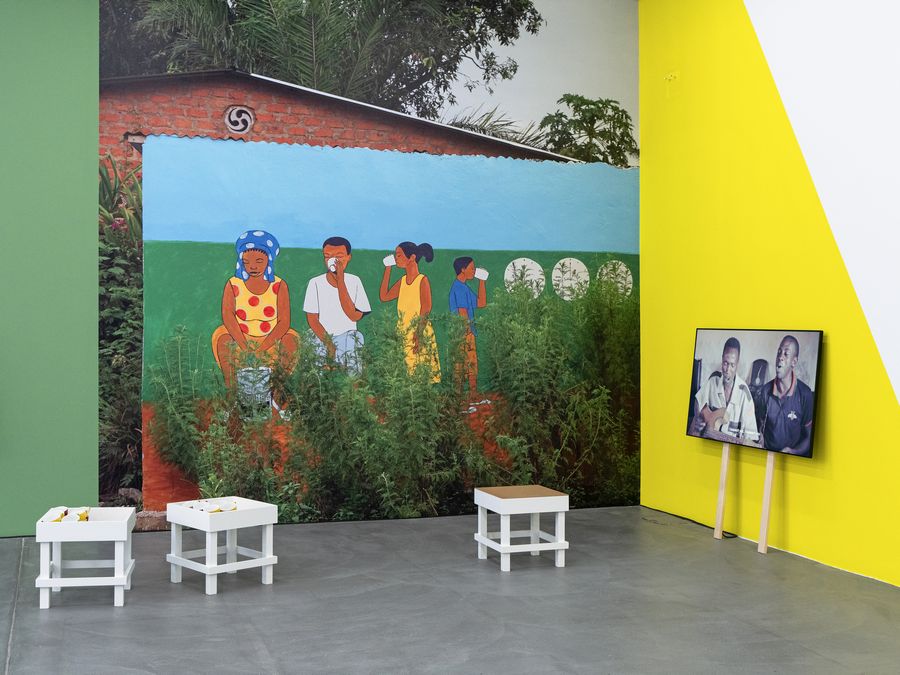
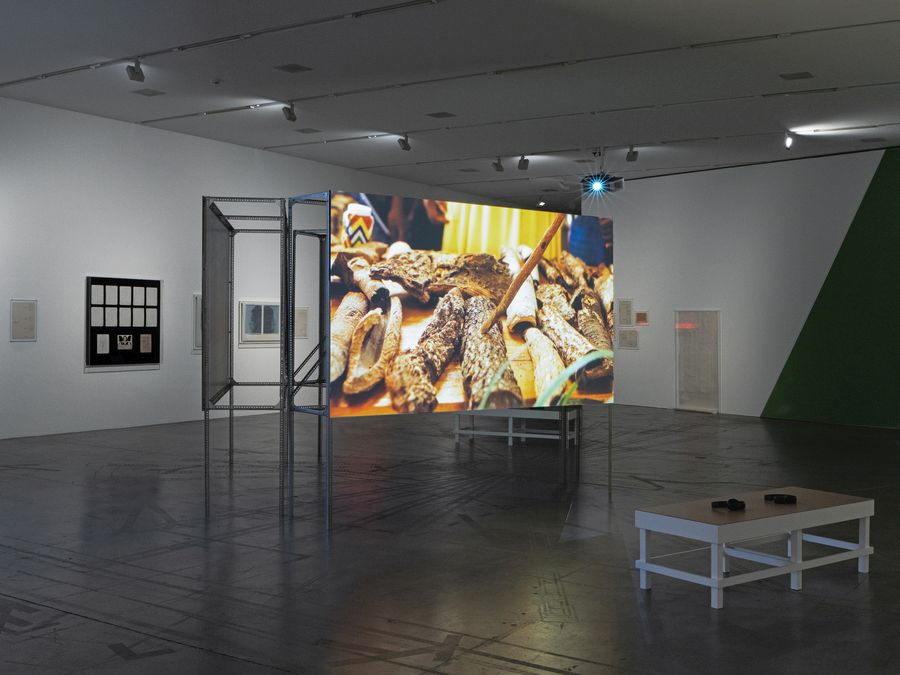
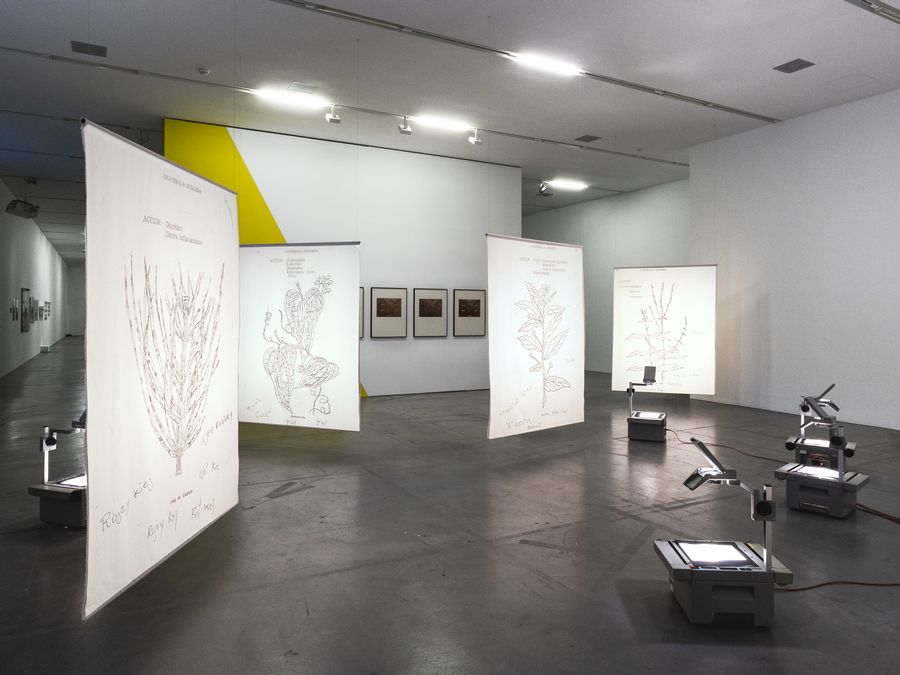
The centerpiece of the exhibition, Orlow’s Theatrum Botanicum Trilogy (2016–2018), acts as a lens through which visitors explore the intersections of botanical knowledge, colonial histories, and indigenous wisdom. Orlow’s trilogy offers a counter-narrative to dominant epistemologies by situating plants as historical actors and repositories of memory.
His focus on the Artemisia afra plant in Learning from Artemisia (2019) exposes the exploitative dynamics of global capitalism, where indigenous medicinal practices are sidelined in favor of profit-driven pharmaceutical interests. This work exemplifies how systemic inequities are embedded within knowledge production.
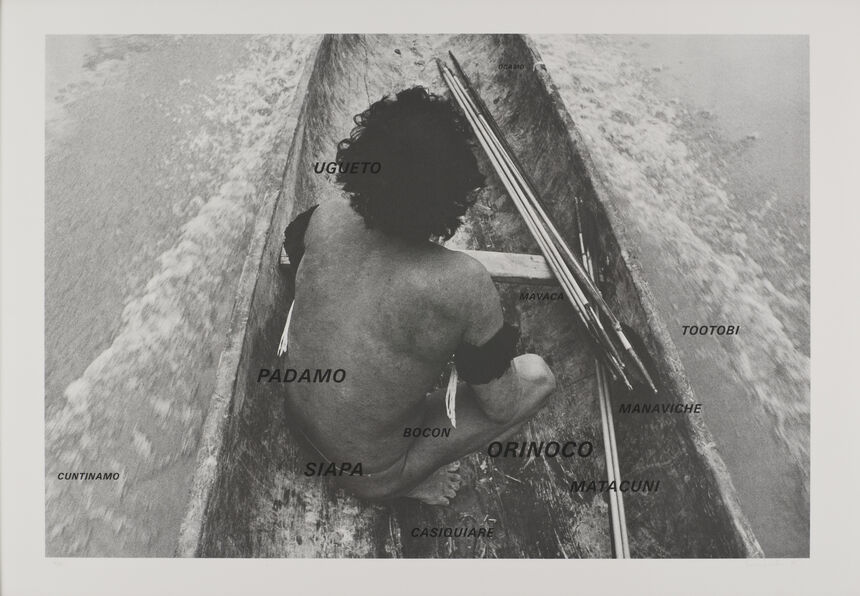
The theme of displacement and appropriation also underpins Lothar Baumgarten’s (1944–2018, Rheinsberg, Germany) contributions to the exhibition. Baumgarten’s time living among the Yanomami in the forests of Venezuela and Brazil during the late 1970s informs several of his works, including Shëprabowë Yãnomãmi (1985), a silkscreen on paper. The artist’s engagement with the Yanomami captures the immediacy of their daily lives—rituals, trade, and resistance to encroaching threats.
The exhibition deftly interweaves Orlow’s works with pieces by artists from varied geographies, including Basel Abbas & Ruanne Abou-Rahme (b. 1983, Nicosia, Cyprus; b. 1983, Boston, USA, respectively), Teresa Margolles (b. 1963, Culiacán, Mexico), Eva Kot’átková (b. 1982, Prague, Czechia) and Susan Hiller (1940–2019, Tallahassee, USA).
Both Hiller and Kot’átková explore the silencing and manipulation of voice, albeit through distinct approaches. In Lost and Found (2016), Susan Hiller examines the fragility of language as a cultural vessel, focusing on endangered languages and the enduring impact of colonialism on intangible heritage. In doing so, Hiller prompts viewers to reflect on their role in the erasure of linguistic diversity and cultural knowledge.
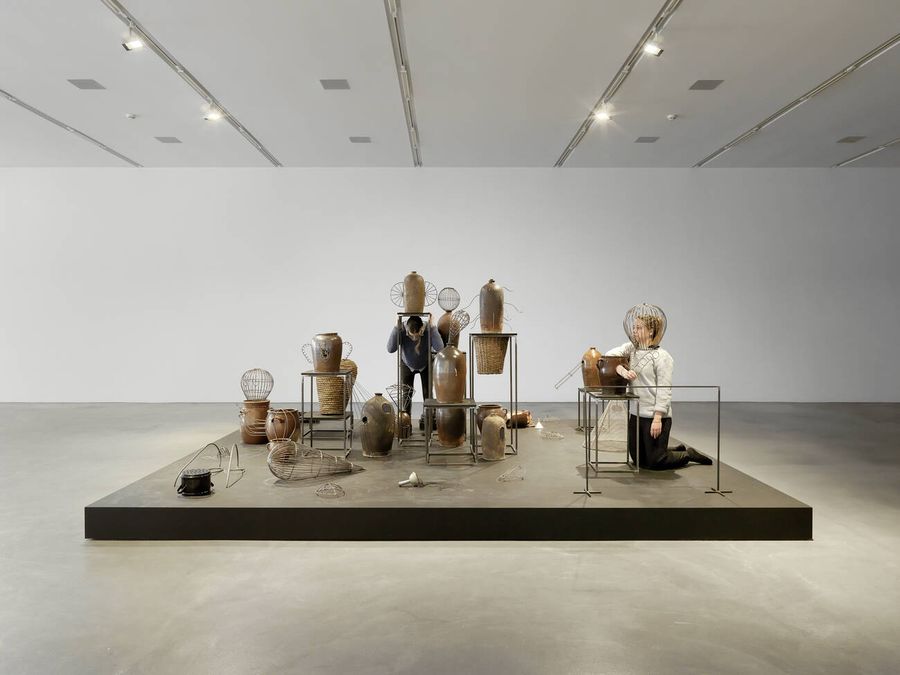
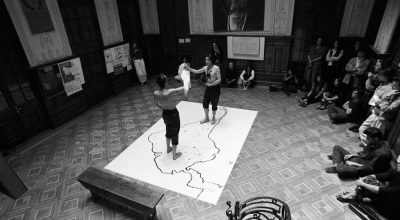
Eva Kot’átková, similarly concerned with the suppression of voices, investigates how societal power dynamics shape and constrain individuals. The altered vessels in her installation Collection of Suppressed Voices appear almost animate, as if they are holding or trapping the very voices they symbolize. While the installation itself serves as a potent metaphor for these silenced voices, it is occasionally activated through performance. During these special events, performers interact with the objects, using their bodies to engage with the vessels and momentarily giving tangible form to the suppressed voices they embody.
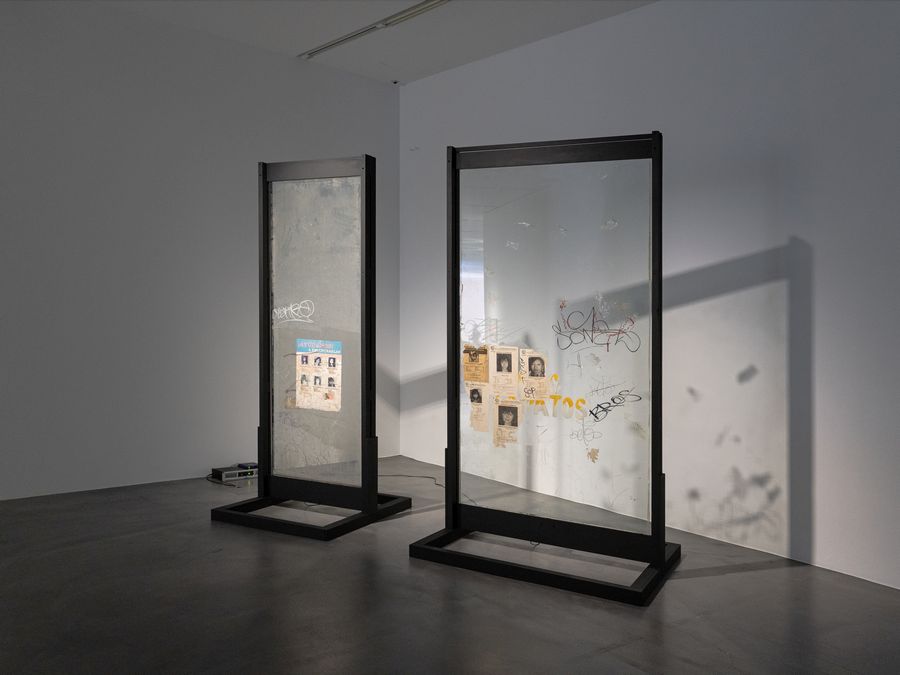
Mexican artist Teresa Margolles explores themes of death, violence, and social exclusion through minimalist yet deeply evocative works. Since the early 1990s, she has collaborated with the forensic medicine department of an autopsy facility in Mexico City, where victims of violent crime—often unnamed—are brought daily. This harrowing reality profoundly informs her artistic practice, which has increasingly turned its focus to the extreme violence in the northern Mexican border city of Ciudad Juárez, particularly in the context of the ongoing drug war.
In La Búsqueda, Margolles addresses the region’s persistent femicides, a tragic series of crimes that have haunted Ciudad Juárez since the 1990s. Her work investigates the physical and psychological scars these brutal acts leave on the urban landscape and its residents’ daily lives. By transposing such traces into the exhibition space, Margolles generates a stark interplay between mundane presentation and grim realism.
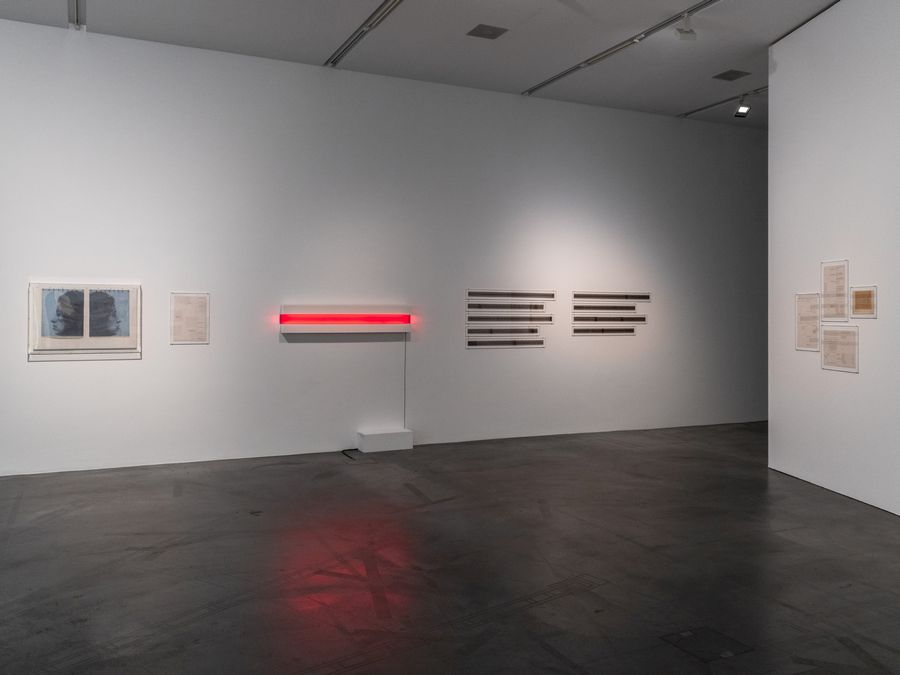
Among the most striking contributions is Autorretrato. Estructura. Informe, 9.6.1972 (1972) by Teresa Burga (1935–2021, Iquitos, Peru), a mixed-media installation that documents her own body through a combination of drawings, photographs, medical records, and sound recordings. Divided into sections such as “Face Report,” “Heart Report,” and “Blood Report,” the work critiques the ways in which human beings are reduced to data points, reflecting broader trends in the relationship between technology, standardization, and social control.
Created during a politically repressive period in Peru, Burga’s work merges deeply personal testimony with a bold interrogation of the dehumanizing effects of systemic oversight, offering a striking counterpoint to the exhibition’s broader themes.
Equally potent is Sammy Baloji’s Untitled (2018), a poignant fusion of natural and martial histories. By planting Congolese rainforest flora in shell casings from the First World War, Baloji (b. 1978, Lubumbashi, Democratic Republic of the Congo) bridges ecological devastation with colonial violence. His work lays bare how the Global North’s appetite for resources and commodities perpetuates environmental and cultural erasure in the Global South, inviting viewers to trace these exploitative patterns into the present.
The curatorial decision to incorporate works by artists from the Global South broadens the scope of the Migros Museum’s collection, drawing critical attention to the geographical and cultural biases embedded in institutional frameworks. By situating these works alongside those from established Western traditions, the exhibition underscores the partiality and incompleteness of any knowledge system, including its own.
This curatorial approach reinforces the exhibition’s central premise: knowledge is neither static nor neutral. It is inherently political, shaped by power structures that determine what is preserved, what is suppressed, and whose voices are heard. In articulating this, Knowledge Is a Garden acts as both a critique and an invitation—to engage with knowledge as an active, ethical practice.
Ultimately, Knowledge Is a Garden challenges visitors to reflect on their own epistemological gardens. What have we cultivated? What have we overlooked? And, most importantly, how can we nurture a more inclusive and equitable ecology of knowledge? This is an exhibition that demands active participation, encouraging visitors not only to observe but also to reconsider their roles as gardeners of knowledge. In doing so, it transforms the Migros Museum into a fertile ground for critical thought and dialogue.
KNOWLEDGE IS A GARDEN. URIEL ORLOW IN DIALOGUE WITH THE MIGROS MUSEUM FÜR GEGENWARTSKUNST COLLECTION
Migros Museum für Gegenwartskunst, Limmatstrasse 270, Zurich
28.09.2024 – 19.01.2025
Curated by Uriel Orlow with Nadia Schneider Willen
Curatorial Assistant: Louisa Behr
With works by Basel Abbas & Ruanne Abou-Rahme, Sammy Baloji, Lothar Baumgarten, Teresa Burga, Maria Eichhorn, Dani Gal, General Idea, Kiluanji Kia Henda, Eva Kot’átková, Susan Hiller, Zahra Malkani, Teresa Margolles, Senga Nengudi, Uriel Orlow, Elodie Pong, Ed Ruscha, Munem Wasif.

También te puede interesar
ANUNCIAN ARTISTAS PARTICIPANTES EN MUESTRA DE LA 56ª BIENAL DE VENECIA
Hoy se anunció la lista de los artistas participantes en la exposición de la 56ª Bienal de Venecia, titulada All the World’s Futures (Todos los futuros del mundo), curada por el nigeriano Okwui Enwezor, entre los que se…
POLEMIKS: UNA EXPOSICIÓN DE PROYECTOS FALLIDOS EN INCUBACIÓN
Las obras presentadas en Polemiks debían, desde sus inicios, ser proyectos que nunca fueron realizados, propuestas encajonadas y arrinconadas en el olvido, o bien que quedaron truncadas por la censura.
TRANSFORMANDO EL DUELO EN ACCIÓN: MIGUEL A. LÓPEZ, NELLY RICHARD E INTI GUERRERO EN CONVERSACIÓN
La siguiente conversación entre Nelly Richard, Miguel A. López e Inti Guerrero aparece originalmente en inglés en el libro "Is the Living Body the Last Thing Left Alive?: The New Performance Turn, Its Histories...