
Agnes Denes

RADICAL SOFTWARE: WOMEN, ART & COMPUTING 1960–1991
«Radical Software» is a primarily analogue exhibition that delves into the decades before the rise of the World Wide Web and the explosion of digital culture. It marks the first major survey of early digital art framed through a feminist perspective, spotlighting women who embraced computers as medium, tool, or subject—and artists whose practices were fundamentally shaped by computational thinking.

ECOFEMINISM(S)
Ecofeminism is grounded in spiritual feminism, which insists that everything is connected –that nature does not discriminate between soul and matter. This exhibition presents some of the strategies of ecofeminist art, by its pioneers as well as the youngest generation of artists. It also provokes the question: if the ecofeminist art of the 1970s and 1980s was largely defined by Goddess art, ritual performances, anti-nuclear work, and feminist land art, what makes female environmental artists working today ecofeminists?
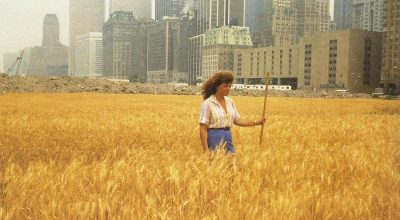
Agnes Denes:a Pioneer of Conceptual And Environmental Art
The Shed presents the most comprehensive retrospective exhibition to date of the work of Agnes Denes (b. 1931), a leading figure in Conceptual and Environmental art. «Agnes Denes: Absolutes and Intermediates» brings together more than 150 works in a broad range of media spanning Denes’s 50-year career, including three new works commissioned by The Shed. “Agnes Denes not only anticipated the man-made destruction of natural habitats at a moment when few people were paying attention, but much of her work features solutions to ecological crises that we are now facing,” said Hans Ulrich Obrist, The Shed’s senior program advisor.
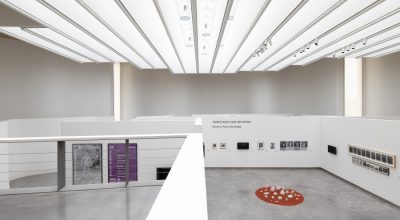
TERRITORIOS QUE IMPORTAN. GÉNERO, ARTE Y ECOLOGÍA
El Centro de Arte y Naturaleza (CDAN) de Huesca, España, presenta «Territorios que importan. Género, arte y ecología», la primera muestra dedicada a explorar, de una forma más amplia, la relación entre el arte contemporáneo, la naturaleza y las cuestiones de género. La exposición reúne un centenar de obras y se divide en nueve ámbitos, en los que se abordan temas como la superación de las dualidades establecidas, la relación entre la espiritualidad, el género y la naturaleza, la economía de cuidados y la sostenibilidad, y la ecología queer o la representación del cuerpo sexuado en el entorno natural.