
REGINA JOSÉ GALINDO’S PERFORMANCE “TIERRA” REMAINS RELEVANT ONCE AGAIN
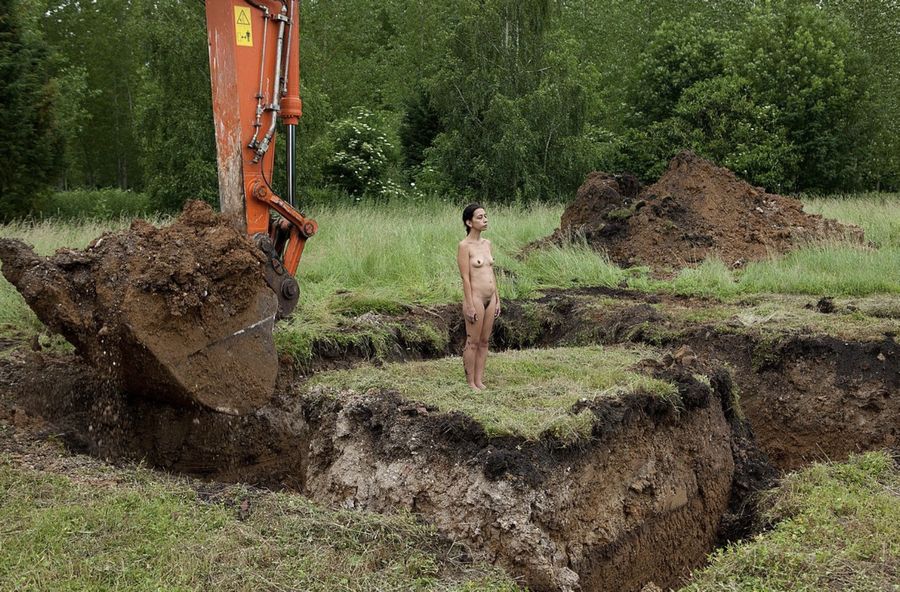
In June 2013, Regina José Galindo exposed her naked body on a plot of land that was carved around her by a large excavating machine. Galindo’s defiant performance drew attention to the massacre of hundreds of thousands of indigenous people, mostly Mayan Ixil, during the Guatemalan civil war (1960-1996). Eleven years later, the concept of vindication behind Tierra remains relevant.
“I think it is a very timely piece,” says Galindo. “All the conflicts occurring in the world are over land; land is the greatest value in the universe,” she comments. “It could have been shown during the Syrian conflict, and now we are facing a new war unfolding before our eyes,” she continues. “The most extensive, largest, and most terrifying crimes against humanity are being committed over territory, which is what is happening right now between Palestine and Israel.”
Known for her long durational performances, Regina José Galindo places her body in extreme situations to recover historical memory and confront injustices, particularly those related to social, political, and gender violence. Her work Tierra emerged from her experience as an observer during the 2013 genocide trial of former Guatemalan dictator José Efraín Ríos Montt and General José Rodríguez Sánchez. Galindo attended a hearing where a soldier provided protected testimony, detailing how the army used excavators to dig graves in indigenous communities. These graves were intended to later contain the bodies of murdered indigenous Mayans within their own land.
This testimony was annulled, but it had already been heard. «The fact that two hundred thousand people had been murdered was not debated there; the State’s intention to murder indigenous peoples was debated,» Galindo comments. This testimony was the starting point of Tierra.
In May of that year, Ríos Montt’s conviction was announced, and in June, Regina’s performance took place, commissioned and produced by Lucy + Jorge Orta (Estudio Orta). The project was recorded on the outskirts of Paris.
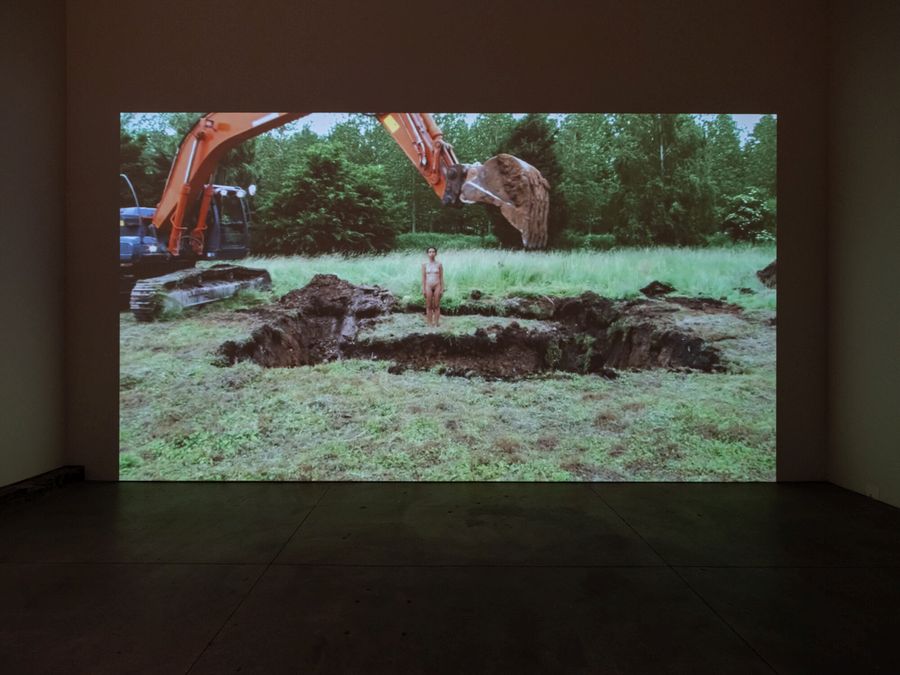
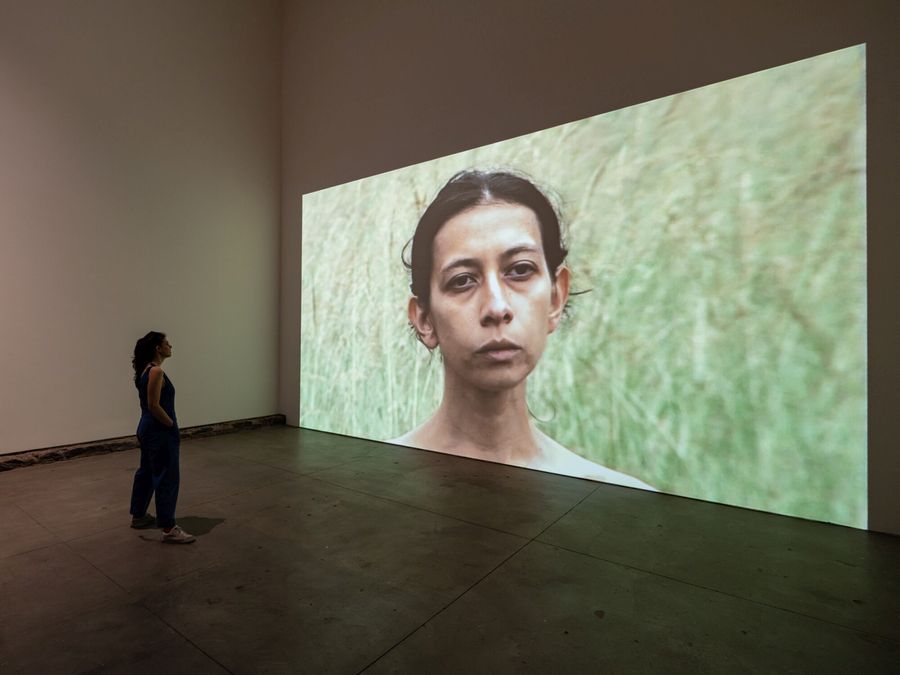
Currently, a monumental double-height video installation featuring Galindo’s work is on display at MoMA PS1 in New York. This exhibition marks the beginning of a collaboration between the Queens-based space and the Museum of Modern Art, aimed at showcasing or premiering works from MoMA’s collection that have not been previously exhibited there.
“I knew that the piece ‘Tierra’ had recently entered MoMA’s collection—a seminal work in Regina’s practice and in performance art in general, not limited to Central or Latin America—and that it was a piece I wanted to exhibit,» comments Elena Ketelsen González, curator of the exhibition.
Ketelsen González states that her interest in this collaboration between museums is to rescue non-dominant stories from MoMA, meaning to examine which artists have been exhibited within the institution but may not be part of its widely recognized collective memory.
Regina José Galindo is one of those artists with a history at the institution. In 2006, shortly after winning the Golden Lion at the Venice Biennale, she participated in the exhibition Into Me/Out of Me alongside artists such as Jenny Holzer, Pipilotti Rist, and Lorna Simpson. In 2008, she returned to exhibit in NeoHooDoo, where she shared space with artists such as Pepón Osorio, Ana Mendieta or Amalia Mesa-Bains.
“The work takes on new meaning today and is always urgent,” says Ketelsen González. “Moreover, considering the location of PS1 in Queens, where there is a significant migrant population that has fled their countries due to current conflicts and struggles over land, including a large Guatemalan community.»
During the 33-minute video, we witness the stark contrast between the power and force of the excavator machine and the vulnerability of Regina’s naked body. Her body progressively becomes isolated and devoid of its foundation with each blow of the excavator’s shovel, symbolizing the exile and exclusion resulting from political violence. Yet, simultaneously, Tierra reflects the essence of original settlement on a piece of land—the struggle, the roots.
According to Galindo, the piece should be approached with rage, as she states, «that is the spirit that hopes to awaken—that of a body that belongs to that land and is defending it with all its claws, with all its presence.»

También te puede interesar

“TIERRA” DE REGINA JOSÉ GALINDO, RELEVANTE UNA VEZ MÁS
La presentación de la obra de Galindo es la primera de una serie de colaboraciones entre el MoMA y el MoMA PS1 para destacar obras de la colección del Museo de Arte Moderno. “Creo...

LA CAÍDA DEL CIELO
La minería ilegal, la contaminación de los ríos, la persecución y destrucción de las comunidades nativas son apenas un par de letras del alfabeto infame de la colonización en las Américas. El exterminio de...
Gianfranco Foschino
Gianfranco Foschino (Santiago de Chile, 1983) acaba de concluir una estadía en Brooklyn, Nueva York, donde hizo una residencia artística en el ISCP (International Studio and Curatorial Program). Para el Fall Open Studios, exhibió…