
DANIEL CORREA MEJÍA: EL AMOR SE ESCONDE COMO UN ANIMAL SALVAJE
Reading time: 5 minutes
[short read]
In his new exhibition at P·P·O·W in New York, Colombian artist Daniel Correa Mejía presents a personal mythology in which bodies, animals, and landscapes intertwine on jute, a rough surface that reveals error and process as an essential part of the work. Drawing from his personal diaries—where desire, pain, and tenderness coexist—the artist creates paintings that explore love, eroticism, and human connection as open, vulnerable, and constantly evolving realms. The exhibition runs from June 12 to July 17, 2026.
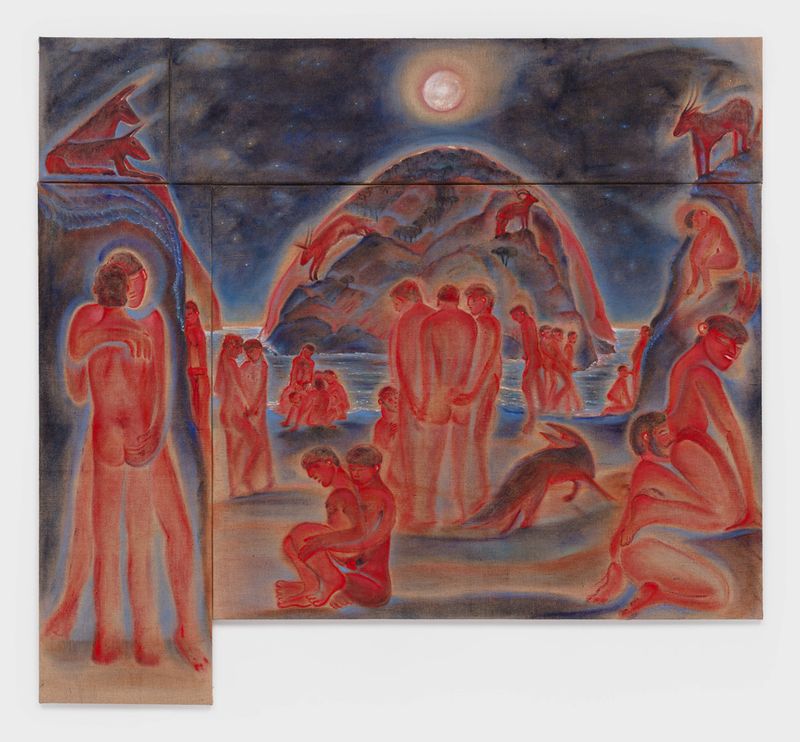
Working across drawing, painting, writing, and sculpture, Daniel Correa Mejía creates a visual language where intimate experience becomes image. His latest exhibition at P·P·O·W in New York, El amor se esconde como un animal salvaje (Love Hides Like a Wild Animal), navigates the space between autobiography and symbolism, unfolding a personal mythology populated by bodies, animals, landscapes, and signs that seem to emerge from an ever-evolving emotional memory.
Born in Medellín in 1986 and now based in Berlin, Correa Mejía has developed a practice in which figurative imagery coexists with a deeply spiritual and emotional sensibility. His figures inhabit environments where the boundaries between body and landscape dissolve: roots, rivers, deserts, plants, moons, and constellations intertwine in compositions that evoke both inner states and the elemental forces of nature.
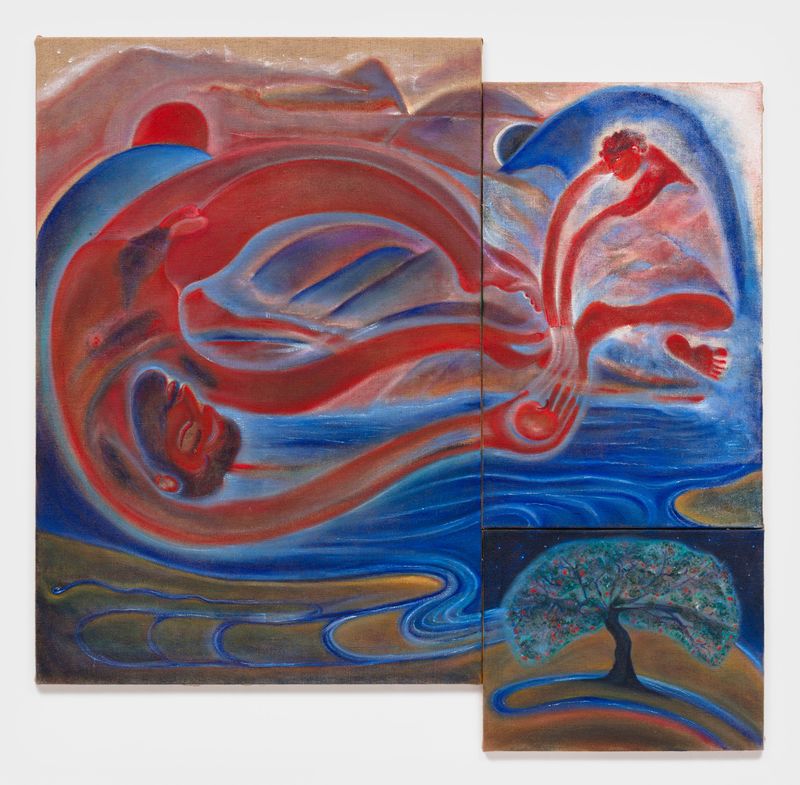
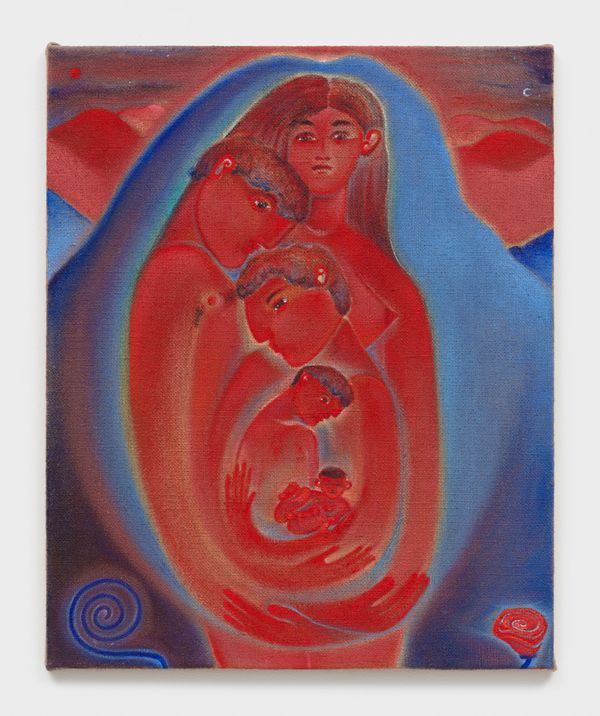
Rather than presenting a fixed narrative, however, the exhibition invites viewers into an open-ended experience. The paintings unfold through free association, memory, dreams, and intuition, each finding form through paint. Correa Mejía is less interested in illustrating a specific story than in creating a space where emotion itself takes on a visible presence.
Materiality lies at the heart of his practice. For Correa Mejía, the canvas is never merely a support but an active participant in the work. “The coarse weave of jute makes drawing more difficult and allows mistakes to surface more easily,” the artist explains. “But that’s precisely where part of its beauty lies. Its texture transforms the painting and releases a warm light that seems to rise from the fabric itself.”
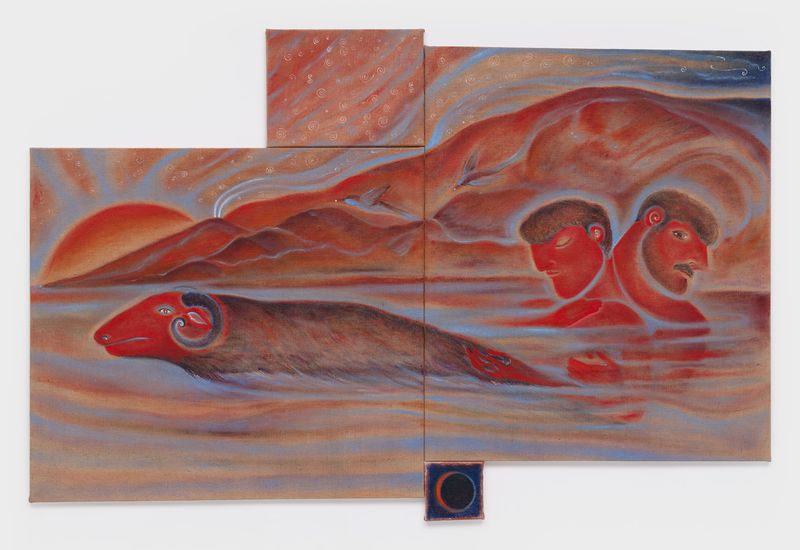
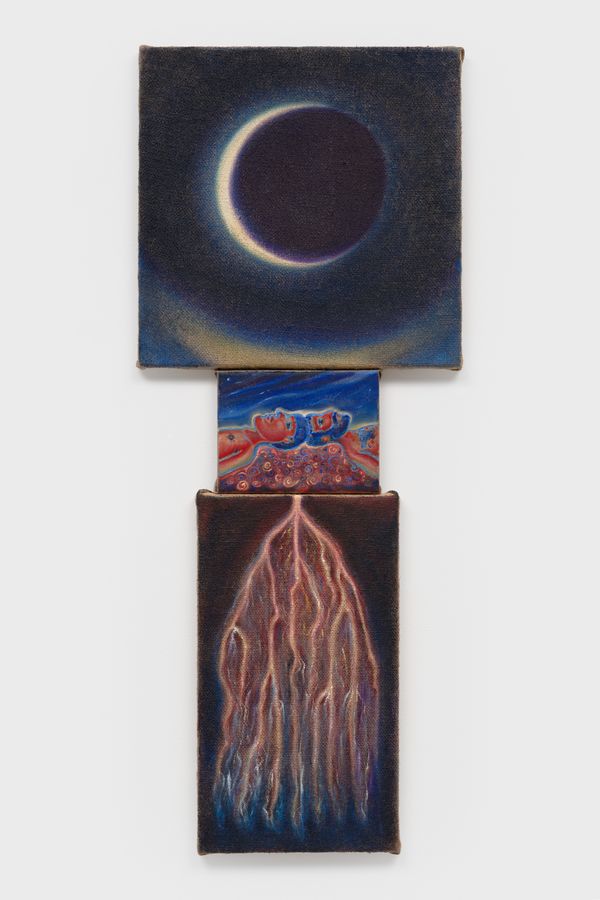
The ochre tones of the jute, together with the deliberate imperfections of his brushwork, reveal rather than conceal the painting process, introducing a surface unlike the conventional primed canvas. Instead of pursuing flawless finish or technical perfection, Correa Mejía allows the fabric to retain its own presence, as though the paintings were breathing through it.
This choice also reflects his broader artistic philosophy. He is drawn to the vulnerability of the image—to what remains unfinished, exposed, or unresolved. Mistakes, transparency, and traces of the artist’s hand are not flaws to erase but essential components of a practice that privileges material presence and emotional sensitivity over technical polish.
Color plays an equally vital role. Red, a recurring presence throughout his work, functions almost as an emotional signature, a persistent source of energy. In contrast, ultramarine blue introduces a complementary tension that runs through many of the compositions. The two colors attract and repel one another, creating a visual vibration that ultimately settles into the earthy tones of the jute. Their relationship echoes the dualities identified by the gallery: masculine and feminine, action and contemplation, matter and spirit.
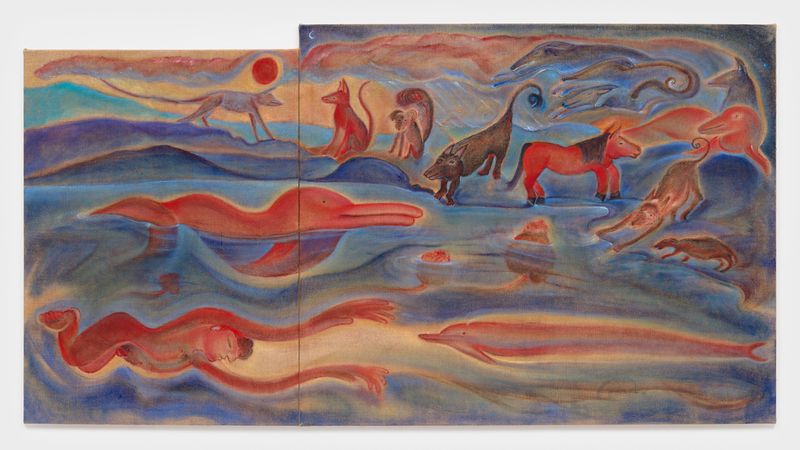
The exhibition also marks an important shift within the artist’s trajectory. His move from abstraction to figuration was not simply a formal transition but the result of lived experience and emotional necessity. While earlier works leaned toward the metaphysical, the emergence of the human figure reflected a growing desire to address intimacy, love, and the realities of everyday life.
Many of the images in these paintings originate within that private sphere. Correa Mejía works from personal journals in which he writes and draws spontaneously. These notebooks function as laboratories of ideas, collecting fragments of thought, sketches, memories, and automatic drawings that are later transformed into paintings. Yet the deepest intimacy of these journals lies not in the occasional sexual imagery that appears in them, but in the accumulation of lived experience—erotic dreams, uncertainty, longing, moments of love, and episodes of grief. “Sometimes I go back to my journals,” he says, “and if I find something that still resonates with me, I bring it to the canvas.”
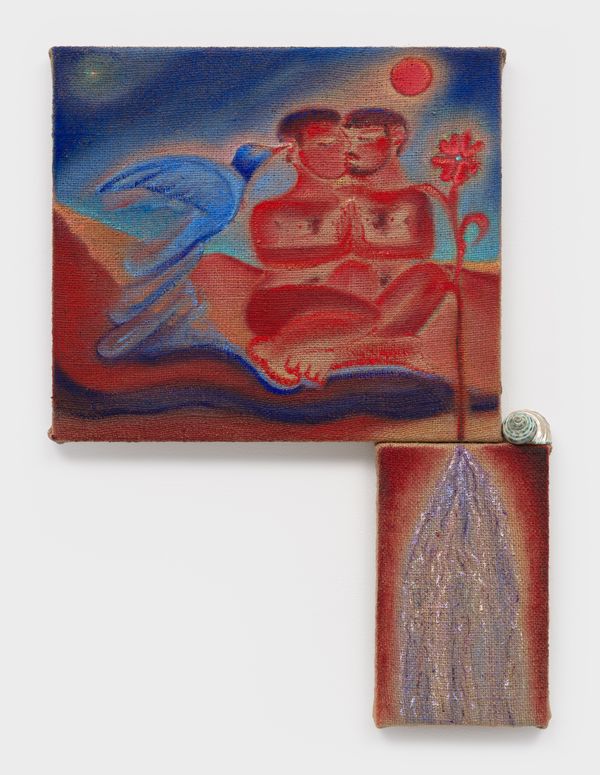
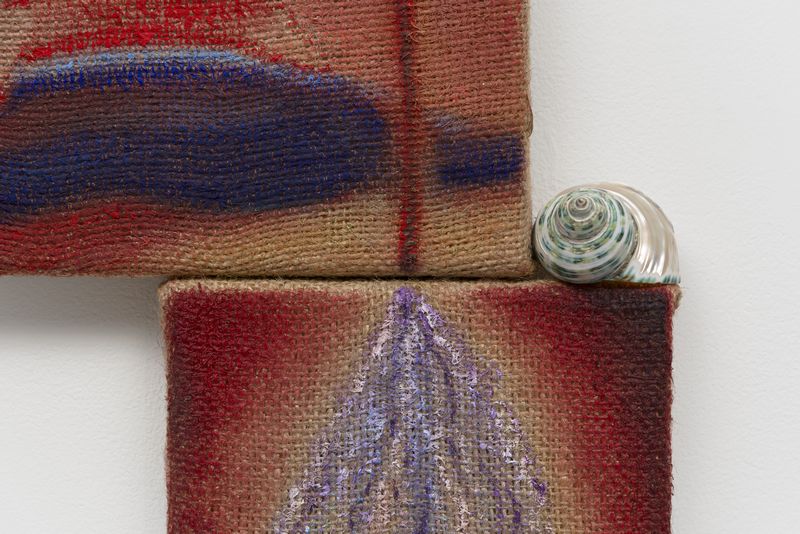
It is within this daily practice, before a work reaches its final form, that the artist reveals perhaps his most honest self. Painting becomes a process of absorbing and transforming lived experience, allowing deeply personal memories to evolve into images that resonate beyond autobiography.
It is therefore no surprise that eroticism occupies a significant place in the exhibition. Scenes of intimacy never function as provocation or anecdote, but instead form part of a broader inquiry into human relationships and the ways desire shapes everyday life. For Correa Mejía, speaking about love and personal relationships also means reflecting on larger structures of care, coexistence, and affection that define social life.
Bodies are joined by recurring animals and symbols: snakes, toads, birds, displaced moons, and landscapes where roots, water, and desert coexist. These images point simultaneously toward the cosmic and the earthly, suggesting a worldview in which every form of life remains interconnected. In several paintings, the moon even appears at the bottom of the composition, overturning familiar visual hierarchies and subtly altering the viewer’s sense of space.
Although symbolic references abound, the strength of Correa Mejía’s work lies in its resistance to singular interpretation. Rather than prescribing meaning, his paintings remain open, inviting contemplation and personal projection. They bring together the directness of prehistoric cave art, an engagement with the history of painting, and a distinctly contemporary sensibility that finds resilience in fragility and emotional honesty.
Ultimately, El amor se esconde como un animal salvaje reaffirms one of Correa Mejía’s greatest strengths: his ability to transform materials, memories, and private experience into a visual language that reaches well beyond autobiography. Through the rough texture of jute, the emotional intensity of color, and the evocative power of his imagery, he constructs a poetic world where body, landscape, and memory merge into a single, living surface.
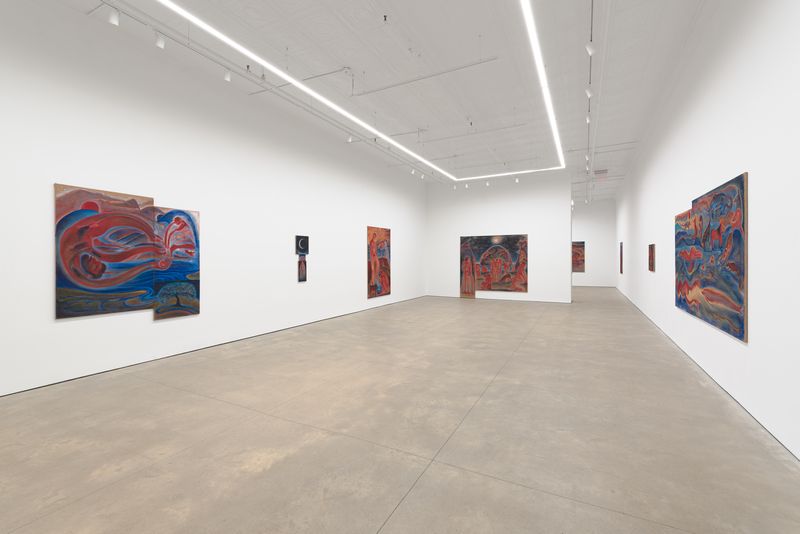
Daniel Correa Mejía: El amor se esconde como un animal salvaje
P·P·O·W, 392 Broadway, New York
June 12–July 17, 2026

También te puede interesar
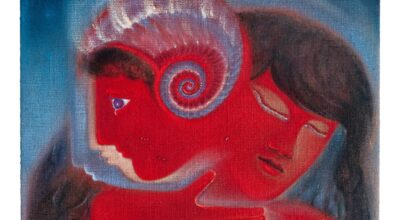
DANIEL CORREA MEJÍA: SOY EL DUEÑO DE MI CASA
Confronting himself with the complexity of being responsible for his own house, his own existence as a breathing and individual body, Mejía (b. 1986 Medellín, Colombia, based in Berlin) finds through his work an...
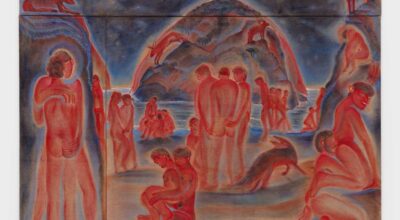
DANIEL CORREA MEJÍA: EL AMOR SE ESCONDE COMO UN ANIMAL SALVAJE
En su nueva exposición en P·P·O·W de Nueva York, el artista colombiano Daniel Correa Mejía (Medellín, 1986) presenta una mitología personal donde cuerpos, animales y paisajes se entrelazan sobre yute, un soporte áspero que...
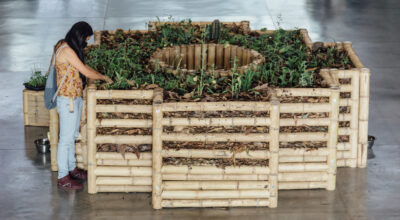
EL CAMINO MÁS LARGO. ARTE CONTEMPORÁNEO EN ANTIOQUIA
"El camino más largo" es una exposición colectiva de artistas de Antioquia y zonas aledañas que buscan visibilizar aquellas prácticas que están contribuyendo a renovar los imaginarios artísticos de dicha región colombiana. La muestra,...