

BEYOND FUNCTION: THE RHIZOMATIC RE-IMAGINATION OF SPACE AT THE NEW YORK LATIN AMERICAN ART TRIENNIAL
New York—a city whose very stones whisper a millennial dialogue between form and spirit. From this vantage point, I observe the transatlantic announcement and development of the New York Latin American Art Triennial (NYLAAT) with a particular, almost visceral, anticipation. The 2025 edition, ambitiously titled Sensorial Fusion: Relationship Art & Architecture, scheduled from September 6, 2025, to January 17, 2026, is not merely another curatorial proposition. It is, I would argue, a necessary geopolitical and aesthetic intervention—one that seeks to recalibrate our very understanding of spatial experience. As an art critic and historian from Panama navigating the Gothic, Baroque, and Cubist skeletons of Bohemia, I have become acutely aware of how built environments inscribe themselves upon the psyche—a phenomenon that NYLAAT 2025 promises to explore through the uniquely syncretic lens of Latin America.
The Triennial’s foundational premise is both historically astute and boldly contemporary: it resurrects the primordial kinship between art and architecture, a relationship consecrated by the social utopias of the twentieth-century avant-garde. This is not a nostalgic glance backward, but a reclamation of that shared revolutionary aspiration for the moral and material reconstruction of society. In the Latin American context, this proposition is particularly resonant. Our architecture—from pre-Columbian geometries echoing the land to the soaring concrete lyricism of modernism—has always stood as a vibrant testament to a complex palimpsest of histories. It is a discourse in stone and steel, weaving indigenous cosmologies, colonial impositions, and a relentless tropical modernity into a living chronicle of regional identity.
The curatorial strategy—to disperse the exhibition across a constellation of venues, from the hallowed halls of The Hispanic Society Museum & Library and the Newhouse Center for Contemporary Art to the dynamic, community-embedded spaces of BronxArtSpace and Inspiration Point, and the provocative architectural ensemble comprising Lehman College Art Gallery, Hostos Community College Art Gallery, NYLAAT House #18, and the LMCC Art Center on Governors Island—is itself an architectural statement.
This framework deliberately mirrors the fragmented, polycentric nature of the contemporary megalopolis, positing that the critical dialogue between art and architecture cannot be apprehended in a vacuum, but must instead be read within specific, politically and historically charged contexts. By decentralizing its exhibitions across the urban fabric, the model actively subverts the monolithic authority of the traditional museum-as-institution, proposing a dynamic, rhizomatic network of aesthetic encounters that proliferate and connect in non-hierarchical ways.
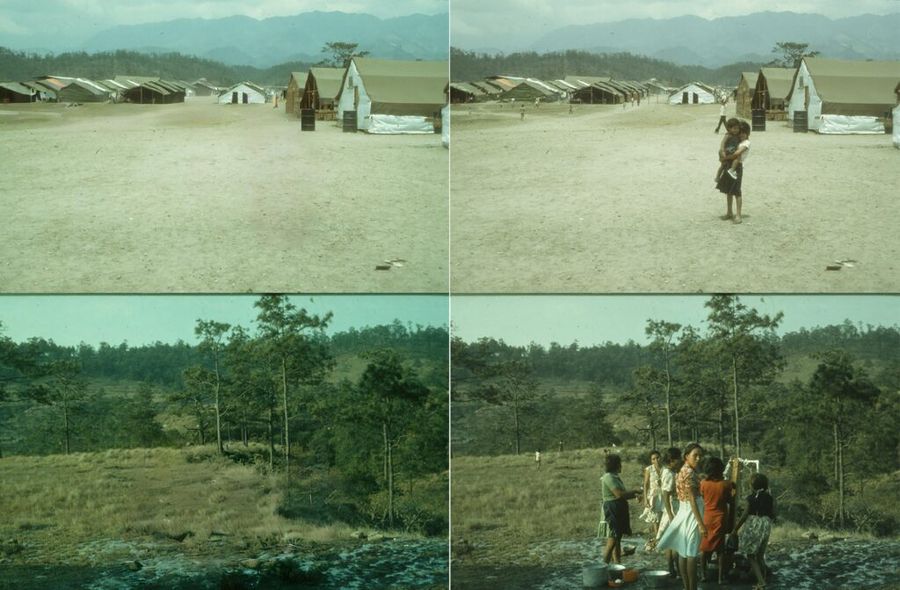
The project’s immense scope is evidenced by the participation of over ninety-three artists and collectives of Latin American provenance—a diasporic constellation whose practices, though emanating from diverse global locations, remain inextricably linked by shared cultural and critical lineages. This assembly deploys a wide-ranging arsenal of media and techniques, encompassing video art, performance, immersive installation, painting, mixed-media assemblage, and sculpture. The program further elevates its intellectual rigor through a robust didactic and educational commitment, manifested in a parallel series of panel discussions, symposia, and public events. All these multifaceted components are cohesively guided by the overarching thematic imperative of Sensorial Fusion: Relationship Art & Architecture, which functions simultaneously as a curatorial lens and a philosophical provocation, inviting inquiry into the deeply intertwined nature of spatial and aesthetic perception.
What truly electrifies this endeavor, however, is its potential to transcend mere formalist exercise. For generations, Latin American artists have acted as cartographers of the urban condition, documenting the shifting contours of cities and the intimate theatres of domestic life. They have captured both the collective euphoria of the plaza and the profound alienation woven into the fabric of sprawling barrios. NYLAAT 2025 proposes that the fusion of artistic expression and architectural form can move beyond representation to actively reimagine our environments. It offers a platform to address—through Latin American ingenuity—the pressing global pathologies of our time: the climate crisis and its demand for new symbioses with nature; the disruptive tides of gentrification and migration; and the homogenizing force of globalization.
This Triennial invites its audience not merely to see architecture, but to feel it—to experience it as a sensorial fusion capable of generating emotional resonance, fostering community, and asserting cultural continuity. It is an invitation to witness how Latin American artists and architects, drawing from deep wells of tradition while gazing steadfastly forward, are constructing not just buildings, but habitats for the soul—proposing futures in which function is married to myth and structure is imbued with sentiment.
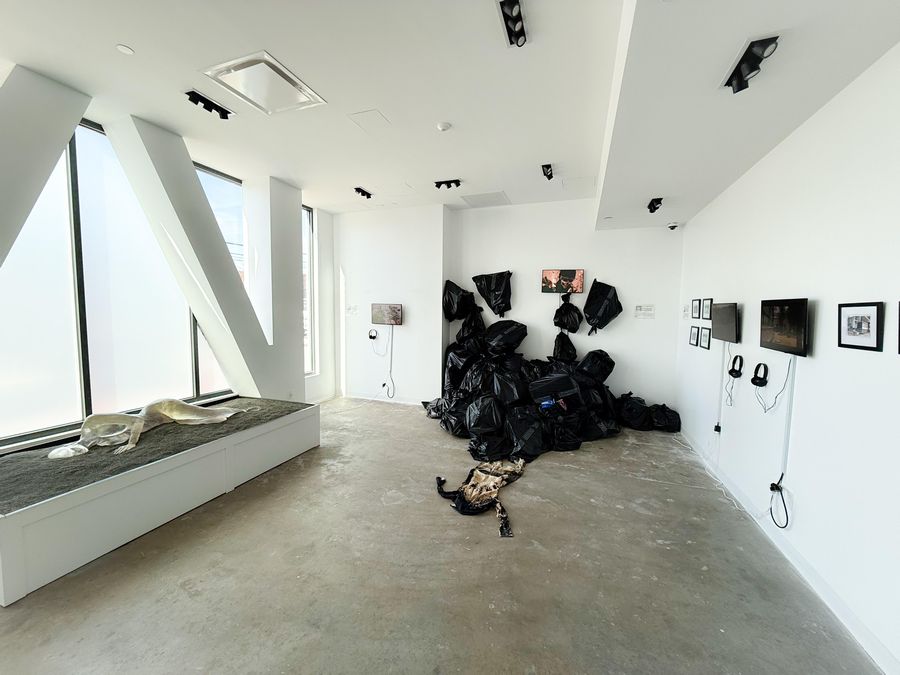
Building upon this foundational context, we may turn to the intricate tapestry of practices defining the contemporary Central American artists participating in NYLAAT 2025—a milieu characterized by profound epistemological inquiry and post-colonial consciousness. From Panama, the phenomenological investigations of Rafael Álvarez, who transmutes the refraction of light into a sensitive perceptual experience through subtle acrylic forms, find a compelling discursive counterpart in the transhistorical practice of Antonio José Guzmán & Iva Jankovic. Centered on the polysemic materiality of indigo—an ancient dye imbricated with sacred and colonial histories—their work deploys textiles, sound, and performance to excavate the trajectories of the transatlantic slave trade, framing the Black Atlantic not as a historical relic but as a living nexus of ongoing cultural exchange and migration.
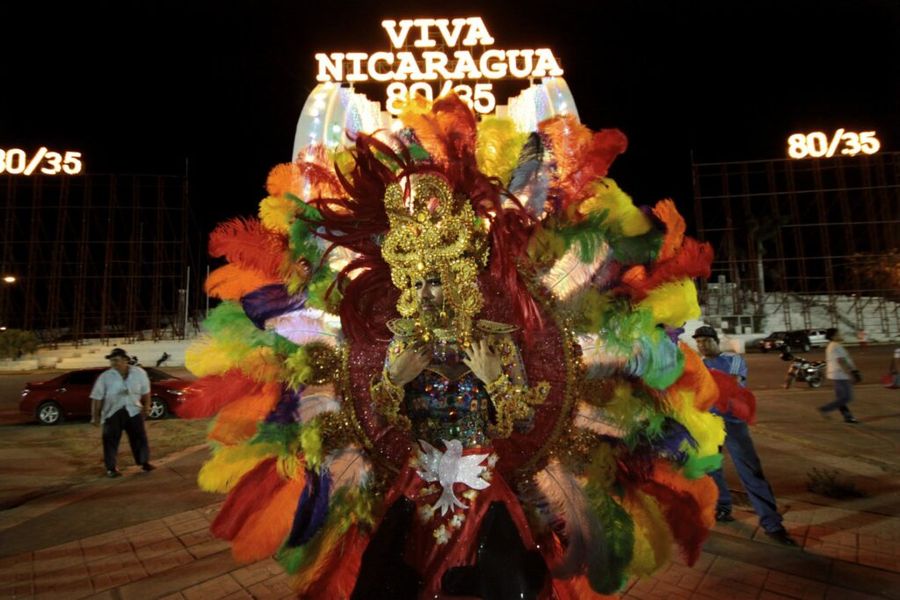
Moving northward, Nicaragua presents a triangulation of critical positions. Óscar Rivas champions a symbiosis between art and science, positing this union as fertile ground for the validation of diverse modes of knowledge, while Anante Estudio engages in the virtual reconstruction of reality through photogrammetric modelling. This techno-rationalist approach is powerfully queered by Elyla, an artist whose name itself signals a non-binary identity. Through ritual, performance, and archival research, Elyla ruptures colonial and rationalist narratives, reactivating dormant cosmologies and ancestral memories to propose spiritually grounded modes of becoming.
From Guatemala, the duo Balam & Mary Soto conceive of art as an immersive apparatus for rewriting the narratives of existence, compelling a collective confrontation with our ontological position amid technological transformation. This preoccupation with historical memory is further nuanced in Honduras through Daniel Valladares’s Travesía, a meticulously planned bipartite action that operates as a profound reflection on a complex moment within Central American memoria.
El Salvador, in turn, offers a cohort of artists engaged in a semiotic deconstruction of the contemporary condition. Mau Samayoa undertakes an almost surgical transcription of memory into abstract bitmaps; Ernesto Bautista orchestrates recognisable signs into schemes of productive mismatch; and Kevin Baltazar interrogates the fraught nexus between individuality and anonymity within the chaotic social fabric of modernity. Edwin Soriano’s Magnetism series unfolds across dual discursive planes, analogising both the spiritual pursuit of cosmic connection and the physics governing mass movement.
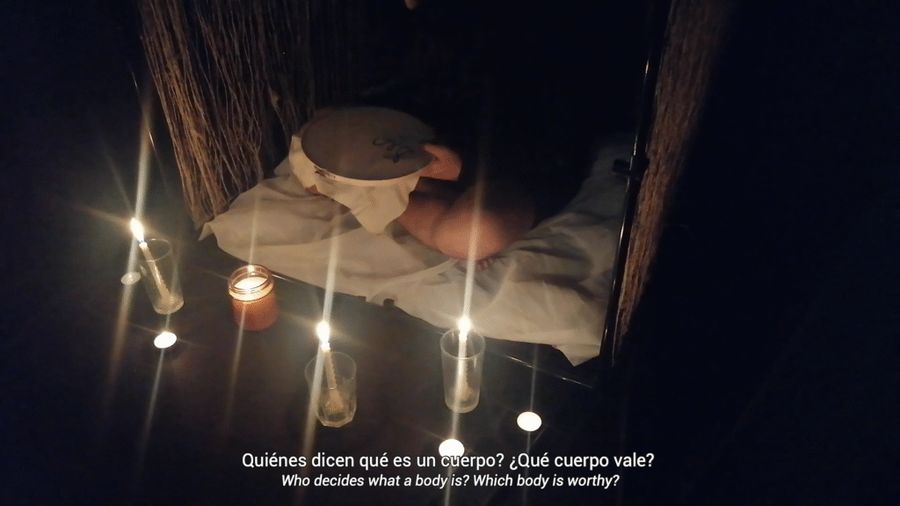

Costa Rica presents a notably diverse ecosystem of practices. Emma Segura Calderón’s transfeminist work archives trans* existence through the intersection of body, time, and space, while Marité Vidales translates the immigrant experience into a harmonic interplay of symbol and texture. Juan José Alfaro architecturally channels the sonic landscape to reveal its latent vibrations, and Alessandro Valerio Zamora extends his pedagogical practice toward social interaction, focusing on aqueous bodies and their agroecological and mnemonic entanglements.
This socially engaged thrust is most starkly articulated in the printmaking of Carlos Llobet, which foregrounds the structural precarity of informal urban labour, and in the assemblages of Ivannia Lasso, whose “affective cartographies,” constructed from marginal materials, poignantly document life under conditions of vulnerability while affirming the agency and dignity of the bodies that inhabit them.
The only sound work in NYLAAT 2025 is presented by Juan José Alfaro. Drawing inspiration from the interior architecture of the Museo La Neomudéjar in Madrid, the piece engages a site that preserves objects and atmospheres in their original state, enabling the capture of resonances tied to its former uses. The piece thus becomes a sonic bridge between the past and present of the location, extending architecture into the temporal and acoustic realm.
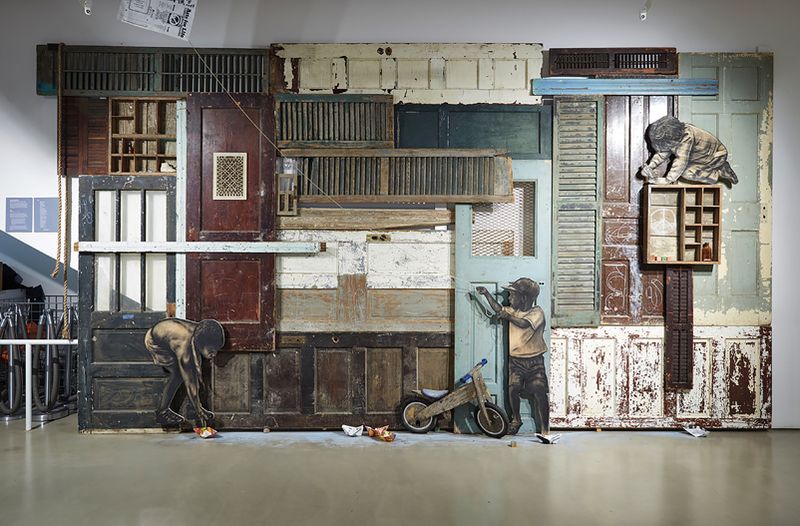

The artistic dialogue extends northward to encompass Mexico and the Caribbean, forging a discursive axis in which the spectral weight of history confronts the relentless pressures of contemporary socio-political and technological realities. In the Caribbean, the practice of Puerto Rico’s Adrián Viajero Román embodies a diasporic consciousness, constructing immersive installations from salvaged ephemera that oscillate between the tropical memory of his homeland and the metropolitan density of New York. His environments become synesthetic archives of race, migration, and identity.
This engagement with collective memory finds a potent, politically charged counterpart in Cuba, where a formidable cohort of artists deconstructs the island’s complex social and symbolic fabric. Guibert Rosales directly interrogates the socio-political through multidisciplinary public interventions, while Ángel Urrely delves into a surrealist and enigmatic symbolism rooted in an abject zoology and Cuban cultural heritage. The conceptual rigour of Linet Sánchez deploys miniature, unreliable narrations to question the very construction of the past, and José Ney’s documentary gaze—shaped by a background in architectural drafting—offers a grounded counterpoint.
Simultaneously, a profound fascination with systemic logic emerges. Armando Guiller translates the helix into a sculptural metaphor for human development, while Fidel García’s Resocialización project audaciously proposes a new social model derived from biometric analysis of homeless populations. This inquiry is complemented by a pervasive interrogation of technology, evident in the work of Marcel Márquez (MINImax-Studio), as well as the duo Néstor Siré & Steffen Köhn—whose TIME OF RED explores the fan-lore surrounding Cyberpunk 2077—and Rewell Altunaga, who dissects how video game culture reshapes perception and artistic production. The material poetics of Winslon’s stacked glass sculptures crystallize this entire discourse, transforming architectural forms into transparent yet razor-sharp metaphors for ideological pressure, surveillance, and social fracture.
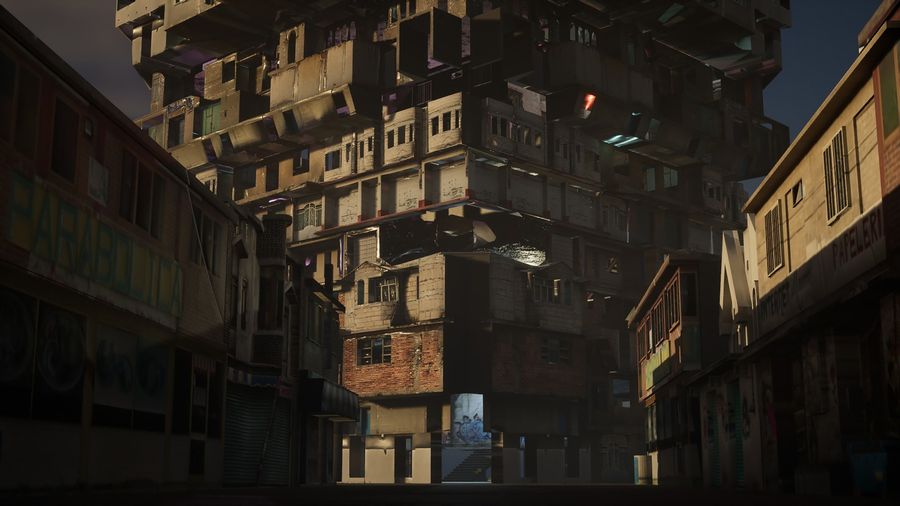
In Mexico, the dialogue shifts toward a profound reckoning with ancestral memory, territorial sovereignty, and state violence. The duo Malitzin Cortés & Iván Abreu present Auto-construcción (Self-construction), an epic live-coded audiovisual concert and video game animation executed in real time by algorithms. The work narrates, through speculative architectural fictions, the phenomenon of informal housing across Mexico, the United States, Latin America, Asia, India, and peripheral regions of Europe. Central to the collective’s practice is the capacity of writing and live coding to enunciate and generate audiovisual narratives in a liquid, granular mode.
Self-construction addresses what is, for most of the popular classes inhabiting megacities, the most viable mode of habitation. It defies the rigid constraints imposed by traditional architecture, real estate speculation, and economic crisis, revealing living spaces as perpetual works in progress. In doing so, it foregrounds flexibility, informality, and pragmatism as modes of self-expression that reflect a fundamental human adaptability.
Artists such as José Trejo Maya and Reyes Joaquín Maldonado Gamboa operate as custodians of Indigenous knowledge: the former as a tonalpouhque (reader of the Nahuatl calendar), the latter through documentation of the resilient yet increasingly threatened Mayan Xaanil naj architectural typology in the face of gentrification. This reverence for land is architecturally sublimated in the work of HW Studio, whose Casa Emma and Casa Enso II function as profound acts of listening—to light, stone, and place—while being critically inverted by Miguel Ledezma’s paper maquettes, which expose and critique modernity’s domination of nature.
The urban realm emerges as a site of communal resilience through Oficina de Resiliencia Urbana’s co-designed climate interventions and Ra! Arquitectos’ mobile Artifacts in Transit, which reconceive architecture as an ephemeral, affective cartography. Yet this spatial inquiry is shadowed by violence. Sergio Beltrán-García’s forensic LiDAR analysis of the site of Lesvy Berlín’s femicide exposes mechanisms of state concealment, while Rafael Lozano-Hemmer’s Level of Confidence deploys facial-recognition technology to construct a haunting algorithmic antimonument to the 43 disappeared Ayotzinapa students. Further critical layers are added by Cecilia Barreto’s examination of neoliberal resource extraction, the collective memory work of Unidad de Conciencias Colectivas Terrestres, and MoraKana’s kinetic installation Histolysis, which engages non-human, metamorphic systems.
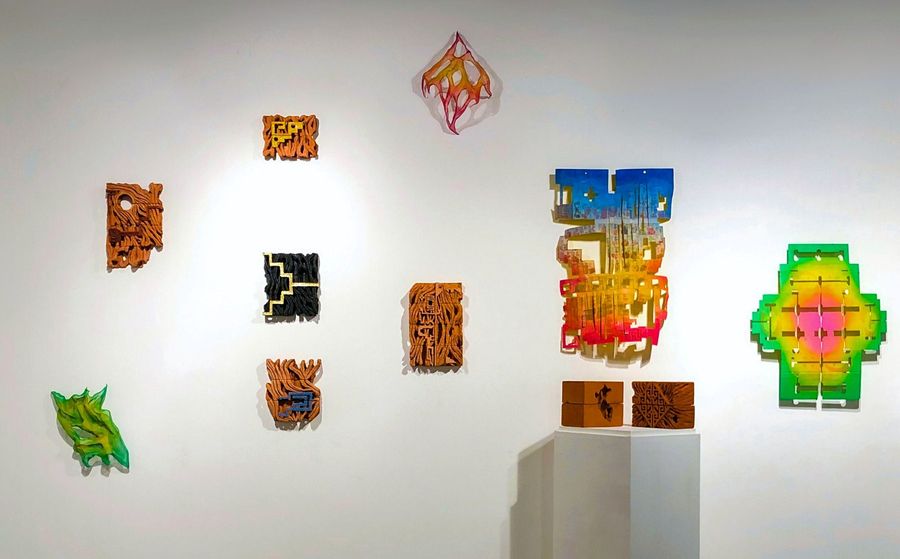
This constellation of Mexican practices finds resonant echoes in the Dominican Republic. Eliú Almonte merges vernacular architecture with New York icons through a “Magical Realist” decoding; Carmen Lizardo navigates immigrant hybridity through digital and analogue photographic processes; and Darío Oleaga’s fragmented wood collages operate as living documents of sensory memory and cultural heritage. The critical photographic practice of Fausto Ortiz further expands the discourse, compelling a reckoning with migration, race, and social inequality as constitutive elements of Dominican cultural politics.
Mary Frances Attiás Antún, meanwhile, explores the relationship between landscape and human presence, addressing universal themes such as fragility, love, and death. Her images linger within the everyday to reveal the invisible: a contained emotion, a farewell, a trace. The camera becomes a tool for close looking, transforming reality into something intimate and symbolic.
The phenomenon of international collaboration is exemplified by the transatlantic practice of Yapci Ramos, whose work is shaped by a geography spanning the Canary Islands, Barcelona, and New York. Her current residency at NYU underscores a trajectory rooted in archipelagic origins, where histories of mestizaje and colonization inform a distinct epistemological stance. From this position, Ramos has developed a methodology grounded in hybridity and transit, treating movement not merely as a condition but as a constitutive element of artistic inquiry. Her multidisciplinary practice—encompassing photography, video, sound, sculpture, and performance—is fundamentally installation-based, conceiving the artwork not as static representation but as a shared event. Each project emerges from lived, first-hand experience, demanding physical and emotional engagement that transforms the creative process into an embodied, communal occurrence.
In a parallel yet distinctly pedagogical and research-driven register, the Natural Materials Lab at GSAPP, founded and directed by Assistant Professor Lola Ben-Alon, operates from New York as a site for investigating the socio-ecological potential of raw, earth- and fiber-based building materials. The lab critically examines the full lifecycle of these materials, from supply chains and fabrication techniques to policy implications and possibilities for scaling. By converging material science, geology, architecture, and art, the lab articulates visionary frameworks for socially equitable and ecologically sustainable futures—positioning materiality itself as the foundation for a radical reimagining of the built environment.
The organizers and curators of the New York Latin American Art Triennial 2025 realize its fullest conceptual and geographical ambit by presenting an eclectic and profound constellation of artistic positions from South America. Taken together, these practices articulate a comprehensive and trenchant critique of modernity’s foundational violences while simultaneously speculating on post-human, decolonial, and communitarian futures.
The Andean region emerges as a particularly potent discursive pole, with Peruvian artists orchestrating a profound re-examination of materiality, memory, and interspecies relations. Niceli Portugal’s Apacheta re-ritualises the gallery space, transforming a concrete-and-rebar cairn—surrounded by urban debris—into a living monument of diasporic remembrance and ecological reciprocity. Visitors are invited to contribute stones or shoes, activating the work through an act of collective participation and healing.
This dialogue with elemental matter finds a complementary expression in Antonio de Loayza’s site-specific installation, which stages the entire process of terracotta brick-making—from raw, pliable clay to desiccated and finally fired states—as a form of quiet archaeology. This meticulous presentation does not merely display an object but exhumes the very lifecycle of a foundational building material, framing it as a silent witness to transnational flows of labor, technique, and cultural meaning. By utilizing local New York clay and juxtaposing its transformation with the implicit knowledge embedded in Peruvian brickmaking traditions, the work generates a potent dialectic. It foregrounds not only the temporal progression from fresh to fired states—readable as metaphors for past, present, and future—but also the cultural and economic asymmetries inscribed within global material production.
The installation thus operates as a comparative ontology of the brick itself, revealing how an ostensibly universal object is in fact deeply marked by the specificities of its geographical, social, and economic origin. In doing so, it questions the very ground—both literal and metaphorical—upon which identities and cities are constructed.
This engagement with matter is pushed into the ontological realm of microbial by Lolo Ostia, whose Talk to Me employs physical computing to facilitate interspecies communication with a SCOBY (Symbiotic Culture of Bacteria and Yeast). The work challenges anthropocentric paradigms and proposes a radical, symbiotic foundation for future architectures and design systems. Conversely, pioneering new media artist Angie Bonino projects a chilling techno-utopian vision of machine-based survival shelters designed for a prophesied mini-ice age—a stark warning against the combined threats of climatic transformation and post-capitalist ecological devastation wrought by transnational corporations.
Cecilia Paredes and Coco Martín anchor these speculative inquiries in the specific traumas of history and the personal archive. Paredes’s copper-woven installation Dwell materially entwines the captivity of the last Inca, Atahualpa, with the contemporary exploitation of mining labor, while Martín’s photographic tableaux configure the urban landscape as a forensic laboratory of personal and collective deterioration. Here, a fragmented film archive becomes a metaphor for a culture’s slow self-immolation, culminating in the recurring imagery of chimney and ash.
Completing this Peruvian contingent, Alejandra Rojas reimagines modularity through expansive sculptural systems that invite tactile engagement, moving beyond rigid geometries to propose innovative, sensorial approaches to inhabited space.
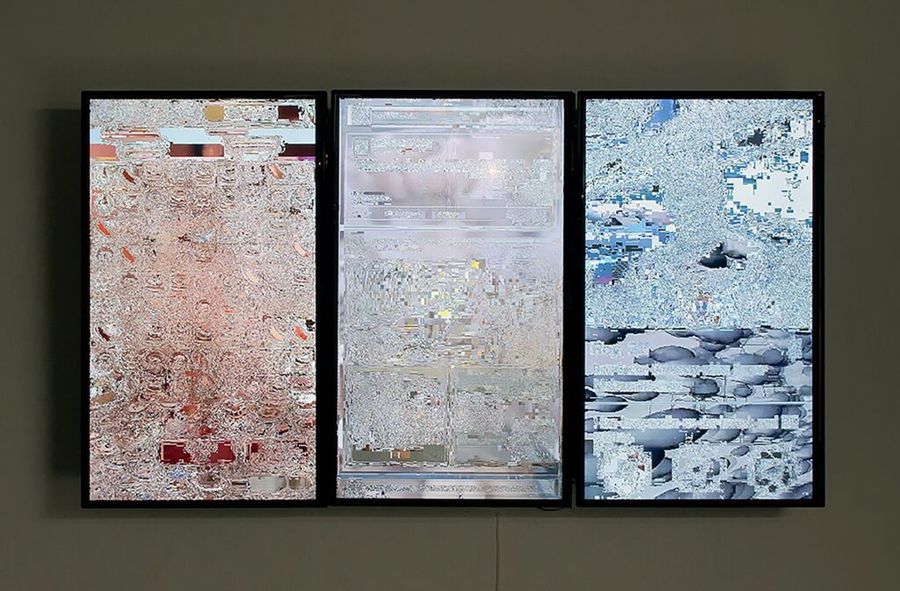
This intricate tapestry of critique and memory finds resonant echoes across the Southern Cone. From Uruguay, Fernando Velázquez deconstructs techno-solutionist paradigms through algorithmic and paradoxical narratives that interrogate the mediating role of technical devices, while Liliana Farber’s video triptych Feed meticulously archives the choreographed muscle memory of smartphone interactions. Her work renders visible the subjugation of the digital body to the repetitive gestures of platform capitalism.
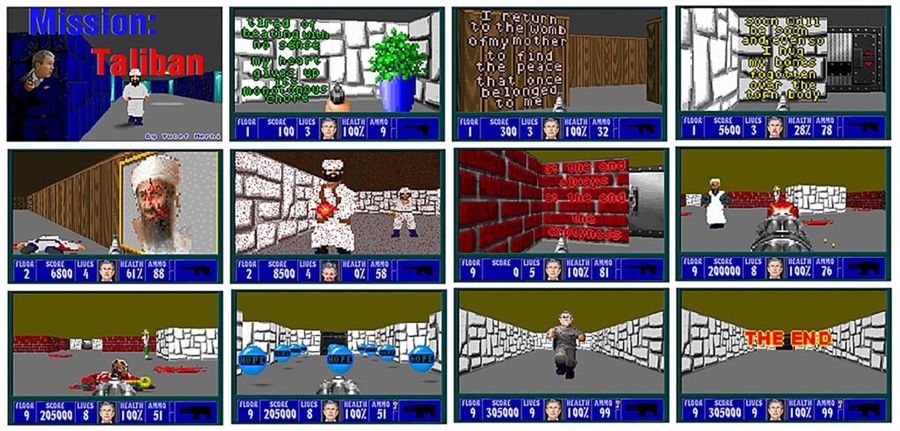
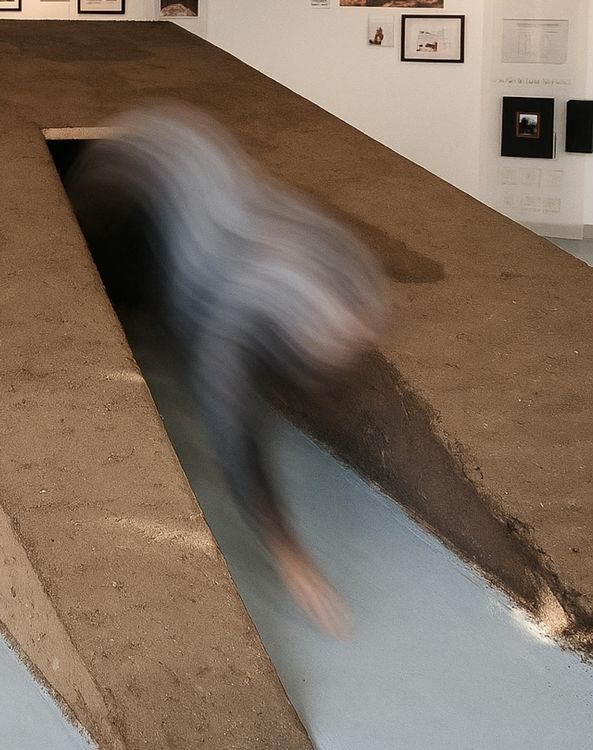
Venezuelan contributions offer profound meditations on land, labor, and digital catharsis. Dwight Portocarrero’s soil-clad ramp operates as a non-functionalist, Derridean vessel of silence and eroded agricultural labor—a monument not to ascent, but to the “quiet violence” endured by those who move invisibly across furrows and borders. In stark contrast, Yucef Merhi repurposes the archetypal code of the first-person shooter in Mission Taliban, creating a critically fraught yet cathartic space in which to process the geopolitical trauma of 9/11. Here, the act of reading digital poetry on the walls of a Taliban base carries the very real risk of virtual death.
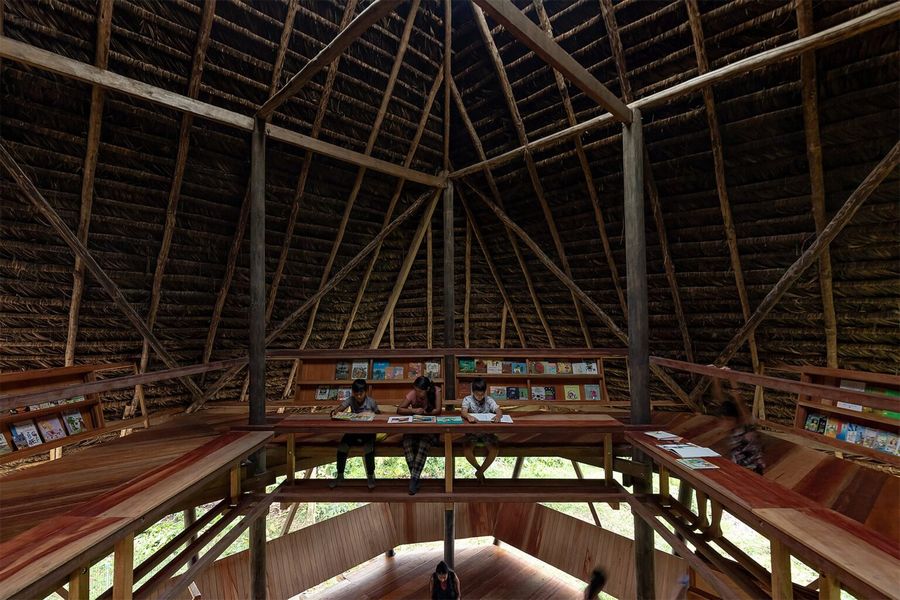

Ecuador contributes a powerful ethos grounded in communitarian practice, ancestral reclamation, and the psychic toll of displacement. The collective Al Borde presents Yuyarina Pacha (Space-Time to Think), a holistic learning space situated within the Amazonian community of Huaticocha, while La Cabina de Curiosidad showcases Chaki Wasi, a handicraft centre constructed through traditional mingas. Together, these projects exemplify a democratised, carbon-positive architecture rooted in vernacular knowledge.
Alongside these collective endeavours, Olmedo Alvarado and Boris Ordóñez Petroff articulate the physical and metaphysical distortions produced by historical erasure and migration. Alvarado does so through unframed, mobile paintings that function as ceremonial banners of resistance, while Ordóñez Petroff presents wrapped, entrapped anthropomorphic figures that meditate on the loss of self within the voracious, technologically saturated metropolis. The contemplative installations of Darwin Guerrero further extend this dialogue, using spatial context to provoke reflection on intertwined social and environmental concerns.
The Colombian contingent manifests a deep and multifaceted engagement with urban cartography, material memory, and the enduring legacies of conflict. Dora Mejía deconstructs the authority of maps and satellite imagery, layering technical drawings and historical data to reveal how urbanisation relentlessly reshapes collective memory and territory. Juliana Correa engages in a poetics of the fragment and the stitched, assembling residual forms to house a resonant, paradoxically beautiful void, while suturing land-ownership records and textile waste into dense, tactile calls for environmental and social reparation.
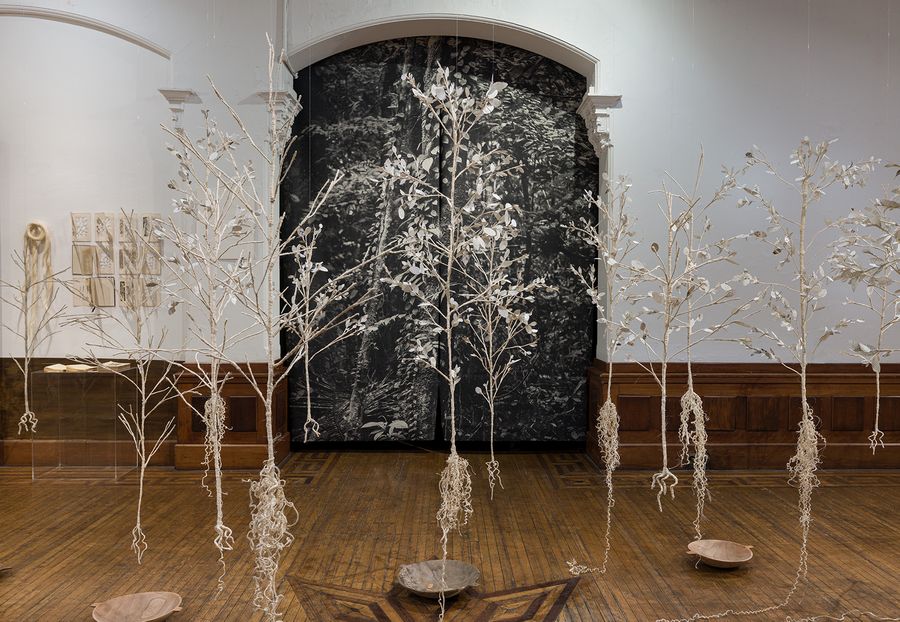
This material inquiry is complemented by Álvaro García-Ordóñez’s Our Last Half Sacred Supper, a floating, war-inflected installation that deploys water as a metaphor for memory, purification, and unresolved trauma, and by Tatiana Arocha’s fieldwork-based practice, developed in collaboration with Indigenous communities to explore the cultural and spiritual significance of plants such as coca. Her work honours ancestral knowledge as an active form of resistance against epistemic erasure.
Further enriching this national representation, Alejandro Pinzón offers intimate paintings rooted in provincial Colombian customs, while Alejandro Múnera Ramírez reconfigures construction materials into poetic, self-referential assemblages. Atelier García presents a belvedere that frames the landscape through intersecting geometries: perched atop a hill, a concrete plinth and roof articulate views toward the Rock of Guatapé and the surrounding reservoir, functioning simultaneously as lookout and mountain shelter. Its triangular floor plan—shaped by the site’s topography—organizes three spatial axes: a solid base integrated with the garden, a transparent upper level that frames distant vistas, and an open-air, habitable roof.
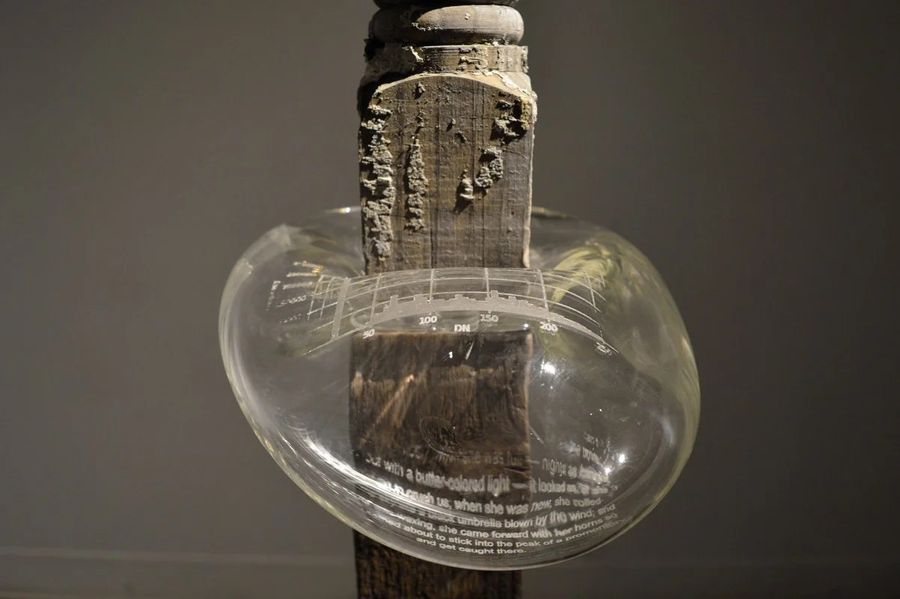
Alba Triana’s Music on a Bound String translates sound and light waves into a visually complex, synesthetic discourse, while Carlos Llamas employs photographic collage to capture the often-overlooked vibrancy of the urban environment. Natalia Mejía Murillo’s practice further resonates with questions of how we situate ourselves in the world in relation to the information and images we consume. Through acts of collecting, mapping, and archiving, she explores subtle connections between the natural and the artificial, the real and the facsimile, intuition and reason.
Finally, Álvaro Correa Molina foregrounds the fragment as a residual, found element. Its formal attributes—colour, texture, morphology, and scale—reveal its latent capacity to shelter something unseen. By covering, assembling, and activating material space, Correa Molina articulates forms that complement one another through their singular qualities, evoking the preexistence of an inhabiting presence. These structures ultimately house a void, staging a paradoxical tension between the beautiful and the sinister.
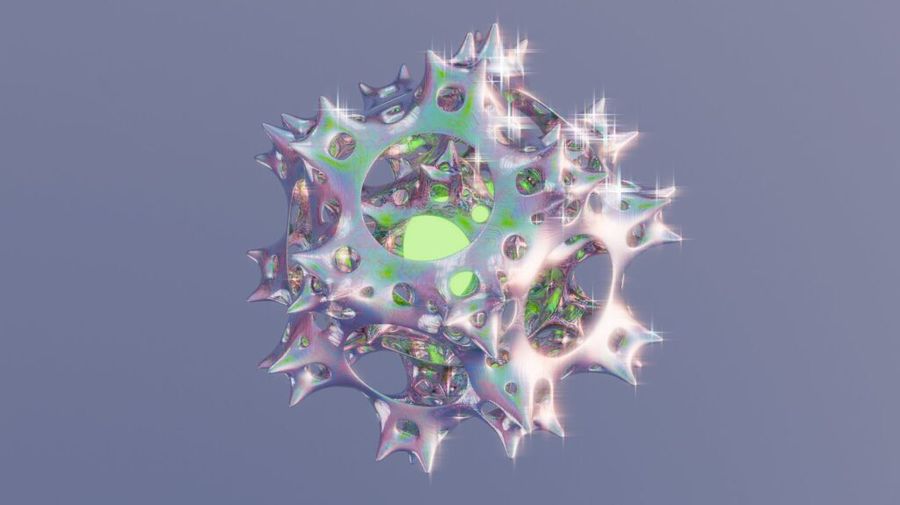
Argentine artists further diversify this critical panorama through investigations into post-human spatiality, the architectures of power, and the limits of knowledge. Liana Strasberg and Elisa Lutteral dissect the spectral and the symbolic: Strasberg through digitally born, multilayered cities that challenge human–non-human dichotomies, and Lutteral through electroformed textile sculptures that subvert the rigid permanence of imperialist monuments, performing an alchemical fusion of linen and metal.
Josemiel Platz and Joaquín Fargas explore metaphysical and epistemological frontiers—the former through archetypal paintings that function as meditative thresholds, the latter through The Absolute Book, a Borgesian digital object that materialises the elusiveness of infinite knowledge.
The personal as political is powerfully articulated in Marisa Caichiolo’s The House on Fire, a site-specific installation addressing familial loss and female resilience, and in Flavia Bertorello’s Ego Box, a transparent architectural model that interrogates the fragile boundaries between the psyche and the built environment. Completing the Argentine narrative, Sabrina Merayo Núñez collaborates with living biomaterials, while Valeria Divinorum’s kinetic stained-glass work Oculus immerses viewers in an ever-shifting play of colored light and shadow, transforming geometric precision into a contemplative, cosmic experience.
From Bolivia, Wara Vargas Lara offers a poignant testimony on the nation’s architectural identity, contrasting the painful legacy of colonial structures with the emergent, defiant architecture of El Alto, understood as both a site of protest and a search for an authentic cultural voice. Brazilian participation, through the collective Khalil Charif & Marcos Bonisson, presents Kopacabana, an experimental filmic collage that situates the iconic beach as an epicentre of intercultural and sensorial memory, narrated by poet Fausto Fawcett. Meanwhile, C. L. Salvaro constructs an “anti-belvedere” from demolition debris, transforming the gallery into an aerial swamp where radiant gardens and damp stains vie for dominance—a fittingly unresolved metaphor for the nation’s layered contradictions.
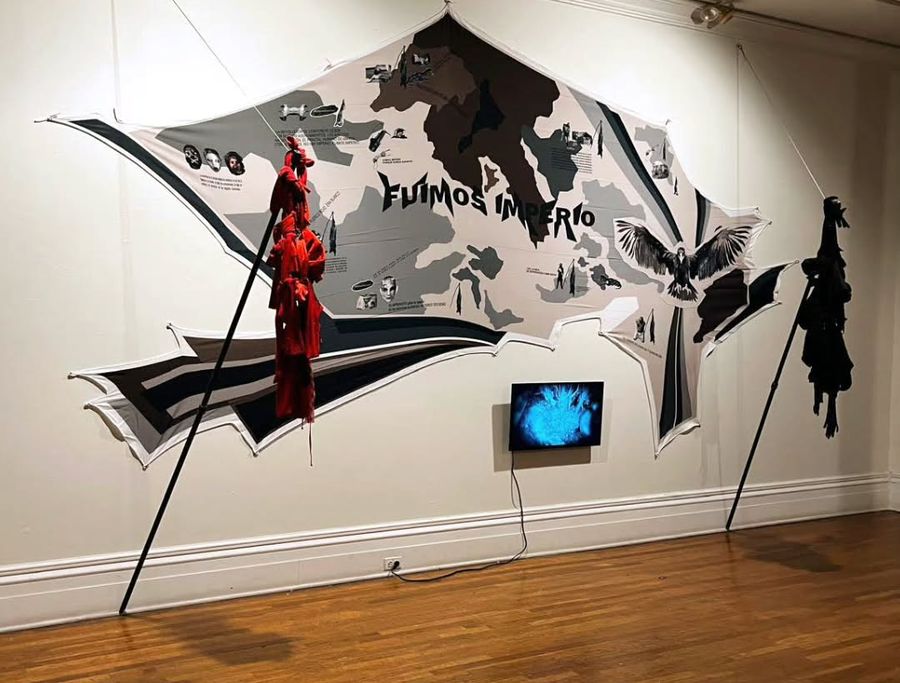
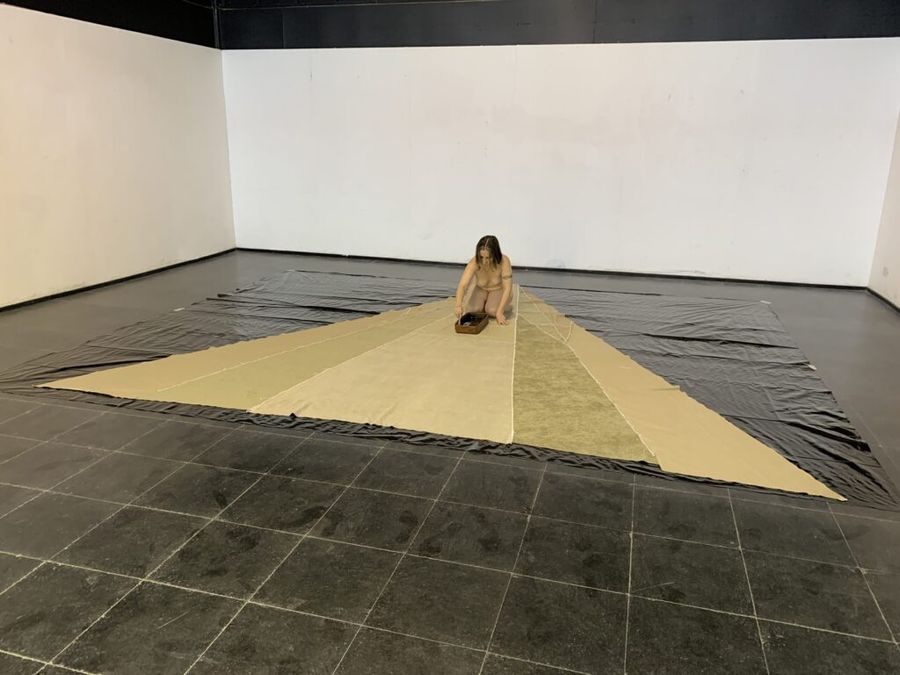
Finally, the Chilean contributions deliver some of the Triennial’s most searing political and social critiques. Danilo Espinoza Guerra’s smoke-on-fabric works constitute a “spectral archive,” in the Derridean sense, of the politically interrupted Ochagavía Hospital, employing volatile, residual materials to summon the suspended memory of a socialist promise later converted into a business centre. Iván Zambrano critically repurposes the plumb line as a phallic symbol of patriarchal rigidity and hegemonic masculinity, exposing the logics of control and repression embedded in ideals of precision and verticality. In radical opposition, Poli Mujica’s Armors of Tenderness speculates on a feminist, decolonial, and queer symbolic architecture inspired by microscopic, networked organisms, proposing a sympoietic model of building grounded in softness, mutualism, and interdependence.
This triad is further complemented by Gabriela Carmona’s exploration of the absent, wounded body in La desigualdad del tiempo, and Víctor Hugo Bravo’s use of discarded underwear as intimate markers of community and subjectivity in Fuimos Imperio, reclaiming agency through the transformation of waste. Together, this vast and intricate South American constellation within NYLAAT 2025 does not merely represent a region; it stages a crucial epistemological confrontation, mobilizing a dizzying array of media and methodologies to dismantle the enduring myths of progress and power, while insistently assembling fragments toward a more resilient, plural, and equitable future.
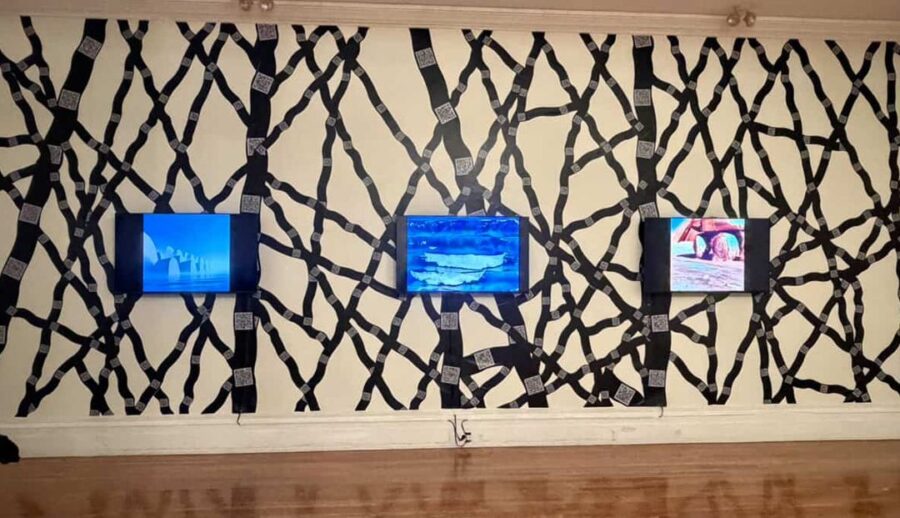
The New York Latin American Art Triennial 2025, Sensorial Fusion: Relationship Art & Architecture, emerges not merely as a group of exhibitions but as a monumental epistemological rupture. It orchestrates a decolonial re-reading of spatial practice through a rhizomatic, diasporic lens, challenging the foundations of how built environments are conceived and how they inscribe themselves upon the human psyche. By decentralizing its narrative across New York’s urban fabric, the Triennial subverts the monolithic authority of the traditional museum, creating instead a dynamic network in which aesthetic encounters proliferate in non-hierarchical ways, mirroring the fragmented condition of the contemporary megalopolis.
The staggering assembly of over ninety-three artists and collectives, drawn from across Latin America and its global diaspora, stands as a powerful testament to a shared yet heterogeneous critical consciousness. Their collective endeavor—ranging from the quiet archaeology of material culture to technologically mediated speculation—dismantles enduring myths of progress and patriarchal power, interrogating the legacies of colonialism, the violence of extraction, and the pathologies of the techno-capitalist present.
Ultimately, NYLAAT 2025 posits the fusion of art and architecture as a vital sensorial methodology for world-building. It advances a grand and urgent proposition: that from the fragments of history and the margins of global discourse, it is possible to assemble habitats for the soul—to forge futures in which function is irrevocably married to myth, structure is profoundly imbued with sentiment, and a more resilient, plural, and equitable horizon comes into view.

También te puede interesar
COLECTIVO DE ARTE MICH: ACCIÓN MONUMENTA
La Galería Macchina de la Escuela de Arte de la Pontificia Universidad Católica de Chile, presenta en la Galería Macchina la exposición: Acción Monumenta , del colectivo de arte MICH, el resultado de un...

UNA VISITA A LA BIBLIOTECA DEL COLOR DE LONDRES
En el Royal College of Art (RCA) existe una biblioteca creada para atesorar publicaciones exclusivamente acerca del color. Esta colección especial, llamada Colour Reference Library, conforma uno de los archivos más grandes y completos...
DESCARTES. ARTE, ELECTRÓNICA Y RECICLAJE EN EL FIN DEL MUNDO
“Lo que tratamos de hacer con este trabajo y talleres es concientizar sobre la reutilización de los descartes para la elaboración de piezas robóticas, lumínicas, de juguetes, que tienen movimiento y luz propia y...