
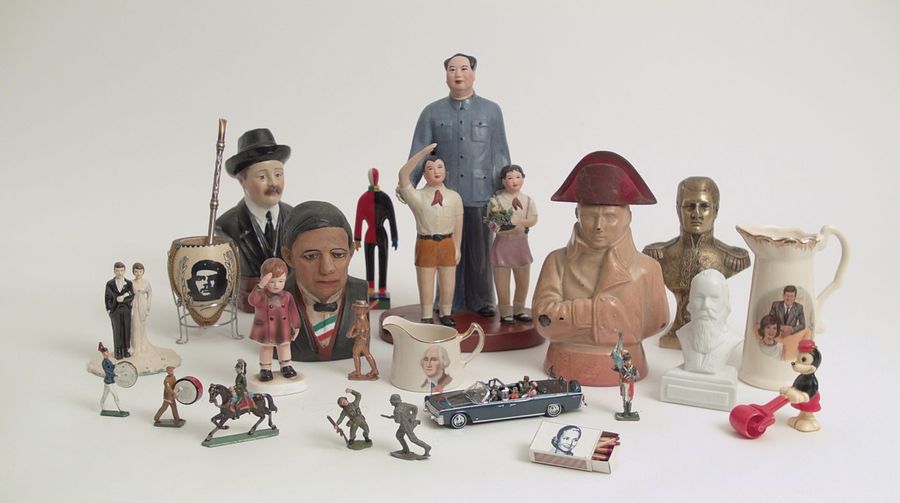
LA INTERNACIONAL ARGENTINA
Despite the relentless attempts to purify tradition, the Argentine Republic is the paradoxical result of the inharmonious coexistence of two factions: civilization and barbarism. We do not know (and never will) which came first, but what we do know is that the history of the Republic has never had a Golden Age where privileged beings organized the world according to measure.
If, as Borges said, every paradise is a lost paradise, then Argentina, having never had one, lost it irretrievably. Because since the dawn of time, from that primordial and ancestral magma, everything has been conflict. In this regard, the voice of the obscure Heraclitus resonates when he states that war is the mother of all things. But let us not go so far; it suffices to call upon the beginning of Argentina’s great book, which several generations knew by heart:
“Terrible shadow of Facundo, I summon you, so that, shaking off the bloody dust covering your ashes, you rise to explain to us the secret life and the internal convulsions that tear at the very entrails of a noble people! You possess the secret: reveal it to us!”
In 1845, when Facundo was published, there were still twenty-three years before Sarmiento assumed the presidency and attempted – with or without success? – to implement the ideas of his generation, that of ’37. What Sarmiento desperately sought with the essay was to detect the cause of the sufferings of his class – which he equates with the country – and the consecrated formula was summed up in the antinomy «Civilization and Barbarism,» a scapegoat that heralds the caudillo Facundo Quiroga as the possessor of the secret.
However, later on, he discovers the true cause of our deplorable condition as Argentinians: “I needed to walk the entire path I have already traveled to reach the point where our drama begins.” And our drama begins on May 25, 1810, with the Revolution, that is, with our birth. We were born marked by a drama, our drama is the heart of our being, with our being, the drama begins.
La Internacional Argentina is one of the great novels of national literature, telling the story of a millionaire of African descent (a slave and an aristocrat at once) who seeks to unite Argentine artists scattered across the world to found a community where imagination prevails. The adventures are varied, and Copi, its author, reveals an unparalleled sensibility (ironic, biting, lucid: “Only in Argentina can one be safe from Argentinians”) about Argentine identity.
The novel takes place in Paris, but the protagonist’s ex-wife, recently arrived from New York, recounts how there, too, an attempt is being made to organize the brotherhood. At this point in the fiction, we pause to make a leap into reality.
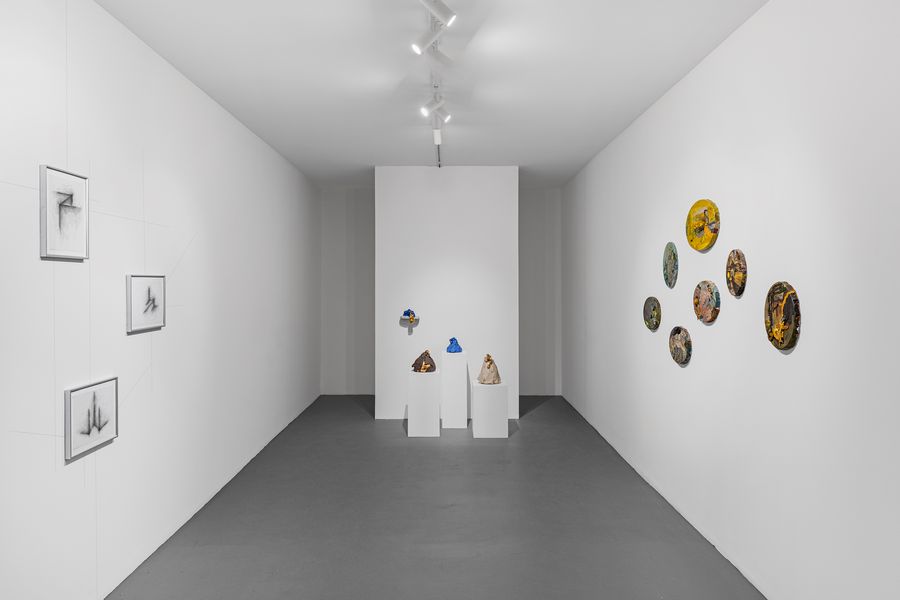
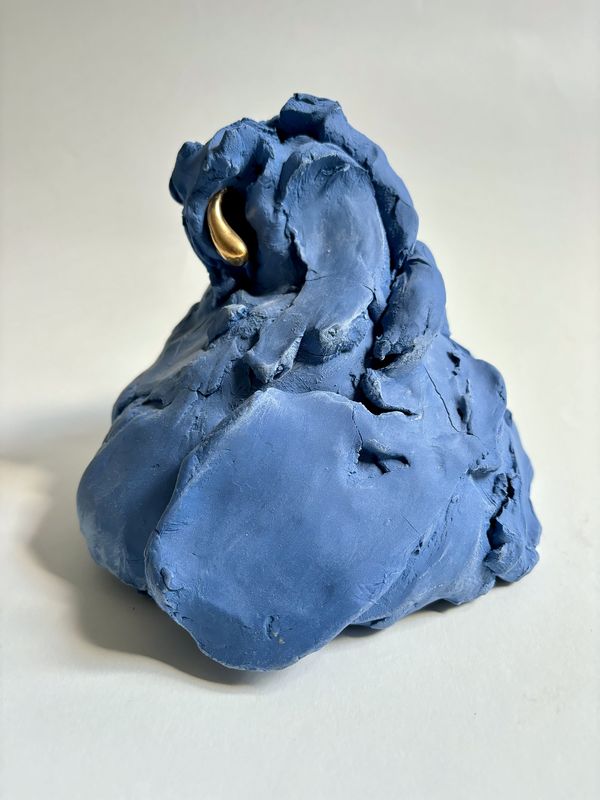
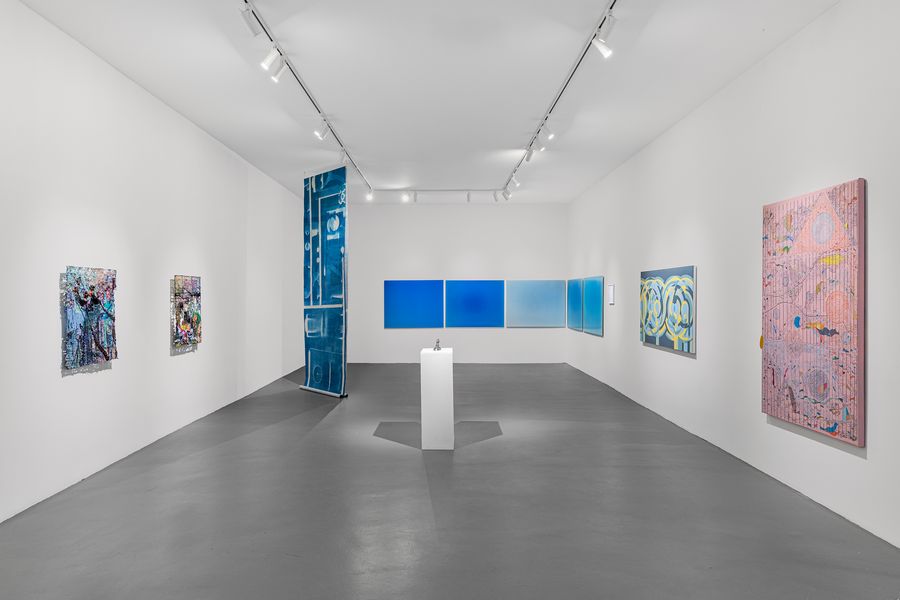
It is the mysterious magic of art that bursts forth with the exhibition, which shares the same name as the novel. La Internacional Argentina brings together works by 17 Argentine artists based (with temporary variations) in New York: Cecilia Biagini, Ivana Brenner, Rafael Bueno, Bibi Calderaro, Beto De Volder, Dolores Furtado, Julio Grinblatt, Nicolás Guagnini, Claudia Kaatziza Cortínez, Syd Krochmalny, Fabián Marcaccio, Sabrina Merayo Núñez, Luciana Pinchiero, Liliana Porter, Sofía Quirno, Analia Segal, and Pedro Wainer. It is curated by The Bureau of The Unknown Curator, with a text by Syd Krochmalny.
With these previous marks (the country’s novel, Copi’s novel), La Internacional Argentina plunges into the conflict of tradition, into the dissonant songs of the homeland, but also plants a flag, staking a territory: The Slip gallery, from February 5 to March 29. Is it American or Argentine territory? Both? And if there is a territory, who occupies it? Migrants, exiles, nomads? These questions, whose answers we will not provide, are interwoven with one of the curatorial concepts that supports the exhibition: the census.

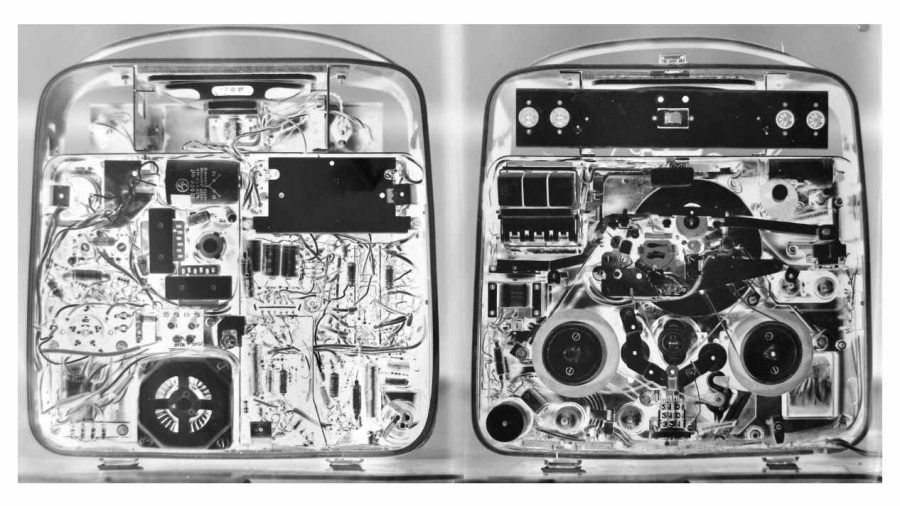
The first national census was conducted between September 15 and 17, 1869, during, of course, the presidency of Domingo Faustino Sarmiento. The introduction bluntly declares the needs of the state:
Census data constitute the first inventory of living elements that make up nations. By enumerating, classifying, and breaking down man, his raw material, societies come to have full awareness of their weakness or strength, replacing the uncertain and hypothetical with the incontestable reality of facts. They are, thus, for nations, the useful and fruitful verification of the ‘know thyself’ that Greek wisdom had inscribed on the entrance to the temple of Delphi.
The census serves rulers to understand the real problems they face and apply policies accordingly. In that year, to grasp the scope of the impending social conflict, the foreign population percentage stood at 12%; 25 years later it had doubled; by 1914, at its peak, it reached almost 30%. It was precisely in this context of foreign dispersion (an uncontrollable mix of customs, habits, and languages) that Leopoldo Lugones worked to elevate the gaucho to a national emblem.
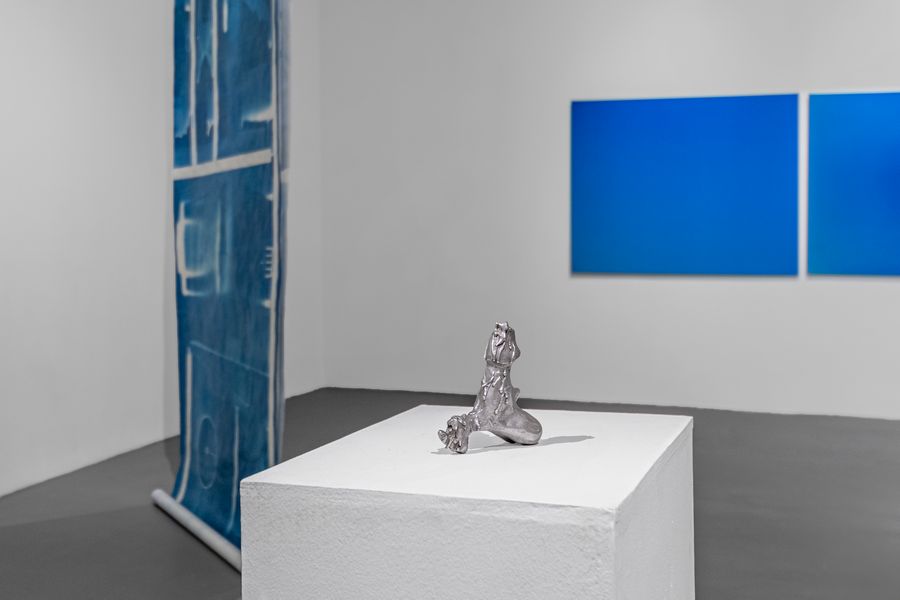
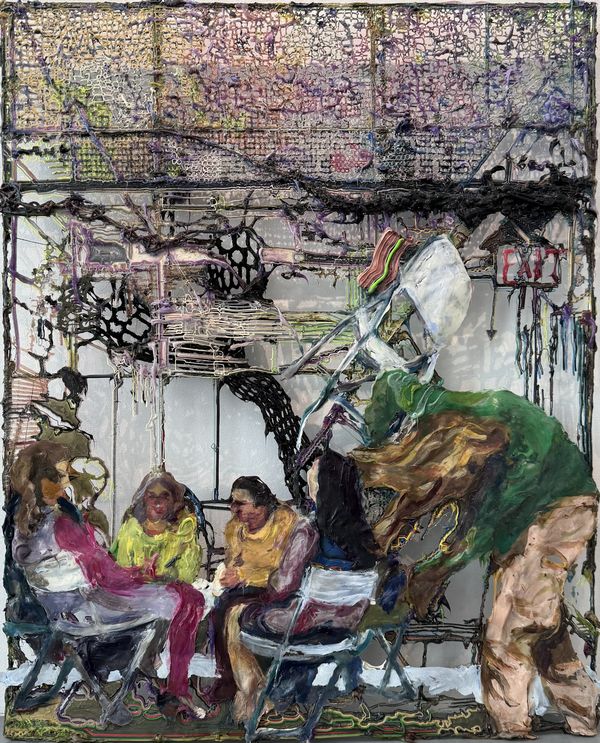
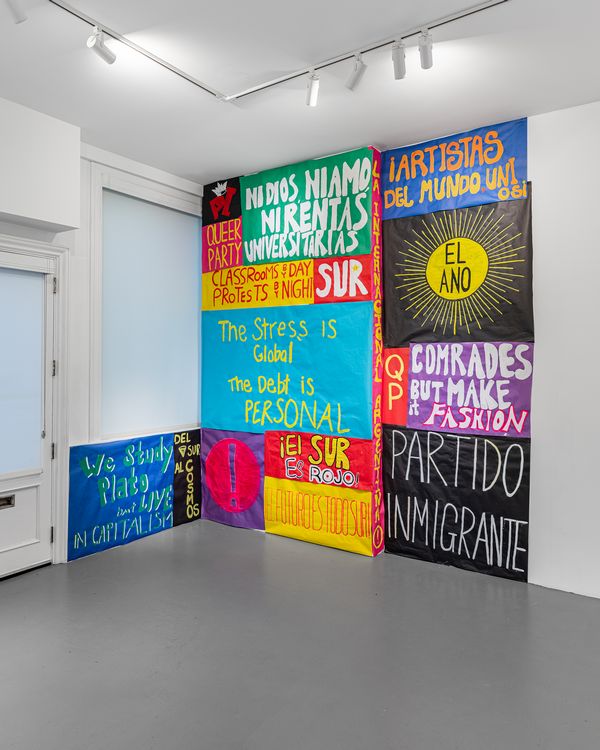
These are the tensions inherent to a country in the process of construction, but they are also those that inhabit any country at any moment in its history. The same happens in La Internacional Argentina (the exhibition, the novel), which includes diverse, contradictory artists working with multiple materialities and formats. We find sculptures, paintings, photographs, videos, collages. Established artists, others of mid-career, forming a community without community. For them, the same question applies as for a nation: what unites them? A feeling? A passion?
There is something more to say. If, while walking through the exhibition, we let ourselves be guided a little by imagination, a little by perception, and a little by sentiment (we do not know how far each one goes), we can discern, thanks to the arrangement of the works (the dominance of light blue over any other color, or rather, of light blue, of the sky and white, with some yellow gleams), the national flag, our patriotic emblem.
Until March 29, an Argentine enclave will function at The Slip, a (dis)organized community formed around tensions, intensities, and heterodoxies that make it unclassifiable.
Long live the International!

También te puede interesar
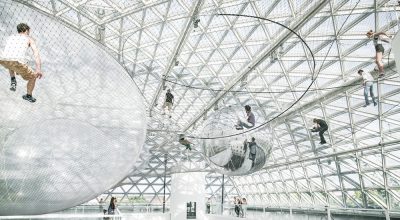
A PROPÓSITO DEL ARTE COMO EXPERIENCIA. TOMÁS SARACENO: IN ORBIT
Bajo la cúpula de cristal del K21 en Düsseldorf, institución que alberga la colección de arte contemporáneo del estado federal alemán Renania del Norte-Westfalia, se extiende a 25 metros de altura una construcción de…
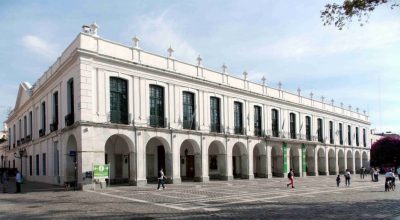
MERCADO DE ARTE CONTEMPORÁNEO, LA FERIA DE CÓRDOBA, VUELVE CON 65 GALERÍAS
Del 17 al 20 de agosto se celebra la sexta edición de Mercado de Arte Contemporáneo, en el Cabildo de Córdoba, ubicado en la Plaza San Martín de esa ciudad argentina, una feria que,...

Mundos Alternos:art And Science Fiction in The Americas
"Mundos Alternos: Art and Science Fiction in the Americas" brings together the work of 30 international artists from across Latin America and the Caribbean, including Mexico, Cuba, Argentina, El Salvador, Brazil, Chile and Puerto...