
Mexican artists
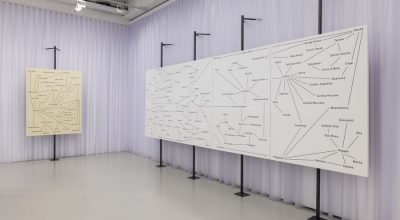
MARIO GARCÍA TORRES: A HISTORY OF INFLUENCE
Many of the works by Mario García Torres—b.1975, Mexico—take their cue from the pieces and essence of historical artists, in particular exponents of Conceptual Art, Arte Povera, and institutional critique. Using various media such as film, slide projection, photography, sound, text, sculpture, or painting, he analyzes artistic material—works, documents, attitudes, strategies, and myths—in order to devise both new history and (hi)stories.
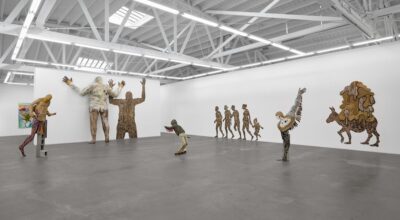
HECTOR DIONICIO MENDOZA: BUSCANDO FUTURO
As an artist, curator, and educator based in the agricultural community of the Salinas Valley in California, Dionicio Mendoza (b.1969, Uruapan, Michoacan, MX) embraces Latinx/e futurism while exploring themes of migration and the environment, spirituality, as well as the geographies of place, memory, identity, and the visualization of immigrant stories that expand upon a new latinidad.

HELIO. EL TALLER DE MIKE
«helio TM» is a group exhibition of Mexican artists who have employed the use of traditional heliogravure in their practice. This photographic printing process has seen a resurgence in recent years, particularly in Mexico City as the workshop of artist and photographer Miguel Counahan has operated as a collaborative space for artists, known as El Taller de Mike.

JORGE SATORRE: BLACK JACKET, GRAY SWEATSHIRT
Satorre connects the interior of the art center, protected by its thick defensive walls, and the exterior, a garden that runs alongside. “Most of the works included in this exhibition at CRAC Alsace were developed on site, intuitively responding to the characteristics of the space and its surroundings. The formal core of the proposal consists in connecting the interior of the building both physically and conceptually to the garden behind it”, says the artist.
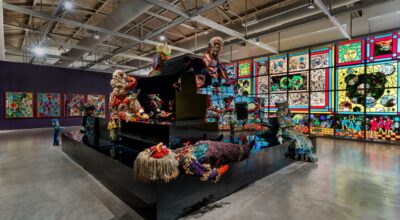
RAÚL DE NIEVES: ETERNAL RETURN & THE OBSIDIAN HEART
“Eternal Return and The Obsidian Heart” is, to date, the most comprehensive survey of work by Raúl de Nieves (1983). De Nieves investigates divinity, desire, and decadence across material, emotional, and spiritual realms. The artist draws inspiration from his childhood spent in Michoacán, Mexico, where public religious ceremonies and private rituals incorporate elaborate costuming and theatrical components. Coming of age in DIY scenes in San Diego and San Francisco also energized de Nieves with a theatrical approach to art making.

AMIDST THE PANDEMIC, PABLO HELGUERA SINGS FOR YOU
«If you want to send a free singing telegram to someone you care about, please email us at grandcentral@fullerton.edu. I can sing romantic opera, zarzuela, Hollywood classics, Broadway Tunes, Mexican folk songs, lullabies and Neapolitan songs. As I told the LA Times, I am not Enrico Caruso, but I am free, and I am alive (and happy to be so). If you feel sad or lonely at home or want to cheer someone you love, contact us and we will deliver -promise! (and it is free).» -Pablo Helguera
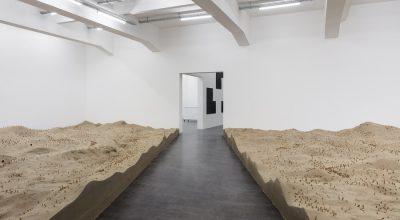
Gabriel Kuri:sorted, Resorted
His exhibition at WIELS – his first institutional solo show in Brussels, where he has lived for the past 16 years – highlights the hybrid nature of his playful work. It comprises over 60 works, including new pieces produced for the occasion, revealing both the diversity of Kuri’s formal approach and the consistency of his underlying themes: flows of information, notions of commercial and cultural value, consumerism, as well as material and its poetic (mis)use.
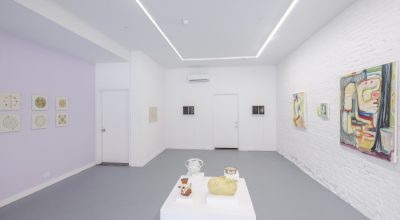
ISA CARRILLO, CIRCE IRASEMA, LUCÍA VIDALES: TERRA PRETA
«Terra Preta» presents the work of three Mexican artists to consider the sacredness of fertile soil and the relevance of ancient wisdom. Through depictions of Mesoamerican mythology and deity representation, the examination of the rituals and sageness of our precursors, and the construction of an underground imaginary, the exhibition aims to approach the intricate legacy of prosperity within black earth.
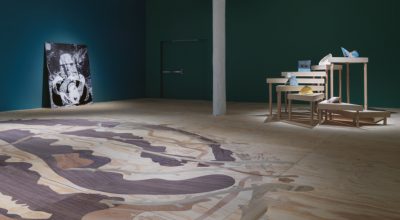
Mariana Castillo Deball:finding Oneself Outside
Working in sculpture, printmaking, photography, and installation, Mariana Castillo Deball (b. 1975, Mexico City, Mexico) examines how knowledge and cultural heritage are produced, organized, measured, and authenticated. Her works often take inspiration from Mesoamerican iconography and narratives, considering their early-colonial transformations and their presence in Central America today. The title of her New Museum exhibition, «Finding Oneself Outside», offers a possible description of a sensation that is central to both the study of history and the experience of encountering an unfamiliar culture.
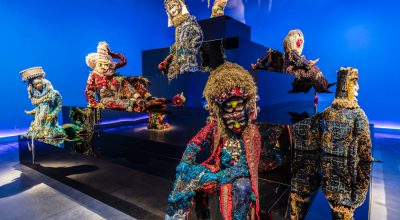
RAÚL DE NIEVES: FINA
«Fina» is the first solo museum exhibition by Raúl de Nieves (b. 1983, Michoacán, Mexico). Through processes of accumulation and a celebration of excess, de Nieves transforms humble materials into spectacular objects and immersive narrative environments. Presented by the Cleveland Museum of Art, «Raúl de Nieves: Fina» features a new site-specific installation of figurative sculptures on a central mirrored structure in the museum Transformer Station’s main gallery. De Nieves mines personal and collective histories, recombining fragments of the past to create timeless fantastical worlds.