
drawing

JORGE SATORRE: BLACK JACKET, GRAY SWEATSHIRT
Satorre connects the interior of the art center, protected by its thick defensive walls, and the exterior, a garden that runs alongside. “Most of the works included in this exhibition at CRAC Alsace were developed on site, intuitively responding to the characteristics of the space and its surroundings. The formal core of the proposal consists in connecting the interior of the building both physically and conceptually to the garden behind it”, says the artist.
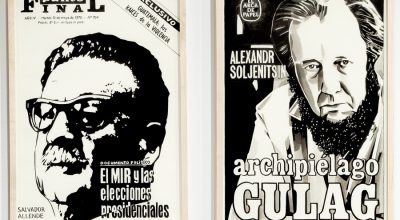
Fernando Bryce:the Decade Review
In Bryce’s review of the decade what is implicit is that world diplomacy was a game played expertly, and exclusively, in the Northern Hemisphere, while the South was dealt and tampered with, most frequently without any political etiquette. Thus one can surmise that the seeds of what we now know as de-colonial thinking were being sown simultaneously in the minds of individuals, all over the globe, living in precarious and unstable locations where a multiplicity of experiences and experiments in the form of nascent post-imperialistic democracies or, more often than not, dictatorial regimes.
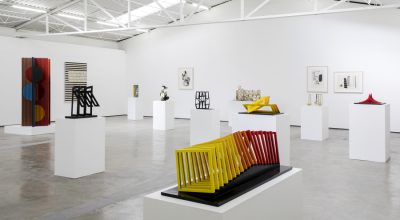
Helen Escobedo:the Potential of Sculpture
«The Potential of Sculpture» is Helen Escobedo’s first solo show at ProyectosMonclova and the second since her retrospective titled «A Escala Humana» at the Museum of Modern Art, Mexico City, in 2010. The present exhibition is composed by a selection of 75 pieces of different interrelated bodies of work: drawing, collage, sculpture, maquette and painting, and is focused on the links between art and architecture, public space, landscape and design, one of the constants that marked the artistic career of Helen Escobedo since the mid-1960s.
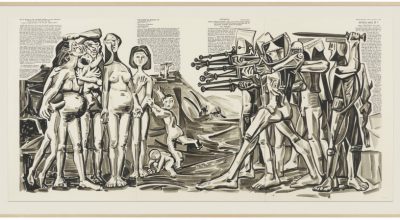
Fernando Bryce at Galerie Barbara Thumm, Berlin
Fernando Bryce’s series of large drawings «Freedom First» captures the intricate events of the Cold War, the emblematic leaders of the time and the struggle to claim the most disputed word and ideal, freedom. Based on the covers of various magazines founded or supported by the Congress for Cultural Freedom (CCF) from its foundation in 1950 in West Berlin until the end of the 1960s, Bryce’s iconic appropriation and re-inscription of historical materials creates a large-scale fragmented geopolitical tableau.