
Chilean artists
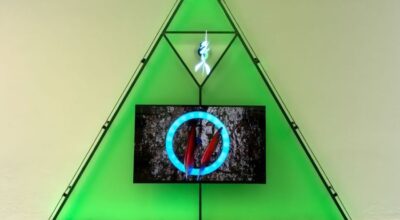
PATRICIA DOMÍNGUEZ: THE WHITE HORSE, PREGNANT
Patricia Domínguez’s cybernetic altars conjure an ecosystem where serpents commune with drones, where pre-Columbian artifacts cohabitate with corporate imagery in acts of unlikely, unholy kinship. These shrines to Water, Earth, Animals, Plants, and the Invisible do not merely offer an inventory of worlds but create conditions for their mutual transformation. Drawing on extensive ethnobotanical research, Domínguez activates what she describes as strategic withdrawal from digital entrapment in favor of interspecies alliance, in order to access planetary memory and its ancient, generative wisdom.
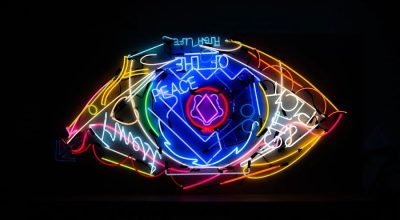
IVÁN NAVARRO: CYCLOPS – THE THUNDER, THE LIGHTNING AND THE GLARE
The entire exhibition winks—not only at those beings of Homeric epic and Hesiodic theogony—but at Matta-Clark’s Parisian intervention of 1975. Under the glow of neon lights and infused with Navarro’s persistent political-poetic experimentation, «Conical Intersect» reemerges, half a century after its execution, mirrored in «Cyclops»—both in time (marking its fiftieth anniversary) and in space (as the two works face each other, just meters apart, near the original site).
CONVOCATORIA: ARTISTAS E INSTITUCIONES DE CHILE – FESTIVAL ARS ELECTRONICA 2024
El llamado, que estará abierto hasta el 29 de mayo, invita a artistas, científicos, diseñadores, investigadores y activistas sociales chilenos, radicados en el país o en el extranjero, y a instituciones académicas radicadas físicamente en Chile que trabajen cruces entre el arte, la ciencia, la tecnología, los medios y las artes sonoras, a presentar sus proyectos.
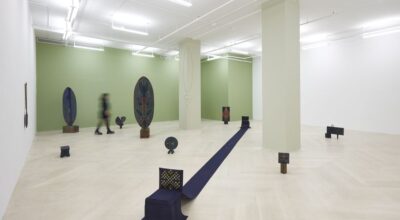
JOHANNA UNZUETA: NATURALIST
In «Naturalist», Johanna Unzueta’s (b. 1974, Santiago, Chile) first solo exhibition at Casey Kaplan, the artist draws from the natural world and the balance between the earth and its living counterparts. In an intimate exploration of her surroundings, Unzueta engages with her Chilean history through its landscape, communities, and labor practices, incorporating organic materials that are indigenous to Latin America.

JORGE TACLA: STAGINGS/ESCENARIOS
Prior to this body of work, Tacla largely excluded the human figure from his paintings, letting buildings and rubble suggest a human presence or intervention. His practice shifted after personally processing images of political rallies in the U.S., Chile, Lebanon and Hong Kong, China, in 2019-20. «October 25, 2019, #4 (2022)» is emblematic of this new mode, depicting some of the estimated 1.2 million protesters that gathered across Chile’s capital, Santiago.
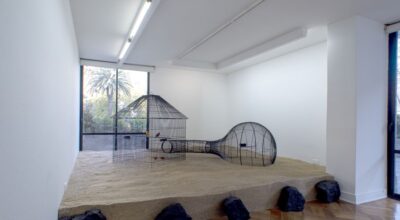
CRISTIÁN SALINEROS: THERE WERE NO LIMITS BEFORE THIS, ONLY TIME
Salineros works literally and symbolically with abjection: he uses the corpse or feces of migratory birds to invoke a series of borders—both physical and virtual—which are transgressed by the effect of time.
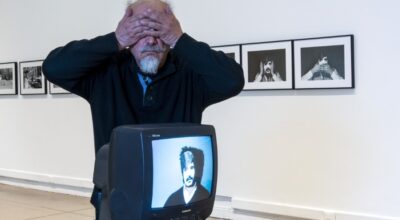
OPEN WOUND. THE MOURNING OF HERNÁN PARADA
Seeing the exhibition, Hernán assures he is moved. He had never seen the material gathered. He further says the image he has of his brother has not changed over time. Within his family they continue to remember him constantly, and in light of events, it seems that Hernán Parada’s work is not only open but is also a way of mourning. “Obrabierta is not closed until Alejandro reappears,” he says firmly.

OPERATIONAL EXCELLENCE
In a moment when cryptocurrency has swiftly become a global phenomenon, this exhibition considers the ways in which dematerialized currency and the ostensible abstraction of value still have tangible impacts. Requiring access to the internet, smart devices, and various software and hardware, the digitization of finance is presented as a seamless, worldwide network, but it in fact has roots in both Wall Street and Silicon Valley.
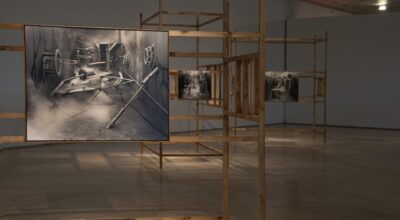
RODRIGO VALENZUELA: NEW WORKS FOR A POST-WORKER’S WORLD
In their invocation of histories of labor, and of industries created by humans in order to displace themselves in the service of capital, these photographs intersect with the struggles for unionization, a longtime interest for Valenzuela. They stress the body’s worth—both single and collective—as well as that of rest and pleasure.
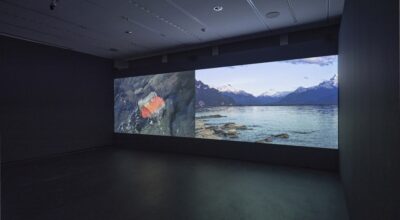
IGNACIO ACOSTA’S ARCHAEOLOGY OF SACRIFICE
In line with Frederic Jameson’s musings on the relationship between utopia and science fiction, and seeing the latter’s strength in failing to accurately imagine a real future, «Archeology of Sacrifice» similarly plays with our imagination’s incapacity. Global capitalism is once again responsible; we’re frozen within its trap, unable to seek alternatives. Instead of presenting a conclusive vision, the film offers a plethora of prospects which “defamiliarize and restructure our experience of our own present».